
Ship Posters Internationally from the US for $15–$60: Packing and Customs Steps
WallfullyFor most international poster shipments, rolling the print in a sturdy tube and placing the tube inside a corrugated overbox gives you the best balance of cost and protection. Expect roughly $15 to $60 for a rolled poster and more for boxed flat prints or crated framed pieces. You’ll need a customs form and an accurate description regardless of method, and insurance is worth buying once declared value climbs past what you’d want to lose. Save specialist art shippers and brokers for high-value or framed originals, restricted materials, or anything crossing borders with strict import rules.
TL;DR:
- Shipping a rolled poster in a snug, double-wall tube within a corrugated overbox is the most cost-effective method for international shipments of standard unframed prints.
- Accurate, detailed customs descriptions including medium, technique, and dimensions are critical to avoid delays and unexpected duties, especially for high-value or original artworks.
- Flat shipping is recommended for textured finishes or multiple posters, as rolling such materials risks damage and flat boxes cost more due to dimensional-weight pricing.
- Crated framed posters offer maximum protection but significantly raise costs, making them suitable only for irreplaceable or high-value pieces, preferably handled by a specialist shipper.
- Carrier choice impacts cost dramatically, with USPS offering the cheapest rates for low-value, lightweight posters, while express carriers like DHL, FedEx, and UPS provide faster, more reliable delivery for higher-value shipments.
Table of Contents
- Rolled Tube vs. Flat Box vs. Crated Frame: Which Fits Your Poster?
- How Do You Pack a Rolled Poster for Shipping?
- Should You Ship Flat or Rolled for International Delivery?
- How Do You Ship a Framed Poster Internationally?
- Which Carrier Is Cheapest for Shipping Posters Overseas?
- What Customs Paperwork Do You Need to Ship Art Internationally?
- Do You Need Insurance to Ship a Poster Internationally?
- How Can You Cut Shipping Costs Without Increasing Damage Risk?
- How Wallfully Preps and Ships Custom Posters Internationally
- Ready to Ship a Custom Poster Without the Packing Guesswork?
- The Overlooked Risk in Poster Shipping
- Sources
- FAQ
Rolled Tube vs. Flat Box vs. Crated Frame: Which Fits Your Poster?
The packaging method you choose depends on the poster’s size, value, and how much risk you’re willing to accept for a lower price. Here’s how the three main approaches stack up.
- Rolled tube: Best for standard unframed prints up to roughly 24x36 inches. Protection is solid against crushing but weak against sharp bending if the tube gets dropped end-first. Ballpark cost: $15 to $40 for a small poster shipped internationally by mail. Buy a double-wall tube and end caps before anything else.
- Flat box: Best for textured finishes, canvas prints, or multiple posters shipped together where creasing matters more than crushing. Protection against bending is excellent, but flat boxes cost more to ship because carriers price by dimensional weight. Ballpark cost: varies depending on box size and destination. Buy rigid cardboard sheets and a box rated for the combined weight.
- Crated framed print: Best for framed originals, glass-front pieces, or anything irreplaceable. Protection is the highest of the three, but crating adds labor, materials, and often doubles the shipping cost. Ballpark cost: can be significantly higher depending on size and whether you hire a specialist. Buy or order a custom wood crate rated for international transit.
Carriers run packages through automated sorters and load them into aircraft holds where pressure and handling vary a lot more than a domestic ground shipment. A tube that would survive a local drop-off can still fail in an international air network, which is part of why DHL’s Express packing guide pushes sellers toward the box-in-box method rather than a bare tube.
How Do You Pack a Rolled Poster for Shipping?
Rolling is the cheapest way to ship most unframed posters, and it’s also the method most people get wrong by using a tube that’s too wide or skipping end protection.
Start with the tube itself. A double-wall cardboard tube handles most posters fine; PVC tubes cost more but survive rough handling and moisture better, which matters for humid destinations or slow surface routes. Pick the smallest diameter that still lets the poster roll without creasing. Carriers price by size and weight, so a 3-inch tube that fits snugly beats a 4-inch tube with wasted space every time.
Here’s the packing sequence that keeps a poster intact across a long international transit:
- Lay the poster face up on a clean surface and cover the print side with a sheet of acid-free tissue or glassine to prevent ink transfer.
- Add a stiff backing sheet behind the poster if the paper stock is thin or glossy, since limp paper telescopes and wrinkles inside a tube.
- Roll from the short edge for wide posters, keeping the roll as loose and even as possible rather than cinched tight.
- Insert the roll into the tube and add crumpled kraft paper or foam plugs at both ends so the poster can’t slide and bang against the caps.
- Seal both ends with plastic end caps, then reinforce with packing tape around the seam, not just across the cap.
- For express shipments, slide the sealed tube into a slightly larger corrugated overbox rather than shipping the bare tube. That single step is what separates a poster that survives an automated sorter from one that arrives with a crushed end.
Measure girth and length together, not just length, because most carriers calculate size limits by combining the two. Weigh the finished, packed tube on a kitchen or shipping scale before you buy postage. Guessing the weight is the single most common reason sellers overpay or get hit with a postage correction after drop off.
Pro Tip: Photograph the poster and the sealed tube before you hand it to the carrier. If a claim comes up later, timestamped photos showing the condition and packaging are the fastest way to get it approved.
Should You Ship Flat or Rolled for International Delivery?
Rolling works for most paper prints, but flat shipping is the better call when the finish, material, or order size makes rolling risky. Canvas prints, metallic or pearl finishes, and anything laminated with a rigid backing can crack or show a permanent crease line if rolled, even loosely. Multiple posters going to the same address also often ship flat, since stacking several prints in one box beats mailing separate tubes.
The go-to method for flat prints traveling long distances is box-in-box: a snug inner box holding the print sandwiched between two rigid cardboard or foam-core sheets, then that whole assembly floated inside a larger outer box with at least a couple inches of cushioning on every side. This mirrors the layered protection DHL recommends for anything moving through an express air network, where boxes get stacked, scanned, and handled by machines rather than people.
A few things to sort out before you tape the box shut:
- Brace multiple posters with foam-core spacers between each print so they can’t shift or rub against one another in transit.
- Add a moisture barrier, a plastic sleeve or sealed poly bag around each print, for any shipment crossing humid regions or traveling by sea.
- Weigh the finished box, since flat boxes often trigger dimensional-weight pricing that makes them cost more than their actual weight suggests.
- Check that your chosen service actually accepts the box’s dimensions. Some postal international tiers cap flat parcels well below what a courier’s express service allows.
Flat shipping costs more per poster than rolling, but for finishes that can’t tolerate a curve, it’s the only method that reliably prevents damage.
How Do You Ship a Framed Poster Internationally?
Framed pieces raise the stakes because glass, wood, and printed paper all react differently to pressure and temperature changes during transit. The first decision is whether to remove the glass entirely.
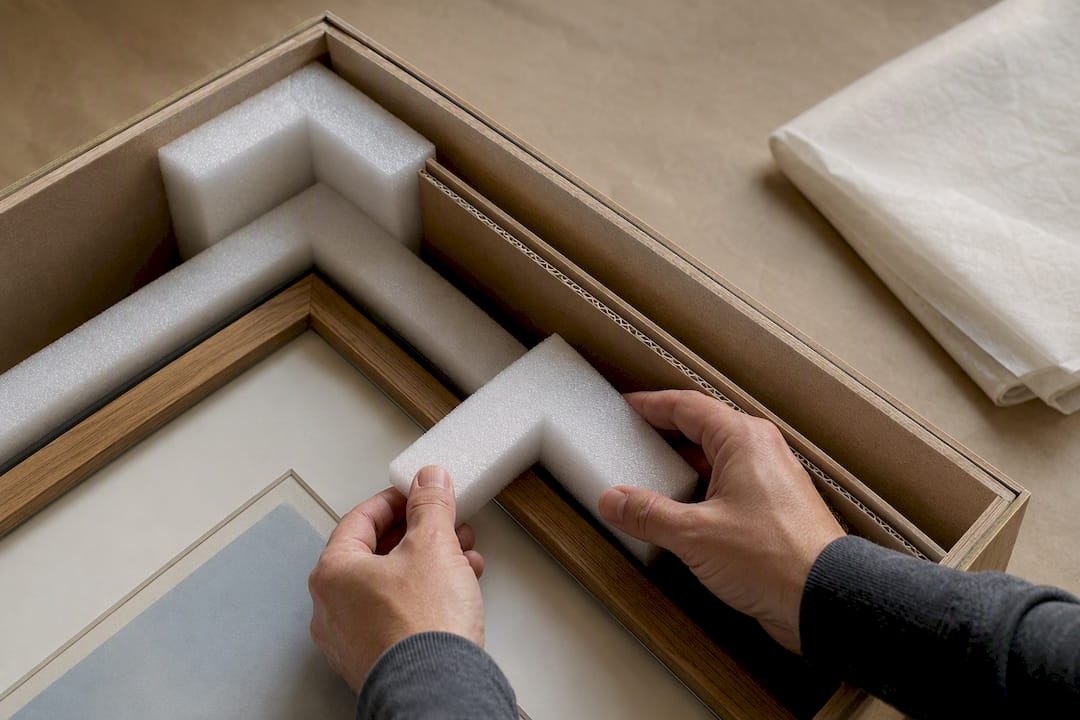
Removing the glass and shipping it separately, wrapped flat between two rigid boards, is the safer choice for anything crossing multiple carriers or long transit times. If removing the glass isn’t practical, tape it in an X pattern with painter’s tape (never packing tape directly on glass), add foam corner protectors to the frame, and wrap the whole piece in at least two layers of bubble wrap before boxing.
For anything large or valuable enough to need a wooden crate, international rules require the wood itself to meet phytosanitary standards. Crates built from raw, untreated wood get held at customs checkpoints, sometimes for weeks. Following ISPM 15 treatment and marking rules for the crate avoids that entirely.
- Choose crating when the piece is irreplaceable, oversized, or worth more than you’d want to risk on standard box protection.
- Expect a crate to roughly double your shipping cost compared to a boxed equivalent, but it also cuts breakage risk substantially on long or multi-leg routes.
- Hand off to a specialist fine-art shipper once you’re dealing with an original, an antique frame, or anything insured above a few thousand dollars. Automated carrier handling isn’t built for that risk tier.
Pro Tip: If you’re on the fence about crating, ask what happens at the destination. A crate that needs a forklift to unload is a problem if you’re shipping to a home address rather than a business with a loading dock.
Which Carrier Is Cheapest for Shipping Posters Overseas?
Carrier choice drives cost more than almost any other decision you’ll make, and the right pick depends heavily on the poster’s value and how fast it needs to arrive.
USPS tends to be the cheapest option for lightweight, lower-value posters. USPS requires a computer-generated customs form for anything sent internationally and caps some services tightly. First-Class Package International Service, for example, tops out around 4 pounds, which fits most rolled posters but rules it out for crated or multi-print flat boxes.
Major express carriers like DHL, FedEx, and UPS cost more but move faster and offer stronger tracking and customs support, which matters for commercial sellers shipping regularly or for anything above a modest declared value. Their networks also handle customs clearance more predictably than postal services, since they broker on the shipper’s behalf rather than routing through the destination country’s postal customs desk.
Specialist art shippers and customs brokers exist for a reason: automated carrier systems routinely misclassify prints and posters as generic “printed matter,” which can trigger the wrong duty rate or an inspection hold. Once you’re shipping original art, framed pieces above a few thousand dollars, or anything with provenance documentation, a broker earns their fee back in avoided delays.
Rough cost bands by method and destination:
- Small rolled poster typically costs a moderate amount for most international destinations.
- Boxed flat print generally costs more depending on box size and destination distance.
- Crated framed piece usually costs substantially more, especially with specialist handling for high-value work.
These are ballpark figures. Actual pricing swings with fuel surcharges, destination country, and how close you are to a service’s weight or size breakpoint.
What Customs Paperwork Do You Need to Ship Art Internationally?
Every international poster shipment needs a customs declaration, and the description you write on that form matters more than most sellers assume. USPS requires an electronically generated customs form rather than a handwritten one, and express carriers require the equivalent commercial invoice built into their online shipping tools.
Vague descriptions like “poster” or “print” invite automated reclassification as generic printed matter, which can bump the duty rate or trigger a manual review. A description that specifies medium, technique, and dimensions, and cites the correct classification, gets through customs faster.
- Use HTS Chapter 97 codes where applicable. Correct classification under Chapter 97 significantly cuts the risk of erroneous duty charges, since many original artworks and prints qualify for duty-free treatment, though that status varies by country of origin and specific tariff rules, not universally.
- Include medium, technique, exact dimensions, and provenance on the commercial invoice when relevant. A one-word description is the single biggest trigger for reclassification.
- Hire a customs broker for shipments above a few thousand dollars in declared value, since CBP’s formal entry requirements call for specific documentation, bonds, and evidence to support duty-free treatment in some cases.
- Use an ATA Carnet if the artwork is traveling temporarily, for an exhibition or trade show, and coming back rather than being sold.
Do You Need Insurance to Ship a Poster Internationally?
Carriers include a baseline liability in most shipping rates, but that coverage is often far below what a valuable print, let alone a framed original, is actually worth. Optional shipment value protection costs extra and scales with the declared value you assign the package, so declaring an honest value matters both for insurance and for customs accuracy.
- Basic carrier liability rarely covers the full replacement cost of an original or a limited-run print; check the fine print before assuming you’re covered.
- Buy extra protection when declared value exceeds what you’d want to absorb as a loss, and be ready for the premium to rise with that value.
- Photograph the piece, keep the purchase receipt or an appraisal, and hold onto packaging materials before you ship, since claims get denied more often for lack of documentation than for any other reason.
- File a claim promptly. Most carriers set a filing window measured in weeks, not months, and a broker or specialist shipper can help assemble the paperwork if the shipment was high value.
How Can You Cut Shipping Costs Without Increasing Damage Risk?
Cost control comes down to a handful of habits that don’t require sacrificing protection.
- Size your box or tube to the poster, not to whatever container you have lying around. Extra void space adds dimensional weight without adding safety.
- Combine multiple posters into one flat box or one larger tube when they’re heading to the same address, rather than paying for separate shipments.
- Choose economy or surface transit for anything that isn’t time-sensitive. Air express costs a real premium over ground or slow international mail.
- Open a shipping account with your carrier of choice if you send packages regularly. Negotiated rates beat retail counter pricing once volume picks up.
- Write an accurate, specific customs description every time. A vague one that triggers reclassification often costs more in delay and duty than the shipping itself.
Pro Tip: Compare two or three services online before committing, since a courier’s international rate can beat a postal service’s for the exact same box once you account for delivery speed and customs handling.
How Wallfully Preps and Ships Custom Posters Internationally
Every custom order follows a fixed packing routine: acid-free interleaving against the print surface, a properly sized tube or box matched to the poster’s dimensions, and reinforced end caps or corner protection before anything ships. Framed orders get additional bracing and glass protection built in rather than left to chance.
Shipping and any applicable customs information is laid out before checkout, so there’s no guessing about what a package will cost to receive on the other end. That same clarity extends to choosing the right poster size before ordering, since size drives both packaging method and shipping price.
Ready to Ship a Custom Poster Without the Packing Guesswork?
Skip the tube shopping, the end-cap math, and the customs-form second-guessing. Packing, sizing, and shipping steps covered above are integrated into the order process, so a personalized poster arrives protected without needing to source materials or write a commercial invoice.

Designs go through a preview step before payment, checkout runs with secure encryption, and shipping is free on all orders, regardless of destination. If you’re deciding between formats, comparing custom poster costs or reviewing printing techniques first will help you land on the right size and finish before you commit. For anything unusual, an oversized piece, a fragile finish, or a destination with tighter import rules, reach out for a shipping quote before you order so there are no surprises at customs. Start a custom design at Wallfully and see the packaging and delivery estimate before you pay a cent.
The Overlooked Risk in Poster Shipping
Most guides obsess over tape and bubble wrap and skip the part that actually causes the worst outcomes: the customs description. A poster that survives a bumpy flight in a well-packed tube can still get stuck for weeks, or hit with a duty bill nobody expected, because someone typed “poster” into a customs form instead of specifying the medium, technique, and correct tariff classification.
The packaging conversation gets all the attention because it’s tangible. You can see a crushed tube. You can’t see a shipment sitting in a customs queue because an automated system flagged a vague description as something requiring manual review. That’s the gap between what most sellers prepare for and what actually delays or taxes international shipments. If you’re shipping regularly, spend as much time getting the paperwork right as you go picking the tube diameter. The tube protects the poster. The paperwork protects the delivery date.
— Luanda
Sources
- Preparing international shipments | USPS
- DHL Express packing guide
- U.S. Art tariffs in 2026: practical advice for importers & shippers — Renwick Fine Art Services
- CBP help/article on entry documentation
FAQ
How Much Does It Cost to Ship Art Internationally?
Costs vary by method and destination, but a small rolled poster typically runs $15 to $40, a boxed flat print generally costs more depending on size and destination, and a crated framed piece usually costs substantially more, especially with specialist handling for high-value work.
What Is the Cheapest Way to Ship a Poster?
Rolling an unframed poster into a properly sized cardboard tube and shipping it through USPS is generally the cheapest method for lightweight, lower-value prints heading overseas.
What Are the Customs Requirements for Shipping Artwork Internationally?
You need an electronically generated customs form with an accurate description that includes medium, technique, and dimensions, and ideally the correct HTS Chapter 97 classification to avoid misclassification as generic printed matter.
Can FedEx Ship a Poster?
Yes, FedEx and other major express carriers ship posters internationally and offer faster transit and stronger customs support than postal options, though at a higher price than USPS for comparable weights.
Do I Need Insurance to Ship a Poster Overseas?
Standard carrier liability rarely covers the full value of an original print or framed piece, so buying optional shipment value protection is worth it once declared value exceeds what you’d want to lose.