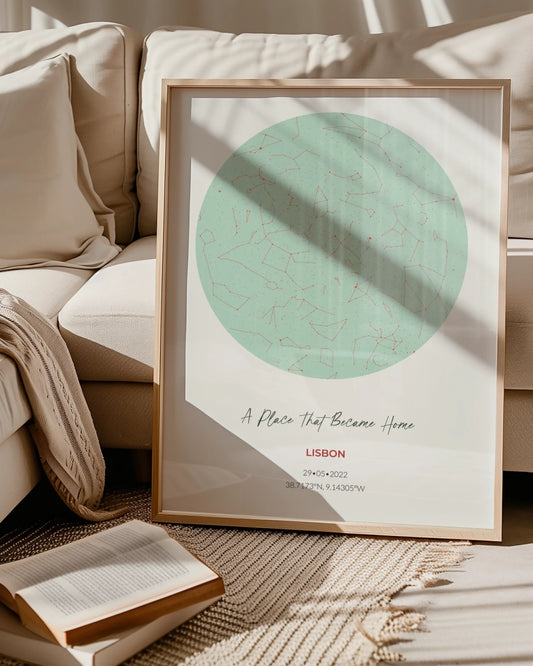

Flat or Rolled: Poster Packaging Protection for Paper, Price, Route
WallfullyShip signed prints, gallery editions, or anything over $75 flat, using a sleeve-and-backing-board sandwich inside a rigid mailer. Roll everything else, but only in a reinforced tube with 2 to 3 inches of end cushioning. For tubes, start your shopping list with Anscher Mailing Tubes, IDL Packaging Cardboard Mailing Tubes, MagicWater Supply Kraft Mailing Tubes, and SAVUK Kraft Mailing Tubes. Whichever route you pick, moisture control and correct sizing decide whether the poster arrives flat or ruined.
TL;DR:
- Reinforced cardboard tubes with at least 2 to 3 inches of end cushioning and proper diameter clearance are best for shipping large or heavy posters safely.
- Flat shipping with a sandwich of rigid backing boards and a stay-flat mailer reduces curl and edge damage, especially for high-value or signed prints.
- Using size-appropriate tubes or flat containers, along with moisture control and reinforced caps, significantly lowers the risk of damage during transit.
- Properly built, repeatable packing processes with documented specifications help minimize damage claims and ensure consistent shipment quality.
- Choosing the correct shipping method depends on poster size, paper weight, and customer needs, with flatter options better for small, high-value prints and tubes for large or lightweight posters.
Table of Contents
- Which Mailing Tubes Actually Protect Posters?
- Should You Roll It or Ship It Flat?
- How Do You Pack a Poster Flat?
- What’s the Right Way to Roll a Poster for Shipping?
- What Supplies Do You Actually Need to Buy?
- How Do You Build a Repeatable Packing Process?
- Why Packaging Is Part of the Product, Not an Afterthought
- Want the Poster and the Packing Handled for You?
- Sources
- FAQ
Which Mailing Tubes Actually Protect Posters?
Not every tube on the shelf is built for the same job, and the differences show up fast once a box gets tossed on a delivery truck. The four brands below cover most of what individual sellers and small print shops actually need, from single-poster mailing to bulk fulfillment.
Anscher Mailing Tubes show up constantly in multipack listings, and that’s the point. They’re built for standard-size posters going out one or two at a time, and their retail availability means you can restock from almost any general supplier without hunting for a specialty vendor.
IDL Packaging Cardboard Mailing Tubes target businesses moving heavier or oversized rolled prints. The line spans multiple diameters and includes reinforced constructions, which matters if you’re shipping 24x36 posters on heavier stock that would crush a standard-wall tube.
MagicWater Supply Kraft Mailing Tubes sit in the budget-to-mid range and work well for sellers shipping flexible, lightweight posters where cost per unit matters more than reinforced walls.
SAVUK Kraft Mailing Tubes come in pack formats sized for small shops and DIY shippers who don’t need bulk commercial quantities but still want a reliable kraft tube on hand.
| Product | Best For | Material / Wall Strength | Available Diameters/Lengths | Standout Feature |
|---|---|---|---|---|
| Anscher Mailing Tubes | Economical rolled shipments of standard posters | Kraft/white, standard wall | Multipack standard sizes | Widely available in retail channels |
| IDL Packaging Cardboard Mailing Tubes | Heavier or large-format rolled prints for business use | Cardboard, reinforced options | Varied diameters | Range of diameters and reinforced constructions |
| MagicWater Supply Kraft Mailing Tubes | Cost-conscious sellers shipping flexible posters | Kraft, standard wall | Retail standard sizes | Affordable retail availability |
| SAVUK Kraft Mailing Tubes | Low-volume sellers shipping standard posters | Kraft, standard wall | Pack-format sizes | Pack formats for small businesses |
Before you buy, check three things: wall thickness (single-wall bows under weight, double-wall doesn’t), whether the end caps are reinforced or just press-fit, and whether the diameter clears your rolled poster with room for cushioning. A tube that’s too tight forces a tighter roll, and a tighter roll means more curl on arrival.
- Confirm diameter leaves at least an inch of clearance around the rolled print.
- Check for reinforced or telescoping caps, not just snap-on lids.
- Match tube length to poster length plus 4 to 6 inches for end cushioning.
Should You Roll It or Ship It Flat?
The choice comes down to three variables: paper weight, order value, and how the recipient plans to use it. Smaller, rigid, or high-value prints do better flat, while larger, flexible posters ship more economically in tubes, according to Paper Direct’s shipping guide. Neither method is universally right.
Use these rules as a starting point:
- Ship flat for signed or limited editions, anything the buyer plans to frame immediately, heavier matte or textured stock, and prints under roughly 18x24 inches.
- Ship rolled for large-format posters over 24 inches on a side, lightweight uncoated paper, budget or promotional print runs, and long-distance routes where dimensional weight pricing punishes flat boxes.
- Reconsider your default if a specific SKU keeps generating damage complaints regardless of which method you’re using.
Flat shipping avoids curl and edge damage but costs more once carriers price by dimensional weight. Tubes cut shipping cost substantially but introduce curl risk if packed loosely.
A “Do Not Bend” label does nothing without cushioning behind it. Carriers stack, drop, and compress packages regardless of what the label says. What actually prevents damage is 2 to 3 inches of physical cushioning at each tube end, rigid backing boards inside a flat mailer, or both. Labels communicate intent; cushioning absorbs impact.
How Do You Pack a Poster Flat?
The sandwich method is the standard approach for flat shipping, and it works because each layer does one job: the sleeve protects the surface, the boards protect the shape, and the outer mailer absorbs impact.
- Choose a sleeve. Glassine works for short-term, low-value shipments; archival polypropylene or a BOPP closure bag protects better and keeps adhesive off the print surface entirely. If you’re shipping multiples, interleave each print with acid-free tissue so surfaces don’t rub against each other in transit.
- Sandwich the sleeved print between two rigid backing boards. Both boards should be slightly larger than the print on every edge, since oversized boards protect corners and edges from impact that the print itself can’t absorb.
- Tie down the boards without touching the print. Use tape or string around the board edges only. Tape directly on the print surface is one of the most common damage causes reported by shippers.
- Slide the sandwich into a stay-flat mailer or a rigid corrugated box. Add corner protectors at all four corners and fill remaining voids so the sandwich can’t shift.
- Seal and label. Keep the shipping label off the opening seam so it doesn’t interfere with the recipient opening the package safely.
- Account for moisture on long routes. Let prints acclimate to room temperature before sealing. Sealing a print while it’s cooler or more humid than the shipping environment traps moisture that causes warping or cockling later. A moisture-resistant outer wrap or a small desiccant pack adds cheap insurance on multi-day routes.
Pro Tip: Test your sandwich by pressing on the outer mailer with moderate hand pressure. If you feel the print shift or bend at all, add another layer of board or more void fill before sealing.
What’s the Right Way to Roll a Poster for Shipping?
Rolling seems simple until a poster arrives with a crease running through the middle of someone’s face. Get the sequence right and that almost never happens.
- Lay the print face-up on a clean, flat surface and cover it with a sheet of acid-free tissue slightly larger than the poster before rolling.
- Roll loosely around a core, not tightly. A tight roll locks in memory curl; a looser roll around a larger-diameter tube distributes the curve across more surface area, which is why choosing a bigger tube diameter genuinely reduces curl.
- Add 2 to 3 inches of cushioning material at both ends of the tube before inserting the roll, since tube ends are the most common failure point in rolled shipments and unprotected ends let the print slide and strike the caps.
- Reinforce the caps themselves, not just the interior. Tape caps in an X-pattern across the seam rather than a single strip, which resists popping open if the tube is dropped end-first.
- Label clearly with “Fragile” and an arrow indicating orientation if the contents shouldn’t be stood on end during transit.
- Include a flattening note for the recipient. Ask them to unroll the poster promptly and weight it flat under books for 24 to 72 hours, or lightly humidify heavier stock in a controlled space before flattening, which resolves most memory curl from tube shipping.
Pro Tip: Diameter and end cushioning are the two cheapest upgrades that cut complaint rates the most. If you only fix one thing in your current process, upgrade the tube diameter before anything else.
What Supplies Do You Actually Need to Buy?
Stock the right five items and you can handle almost any poster order that comes through.
- Sleeves: glassine for short trips and low-value prints; archival polypropylene or BOPP closure bags when the print matters and needs true adhesive-free protection.
- Backing boards: rigid boards at least 1/16 inch thick, cut with a 1 to 2 inch margin beyond the print on every side.
- Rigid mailers or boxes: stay-flat mailers for thinner orders; double-wall corrugated boxes once you’re shipping multiple prints or heavier stock.
- Reinforced tubes: single-wall for lightweight, short-route shipments; double-wall with reinforced end caps for anything heavier or crossing the country.
- Corner protectors: foam or cardboard corners for flat mailers, applied at every corner before sealing.
- Moisture control: silica desiccant packs and a moisture-resistant outer layer for shipments crossing climate zones or sitting in transit more than a few days.
Reusable padded systems like PrintPad add adjustable inner corners and puncture-resistant liners, which is worth the extra cost for high-value unframed prints on long routes where a single lost order costs more than a season of shipping supplies. For everyday poster volume, the sandwich and reinforced tube methods above cover nearly every case. Choosing the right paper stock also affects which method fits, since heavier or recycled poster paper handles rolling differently than thin uncoated stock.
How Do You Build a Repeatable Packing Process?
Improvised packing is where damage rates creep up. The fix isn’t more materials. It’s writing down what already works and checking it against real numbers every month.
- Set packaging tiers by SKU and size, documenting the exact sandwich or tube spec for each tier so anyone on the team packs it the same way.
- Require a quick inspection and photo before sealing, especially for limited editions, so you have proof of condition if a damage claim comes in.
- Track damage by SKU and method monthly. If tube-shipped 24x36 posters generate more complaints than the flat-shipped equivalent, that’s your signal to move the SKU.
- Run cheap physical tests before locking in a material change. A drop test from 6 to 12 inches onto a hard surface, a shake test for internal movement, and a stack-weight test on corner protectors catch weak packaging before customers do.
Pro Tip: Keep a simple spreadsheet with one row per damage claim: SKU, method, and damage type. After three months you’ll usually see one method or one SKU driving most of the problem, which tells you exactly where to spend on upgrades.
Why Packaging Is Part of the Product, Not an Afterthought
Pack-out should be treated as an extension of the print itself. A personalized poster printed on archival-grade material and then shoved into an undersized envelope isn’t a finished product, it’s a support ticket waiting to happen. That’s why prints built for framing get the same sandwich-and-board treatment described above before they ever leave the building.
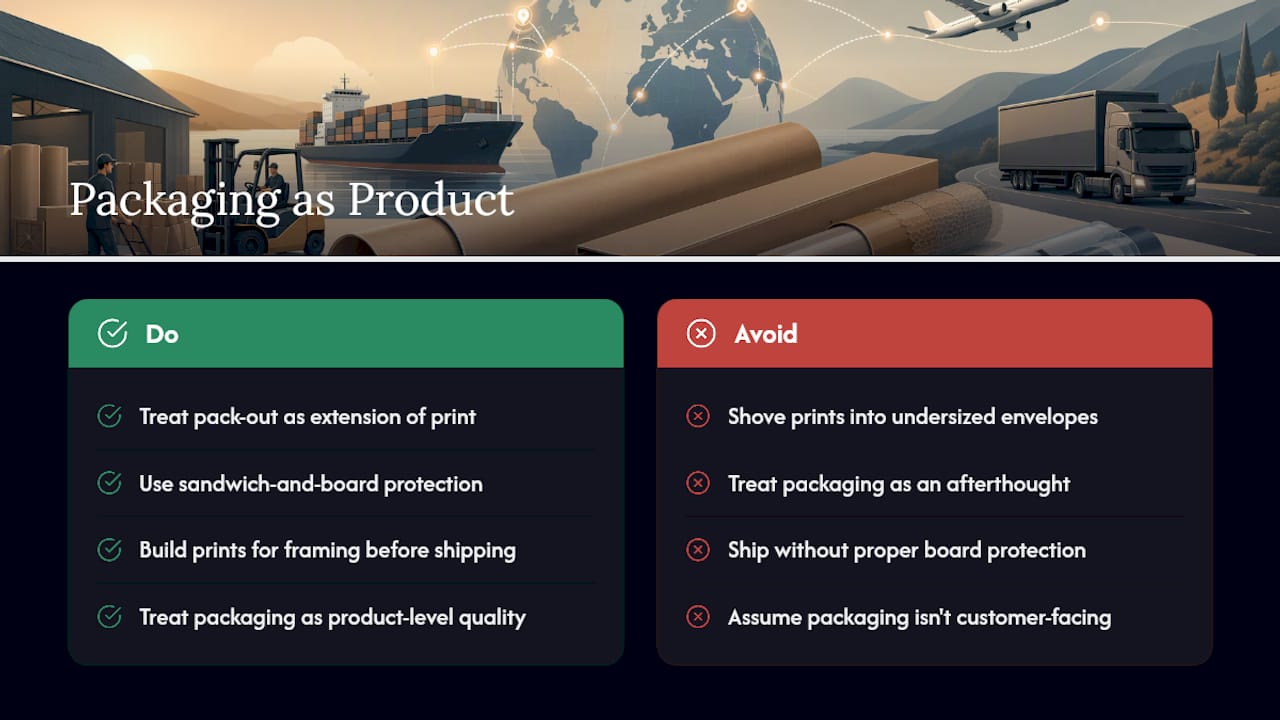
Packaging is the last thing Wallfully controls before a customer opens the box, and it’s treated with the same weight as the print itself.
— Luanda
Want the Poster and the Packing Handled for You?
If you’d rather skip sourcing sleeves, boards, and reinforced tubes altogether, buying a poster that’s already printed and packed to these standards is the more direct route. Some custom wall art providers apply archival printing and protective pack-out as described throughout this guide to every order, so you’re not assembling a sandwich on your kitchen table before a gift deadline.

The Route & Map Posters collection turns a specific address or trip into wall art, and each order ships already protected for framing rather than folded into an envelope. The Personalized Photo Collage Posters line works the same way for anyone assembling a gift from multiple photos, and the Star, Moon & Zodiac Maps collection covers birthdate and anniversary gifts without any packaging decisions on your end. Every order ships free with a preview step before checkout, so you see the finished layout before it goes to print. Browse the map poster collection and build your preview now.
Sources
- How to ship art prints without bends, scuffs or corner damage - ValueMailers
- How to ship posters - Easyship blog
- Art print shipping guide: tubes, flats, sleeves and damage prevention - Paper Direct
- How to store art to avoid deterioration or damage - Prism Specialties
FAQ
How Do You Protect a Paper Poster During Shipping?
Sleeve the poster in glassine or archival polypropylene, then sandwich it between two rigid backing boards slightly larger than the print before boxing it. For rolled posters, wrap in acid-free tissue and add 2 to 3 inches of cushioning at both tube ends.
What’s the Best Way to Package a Poster for Mailing?
Match the method to the poster: flat shipping with a sandwich of boards and a rigid mailer for smaller, higher-value, or heavier-stock prints; a reinforced tube for large, flexible posters. Both methods require moisture precautions and proper sizing to prevent shifting inside the package.
How Do You Protect a Package Without Bubble Wrap?
Rigid backing boards, corner protectors, and void fill made from crumpled kraft paper or cardboard inserts do the same job bubble wrap does, absorbing impact and preventing shifting. For rolled shipments, tissue interleaving plus dense end cushioning replaces the need for bubble wrap entirely.
What Should You Do if a Poster Arrives Damaged?
Photograph the damage and the packaging before disposing of anything, since most sellers and carriers require proof for a claim. If the poster arrived rolled and shows memory curl rather than a tear, unroll it and weight it flat under books for 24 to 72 hours before assuming it’s ruined.
Are There Examples of Good Protective Packaging for Posters?
Reinforced double-wall tubes with cushioned ends and stay-flat mailers built around a board sandwich are the two standards that consistently prevent damage. Reusable padded systems like PrintPad add another tier of protection for high-value unframed prints on long shipping routes.