
Names and Dates in Art: What They Really Mean
WallfullyTL;DR:
- Names and dates in art are critical for establishing the creator’s identity, provenance, and authenticity. They influence market value, support recognition, and help detect forgeries through material analysis and historical context.
Names and dates in art are the primary identifiers that connect a work to its creator, its moment in history, and its legal record. The role of names and dates in art extends far beyond simple labeling. They anchor provenance, support authentication, and determine market value. For art enthusiasts and students, understanding how signatures and dates function reveals a layer of meaning that most casual viewers never notice. These two small details carry enormous weight in galleries, auction houses, courtrooms, and classrooms alike.
How does an artist’s name function as an identity marker?
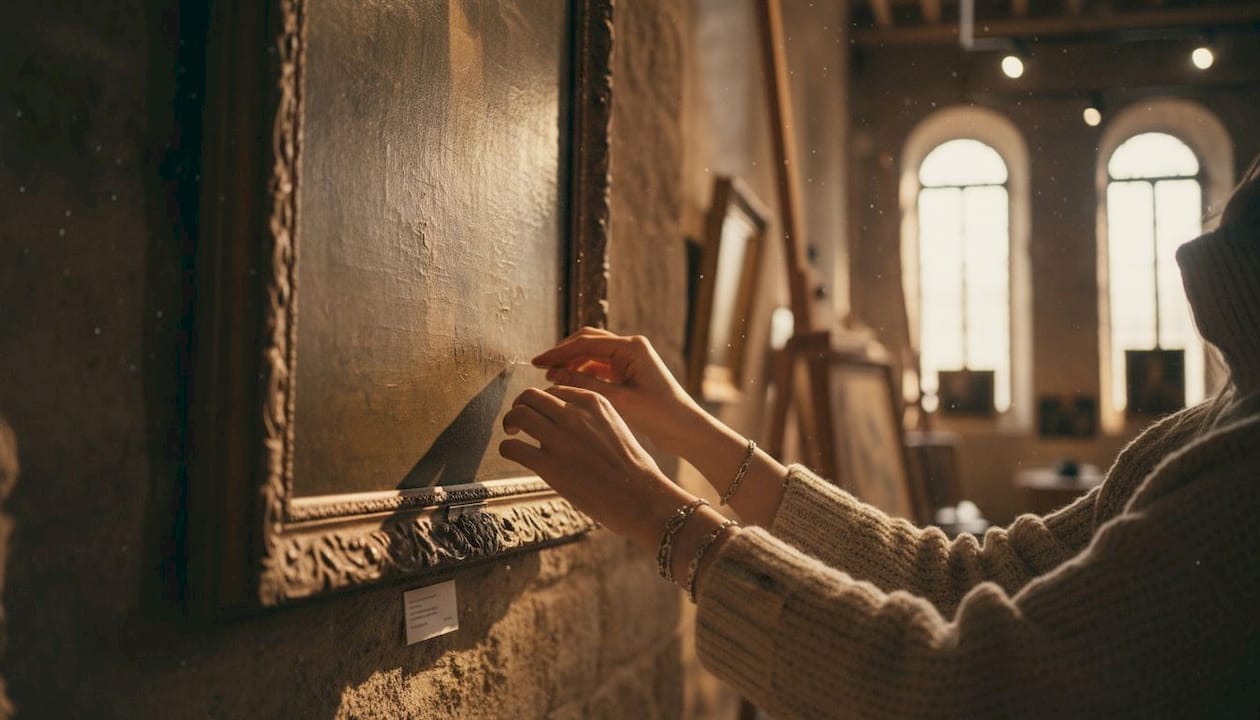
An artist’s name on a work is a professional declaration, not just a label. Signatures build recognition and serve as a first defense against unauthorized reproduction. The way an artist signs a work reflects deliberate choices about identity, legacy, and market positioning.
Artists sign in several distinct ways:
- Full legal name: Common in formal or academic traditions, signaling professionalism and permanence.
- First name only: Van Gogh signed exclusively as “Vincent” because his Dutch surname was routinely mispronounced by French dealers. That was a deliberate branding choice tied to market realities and complex family dynamics.
- Initials or monogram: Historically used by printmakers and draftsmen where space was limited and compositional elegance mattered.
- Pseudonym: Artists like El Greco and Caravaggio are known by names that were never their legal identities. These names became the brand.
The consistency of a signature also matters enormously. Van Gogh signed 50 paintings after moving to Arles, only 7 during his time at Saint-Rémy, and just 1 in his final months at Auvers-sur-Oise. That pattern reflects psychological state and shifting ideas about marketability, not carelessness. Scholars use signing frequency as a biographical data point.
Pro Tip: If you are building an art collection, note not just whether a work is signed, but how. A monogram, a full name, and an unsigned work each carry different documentation requirements for resale.
Maintaining a structured catalogue with titles, dates, and signatures improves traceability and resale consistency. The signature matters, but the paper trail behind it often matters more.
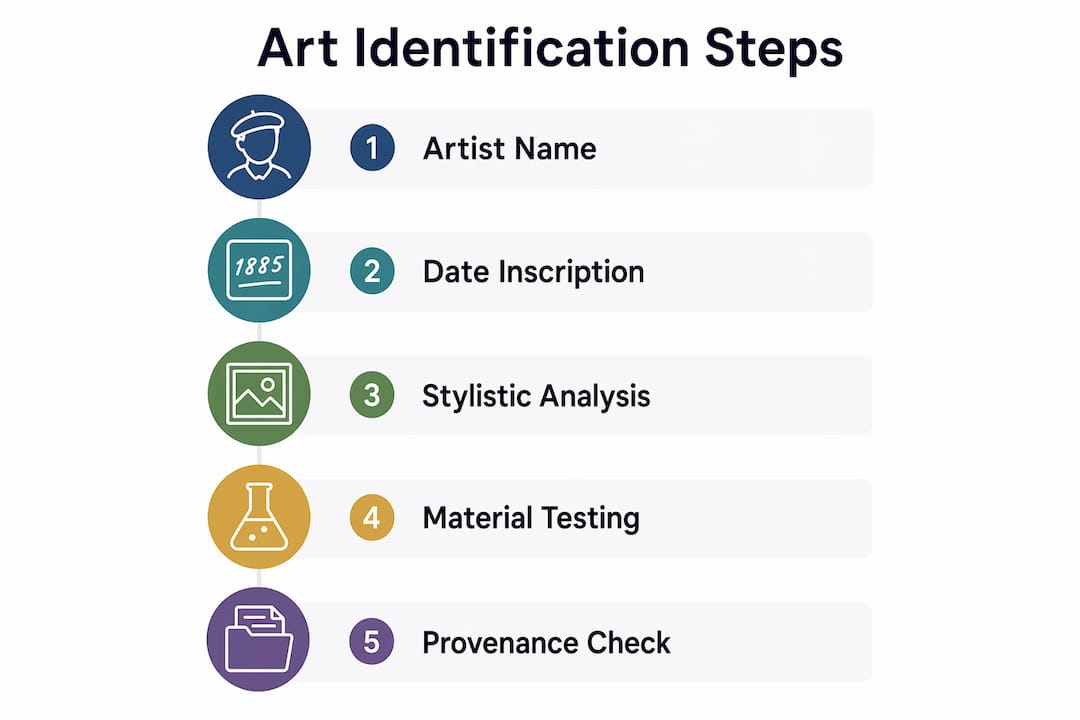
Why do dates on artwork matter for history and authentication?
A date inscribed on a work places it in time. That placement does three things at once: it locates the work within an artist’s development, it connects it to a historical moment, and it creates the first entry in a provenance chain.
Here is why accurate dating carries so much weight:
- Chronological mapping of an artist’s career. Dates let scholars track how a painter’s style evolved. Picasso’s Blue Period (roughly 1901–1904) is only identifiable because works from that era are dated. Without dates, the sequence collapses.
- Establishing the provenance chain. Provenance research aims for a complete chain of ownership beginning with the artist’s name and production date. This is especially critical for works created between 1933 and 1945, when looting and forced sales were widespread.
- Detecting forgeries. A date inscribed on a canvas can be tested against the pigments beneath it. If a work claims to be from 1880 but contains a synthetic pigment invented in 1920, the date is false. Forensic analysis of material layers distinguishes genuine inscriptions from later additions.
- Tracking art movements. Impressionism, Cubism, and Abstract Expressionism are defined partly by when their key works appeared. Dates are the scaffolding of art history as a discipline.
- Affecting market value. A work from a recognized peak period in an artist’s career commands a premium. Accurate dating directly influences auction estimates and insurance appraisals.
The distinction between an inscribed date and a technically verified date is significant. An inscription is a claim. Technical dating, using methods like infrared reflectography or pigment analysis, is evidence. Both matter, and they do not always agree.
How do names and dates support provenance and authenticity?
Provenance is the documented history of an artwork’s ownership from creation to present day. Names and dates are the entry points for every link in that chain.
A work’s legal and historical record begins with the artist’s name and the date of production. Without those two anchors, provenance research has no starting point. The NC Museum of Art’s provenance standards illustrate this clearly: their research protocols treat the creator’s identity and production date as foundational, particularly for works that passed through Europe between 1933 and 1945.
Pro Tip: When buying art online, ask for a catalogue raisonné entry or a certificate of authenticity that includes the production date and the artist’s full documented name. A signature alone is not sufficient verification.
Authentication never rests on a signature alone. Experts combine stylistic analysis, material studies, and provenance documentation to assess authenticity. The signature is one piece of a larger puzzle, not the answer itself.
| Provenance element | Function |
|---|---|
| Artist’s name | Establishes creator identity and links work to known body of work |
| Production date | Anchors the work chronologically and starts the ownership chain |
| Ownership history | Documents transfers, sales, and legal title over time |
| Exhibition records | Corroborates authenticity through institutional recognition |
| Technical analysis | Verifies inscriptions against material evidence |
Forgeries exploit gaps in all five areas. A convincing fake needs a plausible name, a credible date, and a fabricated paper trail. Digitization of provenance records is closing some of those gaps, though the distance between institutional standards and real-world record-keeping remains wide. Knowing how to verify an online art seller before purchasing is a practical skill every collector needs.
How do signing and dating practices vary across periods and art forms?
Signing conventions are not universal. They shift across media, historical periods, and individual temperament.
- Medieval art was almost entirely anonymous. Artists worked in service of the Church, not personal reputation. The concept of the artist as a named individual with a distinct identity is largely a Renaissance invention.
- Renaissance painters began signing works as personal celebrity grew. Albrecht Dürer’s “AD” monogram is one of the earliest examples of a signature functioning as a brand.
- Printmakers traditionally sign in the margins below the image, noting the edition number and total print run (e.g., “7/50”). This convention is now standard practice and affects value directly.
- Sculptors often sign on the base or back of a work, where the signature does not compete visually with the piece itself.
- Contemporary artists sometimes sign on the back of the canvas, the stretcher bar, or not at all. Absence of a front signature does not reduce value if strong documentation exists, such as a catalogue raisonné entry, studio records, or a certificate of authenticity.
The catalogue raisonné deserves special attention. It is a comprehensive, scholarly catalog of every known work by an artist, organized chronologically. For major artists, inclusion in the catalogue raisonné carries more authentication weight than a visible signature. The cultural attribution process for works from non-Western traditions often relies on these records when signatures were never part of the artistic practice.
Not every unsigned work is a mystery. Many artists deliberately left works unsigned, either because they considered them unfinished, private, or not intended for sale. Context, documentation, and material evidence fill the gap.
Key Takeaways
Names and dates in art are foundational identifiers that support authentication, provenance, and cultural understanding, making them indispensable for collectors, scholars, and institutions.
| Point | Details |
|---|---|
| Signatures signal identity | An artist’s name or monogram is a professional declaration that supports recognition and resale traceability. |
| Dates anchor provenance | Production dates start the ownership chain and are critical for detecting forgeries through material analysis. |
| Signatures alone are insufficient | Authentication requires stylistic analysis, material studies, and full provenance documentation, not just a visible name. |
| Signing conventions vary widely | Printmakers, sculptors, and painters follow different traditions; unsigned works retain value with strong documentation. |
| Digitization is changing the field | Provenance records are moving online, improving transparency but revealing gaps between standards and practice. |
Why I think we underestimate what a signature actually says
Most people look at a signature on a painting and see confirmation. I look at it and see a question. The signature tells you what the artist wanted you to believe at that moment. It does not tell you whether the work was finished, whether the artist was proud of it, or whether the name on the canvas matches the hand that held the brush.
Van Gogh’s signing pattern is the example I return to most often. The drop from 50 signed works in Arles to 1 in Auvers is not a clerical oversight. It is a window into a mind under enormous pressure. When you know that, you look at his late work differently. The absence of a signature becomes as meaningful as its presence.
What I find underappreciated is how much the date does that the signature cannot. A date places a work in a specific cultural moment. It tells you what was happening politically, what other artists were doing, what materials were available. A painting from 1937 in Europe carries a different weight than the same style produced in 1957. The date is the context. The name is the author. You need both to read the full sentence.
The shift toward digital provenance records is genuinely exciting, but it also exposes how much was never documented in the first place. Gaps in the record are not neutral. They are often the result of deliberate erasure, wartime displacement, or institutional neglect. Paying attention to what is missing is as important as reading what is there.
For students especially: train yourself to look at the back of a painting, not just the front. The stretcher bar, the canvas stamp, the old exhibition labels. That is where the real story often lives.
— Luanda
Wallfully and the art of preserving personal milestones
Names and dates carry meaning in fine art, but they carry just as much meaning in the art you live with every day. A wedding date, a child’s name, a place that changed your life: these details transform a print into something that cannot be replicated.

Wallfully specializes in custom milestone prints that put your names and dates at the center of the design. Every order ships free, prints on eco-friendly materials, and arrives with a satisfaction guarantee. Whether you are marking an anniversary, a birth, or a moment worth keeping, Wallfully makes it easy to create a piece that holds the record. Browse the full collection at Wallfully.com and see how personal details become lasting art.
FAQ
What is the role of names and dates in art authentication?
Names and dates are the foundational identifiers in any authentication process. They establish creator identity and production timeline, which experts then verify against material evidence, stylistic analysis, and provenance records.
Why did Van Gogh sign his paintings as “Vincent”?
Van Gogh used only his first name because French dealers could not pronounce his Dutch surname. It was a practical branding decision that also reflected complex family dynamics tied to his brother Theo.
Does an unsigned painting have less value?
Not necessarily. Unsigned works retain full value when supported by strong documentation such as a catalogue raisonné entry, studio records, or a certificate of authenticity. The signature is one factor, not the deciding one.
How do dates help detect art forgeries?
Inscribed dates can be tested against the physical materials of a work. If pigments, canvas fibers, or varnish layers are inconsistent with the claimed date, the inscription is likely a later addition or a forgery.
What is a catalogue raisonné and why does it matter?
A catalogue raisonné is a comprehensive scholarly record of every known work by an artist, organized by date and medium. For major artists, inclusion in this catalog carries more authentication authority than a visible signature on the work itself.