
Renters: Hang Posters Without Nails Using Library of Congress Advice
WallfullyThe best damage-free options are adhesive poster strips, removable poster putty, removable double-sided tape, and clips or rails, and the right pick depends on poster weight and wall surface. Strips work best on smooth painted walls for small to medium posters, putty suits very light prints or slightly textured surfaces, and clips or rails skip adhesive altogether. If your poster has real value, skip adhesives entirely and jump to the preservation section below.
TL;DR:
- Adhesive poster strips require matching the strip count and weight rating precisely, and should only be used on well-cured, smooth painted walls.
- Removable putty and double-sided tape are suitable for very light posters or textured surfaces, but require testing for residue and grip strength beforehand.
- Non-adhesive options like clips, rails, and magnets eliminate wall contact and are ideal for delicate surfaces or valuable posters needing preservation.
- Proper wall preparation, including cleaning with alcohol and waiting before applying adhesives, significantly reduces the risk of damage and adhesive failure.
- Removing posters correctly involves pulling strips straight down slowly and warming residue gently, or framing irreplaceable items to avoid any adhesive contact altogether.
Table of Contents
- Which damage-free hanging method fits your poster
- How do stretch-release adhesive strips work?
- Should you use putty, tape, or non-adhesive clips instead?
- How do you prep your wall and poster before hanging?
- How do you remove adhesives without damaging your wall?
- How do you preserve a valuable or irreplaceable poster?
- What should you do when a poster won’t stay up?
- A few layout habits that make posters look intentional
- A framing-friendly alternative when you’d rather not risk the original
- Sources
- FAQ
Which damage-free hanging method fits your poster
Before picking a method, match it to your poster’s weight and your wall’s finish. A few extra minutes here saves you a wall repair later.
- Adhesive poster strips: best for smooth, painted drywall holding light to medium posters; check the pair’s rated weight before applying.
- Removable poster putty: best for very light prints or slightly textured walls where strips won’t seat well.
- Removable double-sided tape: stronger hold than putty, but test a small patch first since it can grip paper too tightly.
- Clips, rails, and magnetic hangers: no adhesive at all, ideal for delicate walls, rentals with strict no-mark policies, or metal surfaces.
- Poster rails or lightweight frames: give a cleaner, gallery look and protect the paper edges from handling wear.
Each method gets its own walkthrough below, so jump to whichever matches your wall and poster.
How do stretch-release adhesive strips work?
Command Poster Strips are built for smooth, finished indoor surfaces like painted walls, finished wood, glass, tile, and metal, and they remove cleanly without residue when used as directed. Matching strip count to poster weight matters more than most people assume: too few pairs and the poster sags or falls, too many and removal gets harder.
- Check the weight rating printed on the package and use enough strip pairs to cover your poster’s total weight.
- Clean the wall with isopropyl alcohol and let it dry fully before applying anything.
- Press each strip firmly for the time recommended by the manufacturer, placing pairs at the top and bottom corners or at all four corners for larger posters.
- Wait the recommended time before hanging weight on the strips, per the instruction sheet.
- Remove by pulling straight down, stretching the tab slowly for at least 30 centimeters rather than pulling it outward.
Pro Tip: Test one strip on a hidden patch of wall and a scrap of your poster material before committing to the full display.
Skip strips on wallpaper, unsealed drywall, or walls painted in the last 7 to 28 days, since the manufacturer guidance recommends letting paint cure fully first. They’re also not the right choice for valuable or irreplaceable originals.
Should you use putty, tape, or non-adhesive clips instead?
Putty, removable tape, and clips each solve a slightly different problem, and picking the wrong one is usually why a poster ends up crooked or on the floor.
- Removable poster putty works well for very lightweight prints: press small amounts at the corners and edges, then test a scrap of the poster first to check for residue or color change before applying it to the real thing.
- Removable double-sided tape holds more weight than putty but grips paper more aggressively, so test a small patch and avoid leaving it in prolonged contact with thin paper.
- Binder clips or spring clips on a string or wire, hung from an existing hook or picture rail, let you display posters with zero contact between adhesive and wall.
- Magnetic strips work on metal surfaces like some door frames or filing cabinets, another fully non-adhesive route.
- Poster rails at the top and bottom give a clean, framed look and distribute weight evenly across the poster’s width.
For alignment, mark your top edge with a level or a strip of painter’s tape before committing to any adhesive, so you’re not re-sticking strips or putty to fix a crooked hang.
How do you prep your wall and poster before hanging?
Surface prep is the difference between a poster that stays up for months and one that falls after a week. Clean the wall with isopropyl alcohol rather than household cleaners, which can leave a film that weakens adhesion, and let it dry completely.
- Wait 7 to 28 days after painting before applying any adhesive, using the longer end of that range on freshly painted walls, according to surface prep guidance.
- Flatten curled posters by reverse-rolling them gently, weighting them flat under books overnight, or using light humidification with caution.
- Avoid wallpaper, textured paint, vinyl, and rough plaster, where adhesives either won’t hold or will pull off the surface when removed.
Simple prep steps like alcohol cleaning and correct paint cure time materially reduce adhesive failures and paint peeling, which matters most on newly painted walls where the temptation to hang art right away is strongest.
How do you remove adhesives without damaging your wall?
Taking a poster down the wrong way is the most common cause of paint peel, and it’s an easy mistake to avoid once you know the technique.
- Pull the strip tab straight down, not outward, and stretch it slowly for at least 30 centimeters to release the adhesive bond cleanly, per 3M’s removal instructions.
- For putty or tape residue, warm the spot gently with a hairdryer on low heat, then rub off residue with a gentle adhesive remover, testing it on an inconspicuous spot first.
- Avoid solvents on painted surfaces, since stronger removers can strip paint along with the adhesive.
- Check strips periodically on long-term displays and replace any that show peeling edges rather than reusing them.
Pro Tip: Rotate posters away from direct sunlight when you can, since UV exposure fades ink faster than almost anything else in a room.
How do you preserve a valuable or irreplaceable poster?
Adhesives pose a real long-term risk to paper: even tapes marketed as archival can migrate into the fibers and cause discoloration over years. For anything with sentimental or resale value, the Library of Congress recommends matting and framing rather than any direct adhesive contact.
- Corner mounts and polyester half-moons hold the poster in place inside a frame without touching adhesive to the artwork itself.
- Edge strips and acrylic glazing protect against handling wear and block a portion of UV light.
- Order a facsimile for display and store the original flat in stable, dark conditions, which is exactly what preservation guidance recommends to prevent light damage.
- Consult a conservator if the poster has real monetary or historical value before attempting any cleaning or mounting yourself.
A UV-protective mat and glazing setup costs more upfront, but it’s the only way to display something irreplaceable without slowly damaging it.
What should you do when a poster won’t stay up?
Most hanging failures trace back to one of three things: a dirty surface, cold temperatures during application, or a poster that’s heavier than the adhesive’s rated capacity.

If a poster keeps sagging, add more strip pairs or switch to a rail system rather than adding more putty on top of putty. Curling corners usually mean the poster needs to be reflattened before rehanging, not more adhesive at the edges. The most common mistakes are applying adhesive to wallpaper or fresh paint, using too much putty or tape directly on thin paper, and pulling strips outward instead of stretching them straight down during removal.
A few layout habits that make posters look intentional
Spacing matters more than perfection. I keep gaps between posters in a grid consistent, usually a fist’s width, rather than eyeballing each one separately, and I use a lightweight rail or thin frame whenever a poster is the focal point of a wall. For salon-style clusters, I hang the largest piece first and build outward, checking alignment with a level every two or three additions. Rotating posters between rooms every few months also limits how much light exposure any single piece gets. More layout ideas are in our poster design guide.
— Luanda
A framing-friendly alternative when you’d rather not risk the original
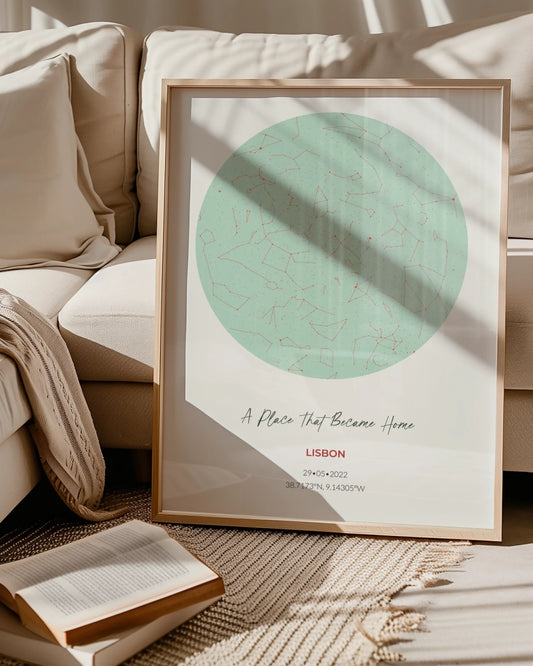
If your poster matters enough that adhesives feel risky, ordering a fresh, high-quality print is often the simpler route. Wallfully’s Route & Map Posters and Star, Moon & Zodiac Maps collections are built for framing rather than direct-to-wall mounting, so you get a display piece without touching the original with tape or putty.

- Personalized Photo Collage Posters work well for gift displays you want to frame and keep pristine.
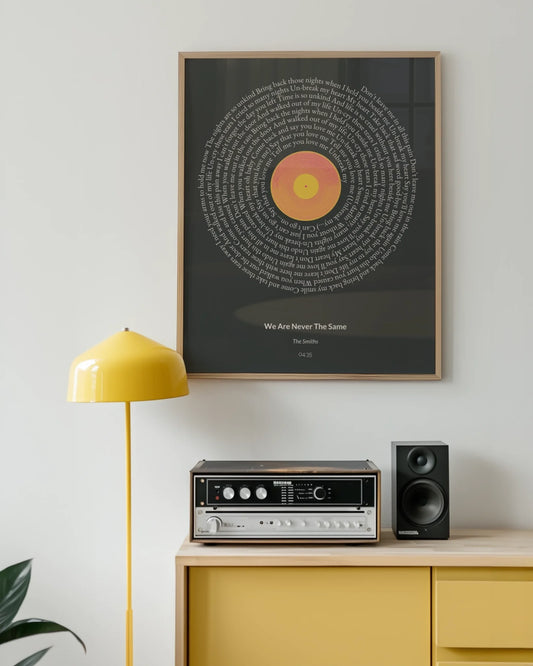
- Song Lyric and Baby Milestones prints are popular choices for a framed piece that skips wall adhesives on anything irreplaceable.
- Some collections offer framing options, providing durable copies suitable for display.
The printed poster and framing choices are supplied, without hanging hardware included. Browse the Route & Map Posters collection to see framing options for your next piece.
Sources
- Command™ Poster Strips | 3M United States
- Command picture hanging strips instruction sheet (3M)
- Poster replacement strips guidance (iTapeStore)
- Matting and framing (Library of Congress)
FAQ
How do you hang a poster without tacks?
Adhesive poster strips, removable putty, or non-adhesive clips and rails all work without tacks or nails. Strips suit smooth painted walls, while clips and rails work on almost any surface since nothing touches the wall with adhesive.
What is the least damaging way to hang posters?
Non-adhesive clips, rails, or magnetic hangers cause zero wall contact, making them the least damaging option available. For valuable originals, the Library of Congress recommends matting and framing rather than any adhesive or clip contact with the artwork itself.
What is the best way to hang an unframed poster?
Stretch-release adhesive strips rated for the poster’s weight, applied to a clean, painted surface, hold unframed posters well without leaving residue when removed correctly. For lighter prints, poster putty at the corners is a simpler alternative that avoids marking the wall.
Can command strips hold up posters?
Yes, Command Poster Strips are designed for smooth, finished indoor surfaces like painted walls, finished wood, glass, tile, and metal, and they remove cleanly when the weight rating and application steps are followed. They’re not recommended for wallpaper, unsealed drywall, or freshly painted walls that haven’t finished curing.