
What Is Order Customization? A Practical Guide
WallfullyTL;DR:
- Order customization allows buyers to modify products according to their preferences, creating meaningful, personalized items. Platforms capture these choices through structured options or free-form fields, impacting accuracy and scalability. Buyers should use live previews and confirm structured inputs to ensure they receive exactly what they want.
Order customization is defined as the process of modifying a product or service according to a buyer’s specific preferences, whether that means choosing a color, adding a name, or building a product from scratch. Platforms like WooCommerce and Oracle have built entire workflows around capturing these choices accurately. For anyone shopping for a gift or a personal keepsake, understanding how customization works makes the difference between a generic purchase and something that actually means something. This guide breaks down the types, the process, and what to expect when you customize an order online.
What is order customization and why does it matter?
Order customization is the practice of tailoring a product’s attributes before purchase, so the final item reflects the buyer’s individual needs or preferences. The Cambridge English Dictionary defines customization as making or changing a product according to the buyer’s requirements. That definition covers everything from picking a laptop’s storage size to engraving a name on a pendant.
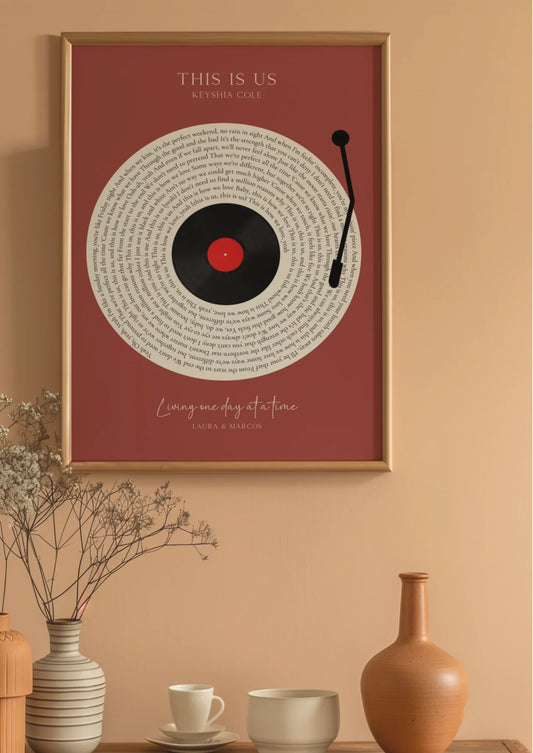
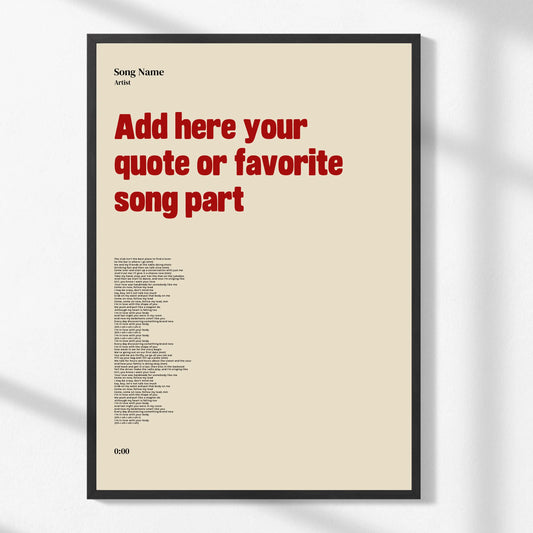
Customization matters because it turns a standard product into something specific. A plain poster becomes a wedding anniversary print when you add two names and a date. A generic phone case becomes a personal statement when you choose the color, material, and finish. The product itself may be the same base item, but the order customization process makes it yours.
For gift buyers especially, this distinction carries real weight. A customized gift signals effort and intention in a way that an off-the-shelf item simply cannot. That perceived value is why personalization deepens customer engagement and increases how much buyers feel the product is worth.
What are the main types of order customization?
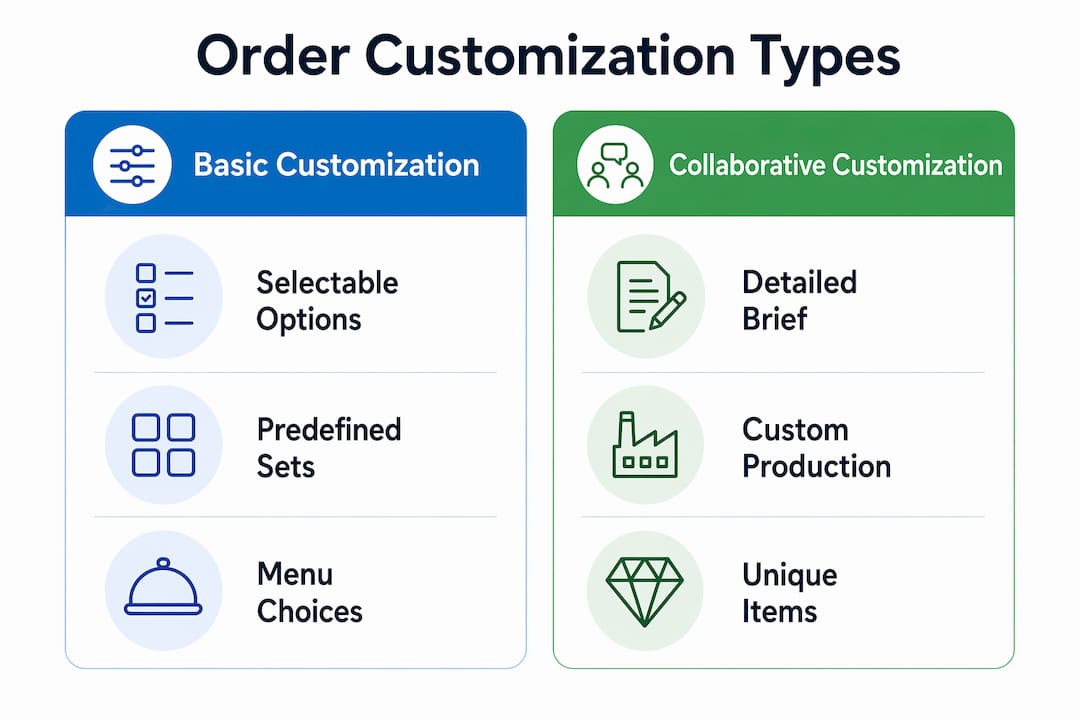
Product customization covers three broad categories: aesthetic, functional, and collaborative. Each type gives buyers a different level of control over the final product.
Aesthetic customization changes how a product looks without altering what it does. Examples include:
- Choosing a color, finish, or material (a mug in matte black vs. glossy white)
- Adding engraved text or a printed design
- Selecting a font, layout, or graphic style for printed products
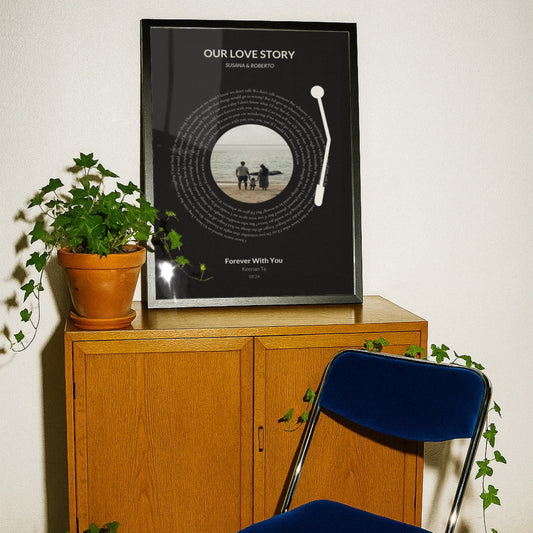
- Uploading a photo to appear on a canvas or poster
Functional customization changes what a product does or includes. Examples include:
- Configuring a laptop with specific memory, storage, and processor options
- Adding or removing features on a software subscription plan
- Selecting add-ons for a furniture piece, like drawer inserts or leg styles
Collaborative or custom-made orders go further. The buyer submits a detailed brief, and the seller produces something that does not exist in any catalog. WooCommerce’s Custom Orders feature supports exactly this model, with messaging tools, file uploads, and a multi-step quote and payment workflow built in.
Customization vs. personalization is a distinction worth knowing. Customization covers selectable options from a menu. Personalization embeds unique personal data like a name, date, or photo directly into the product. Personalization is a subset of customization. Every personalized order is customized, but not every customized order is personalized.
Pro Tip: When ordering a personalized gift, confirm whether the seller treats your text input as a structured data field (which feeds directly into production) or a free-form note. Structured fields reduce errors significantly.
How do ecommerce platforms capture and manage customization data?
The way a platform records your customization choices determines whether your order arrives correctly. Two approaches dominate the industry: structured option sets and free-form text fields.
Structured option sets use predefined menus with constrained choices. Oracle’s configure-to-order model is the clearest example. A buyer selects from approved options for each component, and the system validates that the combination is actually buildable before the order is confirmed. This prevents impossible configurations, like pairing incompatible parts in a custom PC build.
Free-form text fields give buyers more flexibility but create more risk. A seller must read, interpret, and manually translate the buyer’s instructions into production specs. This works for small-volume custom orders but breaks down at scale.
The operational difference between these two approaches is significant:
- Structured data feeds directly into fulfillment software, reducing manual handling.
- Machine-readable customization data improves integration between ordering systems and automated production, cutting errors and delays.
- Structured option sets eliminate the need for a separate SKU for every possible variant, which keeps inventory systems manageable.
- Free-form inputs require human review at every stage, which slows fulfillment and increases the chance of mistakes.
| Approach | Best for | Risk level | Scalability |
|---|---|---|---|
| Structured option sets | High-volume, repeatable customization | Low | High |
| Free-form text fields | Fully bespoke, one-off orders | Medium to high | Low |
| Configure-to-order (Oracle) | Complex products with many components | Low | High |
| WooCommerce Custom Orders | Small-batch, quote-based custom requests | Medium | Medium |
Capturing customization as structured attributes on order lines also prevents SKU explosion. Without structured data, a seller offering 5 colors, 3 sizes, and 10 text options would need 150 separate SKUs. With option attributes on the order line, one base SKU handles all combinations cleanly.
What practical customization options can you expect when shopping online?
Most online stores that support order customization give buyers a clear set of tools at the product page level. Knowing what to look for helps you get exactly what you want.
Common customization options include:
- Dropdown menus for color, size, and material. These are the most common and the easiest to use.
- Text input fields for names, dates, messages, or locations. These feed directly into the printed or engraved output.
- Photo upload tools that let you submit an image to appear on a product like a canvas print, phone case, or photo book.
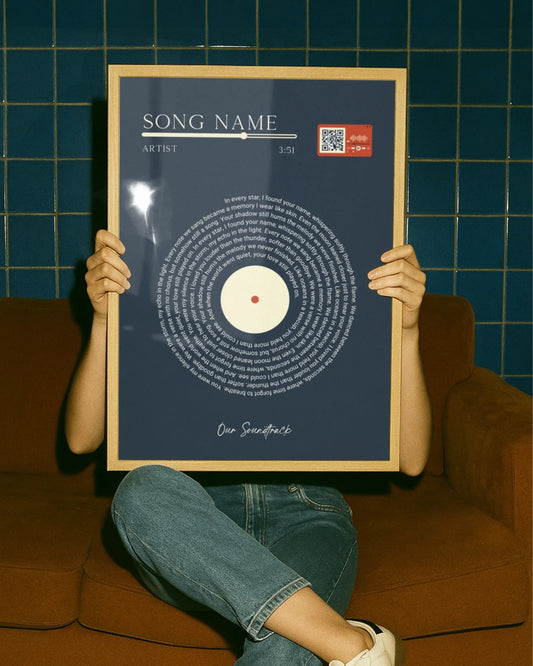
- Online design editors where you arrange text, graphics, and images on a live preview of the product before ordering.
- Special instructions boxes for requests that do not fit standard options, such as asking for a specific font or a non-standard color combination.
For gift buyers, the most valuable tools are text fields and photo uploads. Adding a wedding date to a personalized poster or a couple’s names to a map print transforms a decorative item into a keepsake. Home decor, apparel, jewelry, and stationery are the product categories where these options appear most often.
Pro Tip: Always use the live preview feature if the store offers one. What looks right in a text field can look very different at print size. Check spacing, line breaks, and font size before you confirm.

The meaning of order customization in a consumer context is straightforward: you are telling the seller exactly what you want, and the platform is recording that request accurately enough to deliver it. The quality of that recording process is what separates a great customization experience from a frustrating one.
What operational challenges do sellers face with order customization?
Enabling order customization adds real complexity to a seller’s operations. Order complexity increases with customization, and more custom configurations mean less flexibility for substitutions or returns. A standard product can be restocked and resold. A custom one usually cannot.
Sellers must validate option combinations before accepting an order. Oracle’s configure-to-order system handles this automatically by checking that selected options are compatible. Smaller sellers using free-form inputs must do this manually, which creates a bottleneck as order volume grows.
The WooCommerce Custom Orders workflow illustrates the full complexity of a true custom order process. A genuine custom request typically moves through intake, clarification, quoting, and payment before production even begins. Each step requires communication between the buyer and seller, which takes time and creates opportunities for misunderstanding.
Scaling personalization requires balancing customer choice against operational capacity. Offering too many options without the systems to manage them leads to errors, delays, and unhappy customers. The best sellers limit their option sets to what they can reliably fulfill, then expand as their systems mature.
Pro Tip: If you are a seller adding customization to your store, start with structured option sets rather than open text fields. Constrained choices are easier to fulfill accurately and scale far better as order volume increases.
Key Takeaways
Order customization is the structured process of capturing buyer preferences as product attributes, and the quality of that data capture determines whether the final product matches what the buyer intended.
| Point | Details |
|---|---|
| Core definition | Order customization means modifying product attributes to match a buyer’s specific preferences before production. |
| Two main approaches | Structured option sets scale well; free-form text fields suit one-off custom requests but require manual handling. |
| Customization vs. personalization | Personalization embeds unique personal data like names or dates; it is a specific type of customization. |
| Consumer best practice | Use live preview tools and confirm your text inputs are structured fields, not just notes, to reduce errors. |
| Seller complexity | Custom orders increase fulfillment complexity and reduce the ability to substitute or return items. |
Why I think most people underestimate order customization
Most buyers treat customization as a nice extra feature. I think that framing misses the point entirely. The real value of order customization is not the ability to pick a color. It is the ability to make a product that could not exist without you.
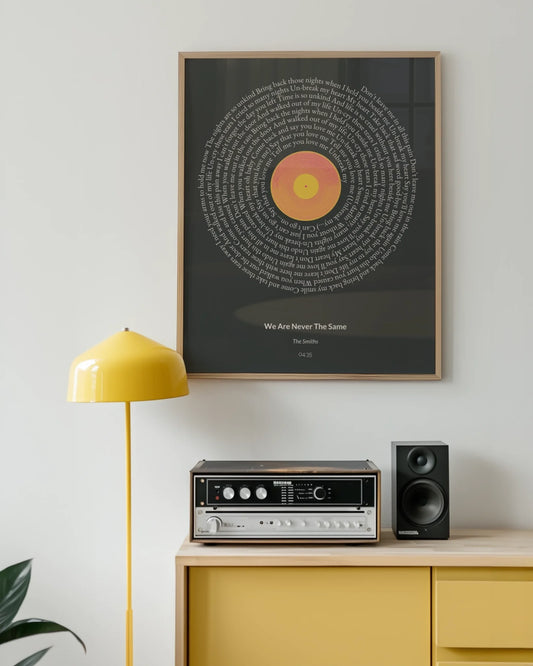
A song lyric print with the exact track that played at your parents’ wedding is not a poster. It is a document of a moment. A map centered on the street where you grew up is not wall art. It is a personal artifact. The customization process is what creates that meaning, and the platforms that execute it well understand this.
What I find underappreciated is how much the backend matters to the buyer experience. When a seller uses structured data fields, your order moves through production without anyone having to interpret your handwriting or decode an ambiguous note. When they use free-form fields, every step is a chance for something to go wrong. Buyers rarely see this, but they feel the results.
The future of order customization points toward AI-assisted configurators that can suggest option combinations, flag incompatible choices in real time, and even generate previews from natural language descriptions. That shift will make customizable gifts more accessible to buyers who currently find the process intimidating. But the operational investment required to get there is significant, and sellers who have not built clean data structures yet will struggle to catch up.
My honest advice: when you find a platform that handles customization well, the experience feels effortless. When it does not, you spend three days exchanging messages trying to explain what you meant. The difference is entirely in how the seller built their system.
— Luanda
Personalized wall art made exactly the way you want it
Wallfully specializes in custom wall art that puts your details at the center of the design. Song lyric posters, city maps, zodiac prints, and milestone art are all built around the names, dates, and locations you provide.
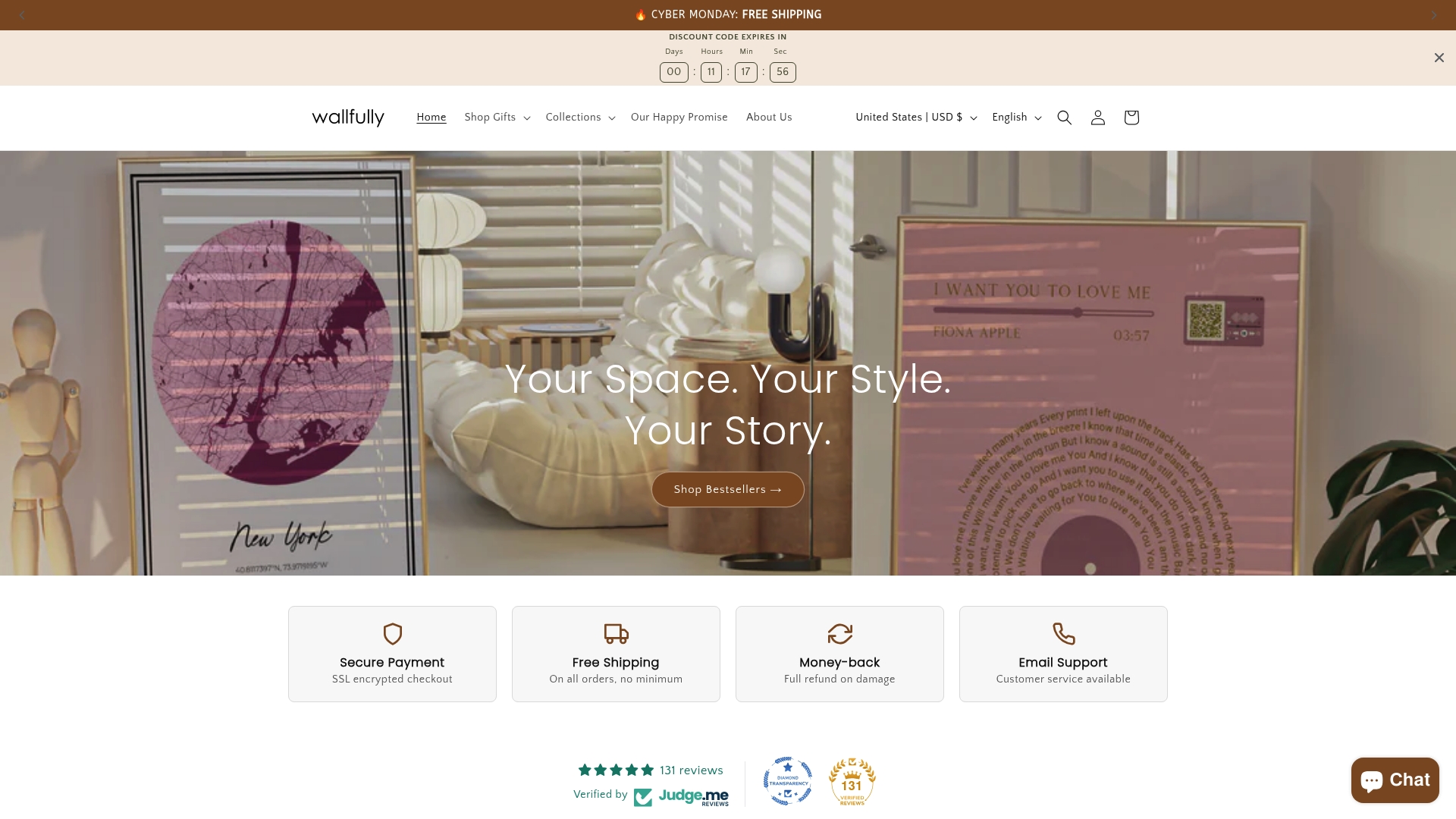
The process is guided from start to finish. You select a design, enter your personal details, see a live preview, and confirm before anything goes to print. Every order ships free, and Wallfully backs each purchase with a satisfaction guarantee. If you are looking for a gift that reflects a specific person and a specific moment, explore Wallfully’s custom prints and see how far a little personalization can go.
FAQ
What is the custom order definition in simple terms?
A custom order is a purchase where the buyer specifies one or more product attributes before production, so the final item is made to their exact requirements rather than pulled from existing stock.
How does order personalization differ from customization?
Customization covers selectable options like color or size. Personalization embeds unique personal data like a name, date, or photo, making it a specific type of customization.
What are common order customization examples for gifts?
Common examples include engraved jewelry, custom map prints, photo books, personalized apparel, and song lyric posters with names and dates added by the buyer.
How do I customize an order online?
Most platforms offer dropdown menus, text input fields, and photo upload tools at the product page. Enter your details, use the live preview to check the result, and confirm before checkout.
Why do custom orders sometimes take longer to ship?
Custom orders increase fulfillment complexity because each item is produced after the order is placed. Unlike standard stock items, custom products cannot be pre-packed or substituted, so production time is added to the shipping timeline.