
Why personalize home decor: 70% feel more connected
WallfullyTL;DR:
- Over 70% of homeowners feel more emotionally connected to personalized decor.
- Personalization enhances emotional well-being and reflection of identity through meaningful objects.
- Market growth is driven by younger generations’ desire for self-expression and sustainable options.
Over 70% of homeowners feel more emotionally connected to their living spaces when they add personalized decor. That’s not a small number. Most people assume decorating is purely about aesthetics, picking colors that look good in photos or furniture that fits the room. But the research tells a different story. Personalization changes how you feel in your own home, how much you want to be there, and how well you recover from stress. This article breaks down what personalization actually means, why it works psychologically, where the market is heading, and when it’s smarter to hold back.
Table of Contents
- What does it mean to personalize your home decor?
- Why emotional connection matters: The psychological impact
- Personalization trends, market growth, and sustainability
- When personalization backfires: Limits and lessons
- The uncomfortable truth: Why personalization is worth it (and when it isn’t)
- Bring your space to life with personalized wall art
- Frequently asked questions
Key Takeaways
| Point | Details |
|---|---|
| Emotional connection | Personalized decor creates a strong sense of attachment and happiness in any living space. |
| Smart personalization | Opt for core items like wall art that reflect your identity without undermining flexibility or resale value. |
| Sustainability matters | Eco-friendly materials in personalized items support both the environment and your well-being. |
| Trends drive change | Global market growth and millennial preferences power the demand for unique, customizable home decor. |
What does it mean to personalize your home decor?
Personalization in home decor means shaping your space to reflect who you are, not just what looks trendy. It goes well beyond painting a wall or buying a new rug. The meaning of personalized decor spans a wide range of choices, from monogrammed throw pillows to custom maps of the city where you met your partner.
There are three main approaches most people take:
- DIY personalization: You make it yourself. Think hand-painted signs, gallery walls built from your own photos, or repurposed furniture you’ve refinished.
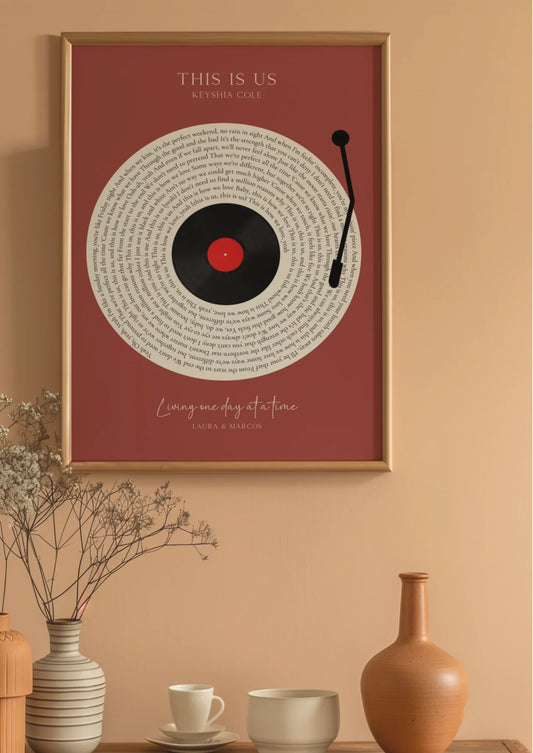
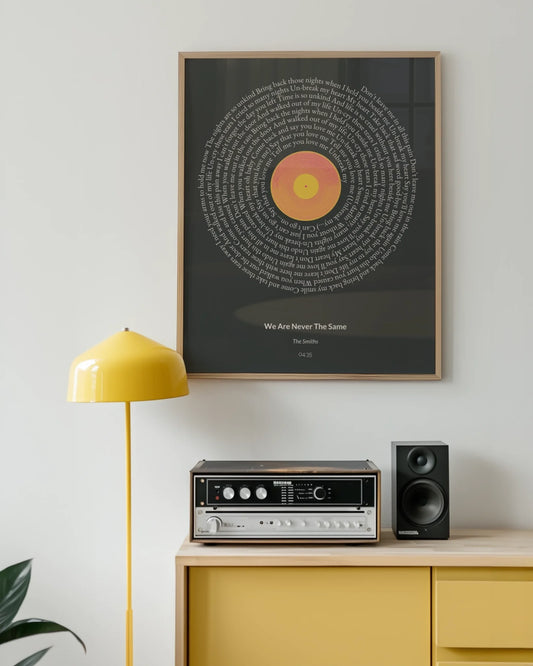
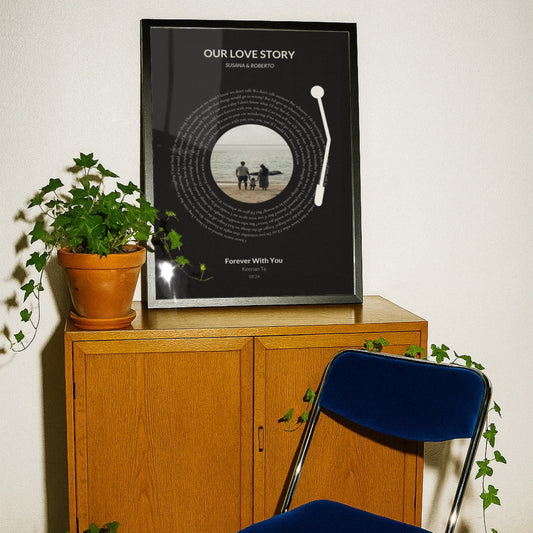
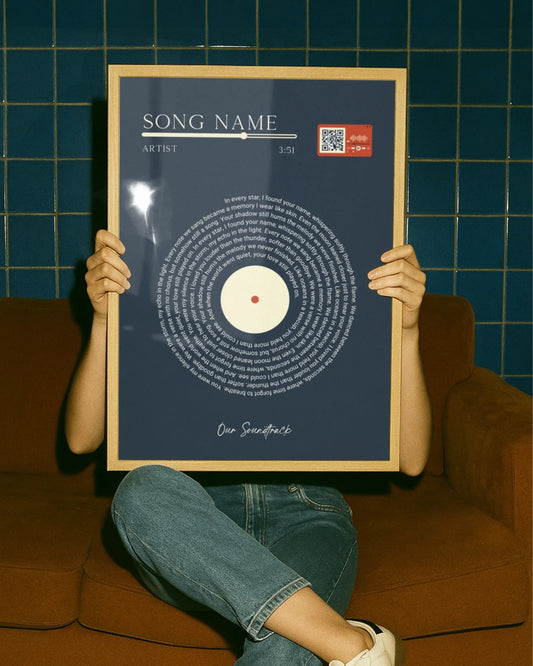
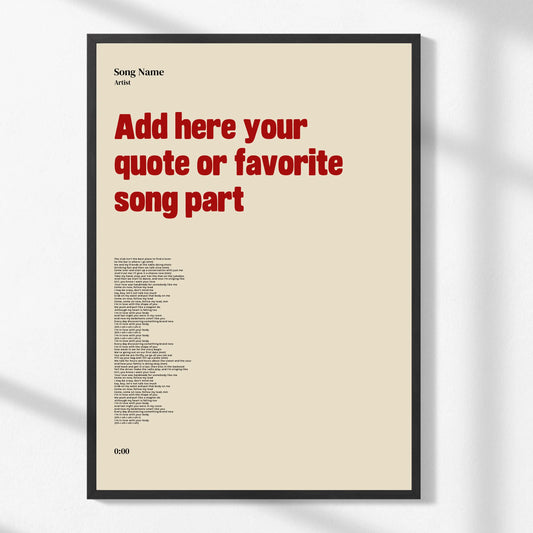
- Semi-custom: You choose from existing designs but add your own details, like a name, date, or location. Song lyric posters and zodiac prints fall into this category.
- Fully custom: You work with a creator or platform to build something from scratch, tailored entirely to your specifications.
Each approach has its place depending on your budget, time, and how specific your vision is. The types of personalized decor available today are broader than ever, which is part of why personalization has grown so fast as a category.
What makes personalization powerful isn’t just the visual result. It’s the meaning embedded in the object. A generic landscape print fills wall space. A custom map of your hometown carries memory, identity, and story. That difference matters more than most people realize.
“Personalization turns spaces into identity reflections, boosting emotional well-being, family bonds, and functionality.”
The rise of personalization also connects to a broader cultural shift. People are pushing back against mass-produced sameness. Platforms like custom decor offerings have grown because consumers want objects that feel like theirs, not like everyone else’s. Uniqueness has become a form of self-care.
Personalization also serves a practical function. When your space is organized around your actual habits and preferences, it works better for you. A reading nook designed around your specific books and lighting preferences isn’t just personal. It’s functional in a way a generic setup never could be.
Why emotional connection matters: The psychological impact
Having established what personalization means, let’s look at why it matters for emotional and mental health.
The science here is straightforward. Humans are wired to attach meaning to objects and spaces. When your environment reflects your identity, your brain registers it as safe and familiar. That lowers stress hormones and increases your sense of control. The benefits of wall art decor extend beyond aesthetics into measurable well-being outcomes.
Over 70% of homeowners feel more emotionally connected to spaces with personalized decor. That emotional connection isn’t a luxury. It directly affects how well you sleep, how quickly you decompress after work, and how much you enjoy being home.
| Group | Key benefit | Main challenge |
|---|---|---|
| Homeowners | Deep customization, long-term investment | Risk of over-personalizing for resale |
| Renters | Portable decor improves comfort fast | Permanent changes can cost deposits |
| Families | Shared decor builds identity and bonds | Balancing individual vs. collective taste |
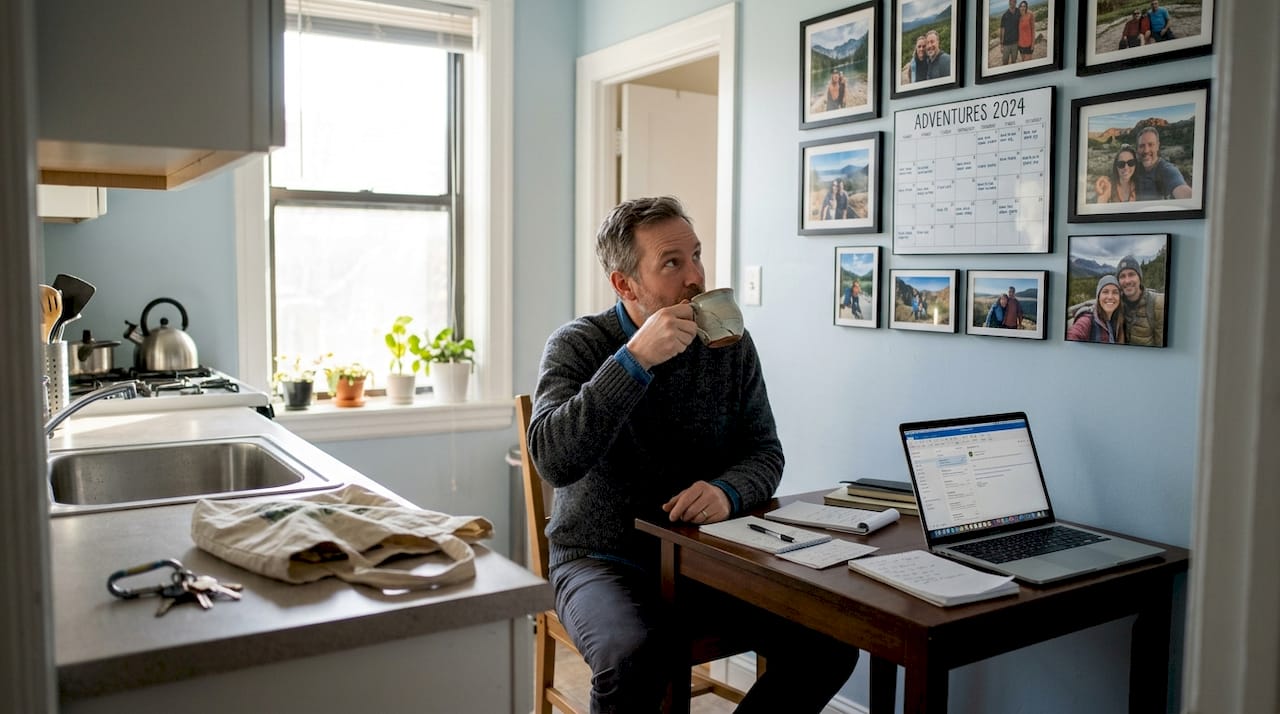
For renters, the situation is more nuanced. Personalization improves mental health and daily comfort, but it can carry financial risk if you make changes that aren’t portable. Painting walls or installing built-ins can cost you your deposit. The smarter move is to focus on items you can take with you, custom wall art, textiles, and freestanding furniture.
Pro Tip: If you rent, build your personalization strategy around things you own, not things attached to the apartment. A set of custom prints, a statement rug, and layered lighting can completely transform a space without touching a single wall.
The emotional benefits research also shows that even small personalized objects, like a custom mug or a framed photo, trigger positive emotional responses. You don’t need to redo your entire home. You need a few anchor pieces that carry genuine meaning. Start there, and the rest of the space often falls into place around them. DIY wall decor ideas are a great entry point if you want to experiment before committing to a larger purchase.
Personalization trends, market growth, and sustainability
With emotional benefits clear, let’s see how market trends and new demands shape personalized decor’s future.
The numbers are significant. The global wall art market was valued at USD 63.61 billion in 2024, driven strongly by emotional and mental health motivations. That’s not a niche category. It’s a mainstream consumer priority, and it’s still growing.
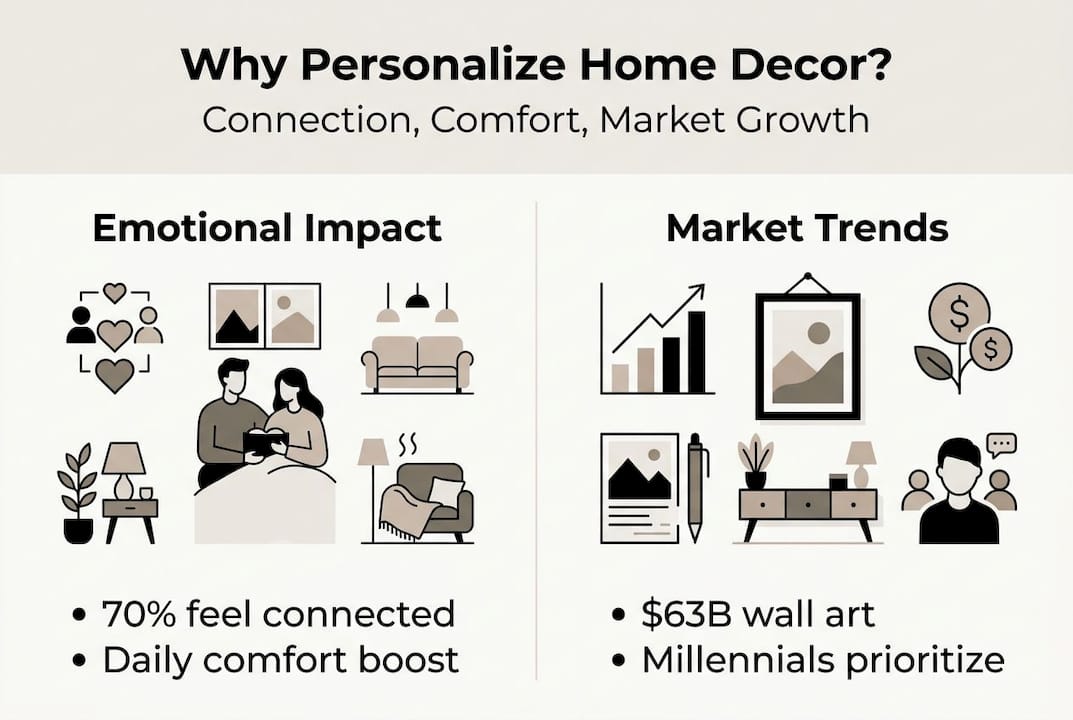
Who’s driving that growth? Primarily younger buyers. 63% of millennial homeowners say they prioritize homes customized to their tastes and needs. Gen Z follows closely behind, with an even stronger preference for self-expression through their environments. These aren’t just style preferences. They reflect a generational shift in how people define home.
| Generation | Personalization priority | Preferred format |
|---|---|---|
| Millennials | High (63% prioritize customization) | Custom art, maps, milestone prints |
| Gen Z | Very high | Digital-first, bold colors, identity-driven |
| Gen X | Moderate | Quality over novelty, timeless pieces |
| Baby Boomers | Lower but growing | Family photos, heritage items |
The wall art trends for 2026 reflect this shift clearly. Consumers want pieces that tell a story, not just fill space. And increasingly, they want those pieces to be made responsibly.
Sustainability has become a real factor in purchasing decisions, not just a marketing buzzword. Buyers are asking where materials come from, how prints are produced, and whether the process is environmentally responsible. Eco-friendly wall art options have grown significantly as a result.
The key benefits of sustainable personalized decor include:
- Reduced environmental impact through recycled or FSC-certified materials
- Longer product lifespan because buyers invest more care in meaningful pieces
- Support for small-batch and local creators who use cleaner production methods
- Alignment with values, which deepens the emotional connection to the piece
If you want a fuller picture of what to look for, the sustainable decor guide covers materials, certifications, and what questions to ask before you buy.
When personalization backfires: Limits and lessons
Personalizing transforms living spaces, but it’s smart to consider a few limits and how to avoid common pitfalls.
The most common mistake is over-personalizing in ways that are hard to reverse. A mural of your family crest might feel meaningful to you, but it narrows your buyer pool significantly if you ever sell. NAR data shows that staging can boost sale prices by 1 to 10%, but that boost depends on depersonalizing, not adding more specific touches.
“For living, personal wins. For selling, neutral stages.”
This doesn’t mean you shouldn’t personalize. It means you should personalize smartly, especially if you think you might sell within the next few years.
Here are the top three risks and how to handle them:
- Resale value loss: Highly specific designs (custom murals, niche color palettes) can put off buyers. Stick to personalization through movable items like art and textiles, not permanent structural changes.
- Deposit loss for renters: Any modification that alters the property, paint, wallpaper, fixtures, can cost you at move-out. Focus on types of custom wall decor that require no installation beyond a nail or adhesive strip.
- Taste fatigue: What feels intensely personal today might feel dated in five years. Choose pieces with lasting emotional meaning, not just current aesthetic trends.
Pro Tip: Think of personalization in layers. The foundation (walls, floors, major furniture) should stay flexible. The personality lives in the details: art, cushions, lighting, and objects with stories.
The custom wall decor guide walks through exactly how to build a personalized space that stays adaptable. It’s a useful reference before you commit to anything permanent. Also, for creative packaging and gifting ideas around personalized decor, personalized packaging options offer interesting inspiration.
The uncomfortable truth: Why personalization is worth it (and when it isn’t)
Here’s our honest take after looking at the research and real homes: personalization is almost always worth doing, but the degree matters enormously.
Most people under-personalize out of fear of commitment or judgment. They default to neutral, safe, forgettable spaces. And then they wonder why being home doesn’t feel restorative. The impact of personalization on daily comfort and emotional well-being is real and measurable. Ignoring it is a cost, even if it’s invisible.
But the opposite extreme, personalizing every surface with hyper-specific references, creates a different problem. It can feel overwhelming to guests and even to you over time. A space that’s all signal and no breathing room loses its ability to calm.
Our recommendation: Start with wall art and textiles. These are high-impact, low-risk, and completely portable. Build from there based on how long you plan to stay and how attached you are to the specific choices. Keep your foundations flexible and pour your personality into the pieces that carry the most meaning. That balance is where comfort and practicality meet.
Bring your space to life with personalized wall art
Ready to make your space truly yours? Here’s your next step.
At Wallfully, we believe your walls should tell your story. Whether you’re looking for a custom song lyric poster that captures a moment, a map of the place that changed your life, or a milestone print for someone you love, every piece is built around what matters to you.
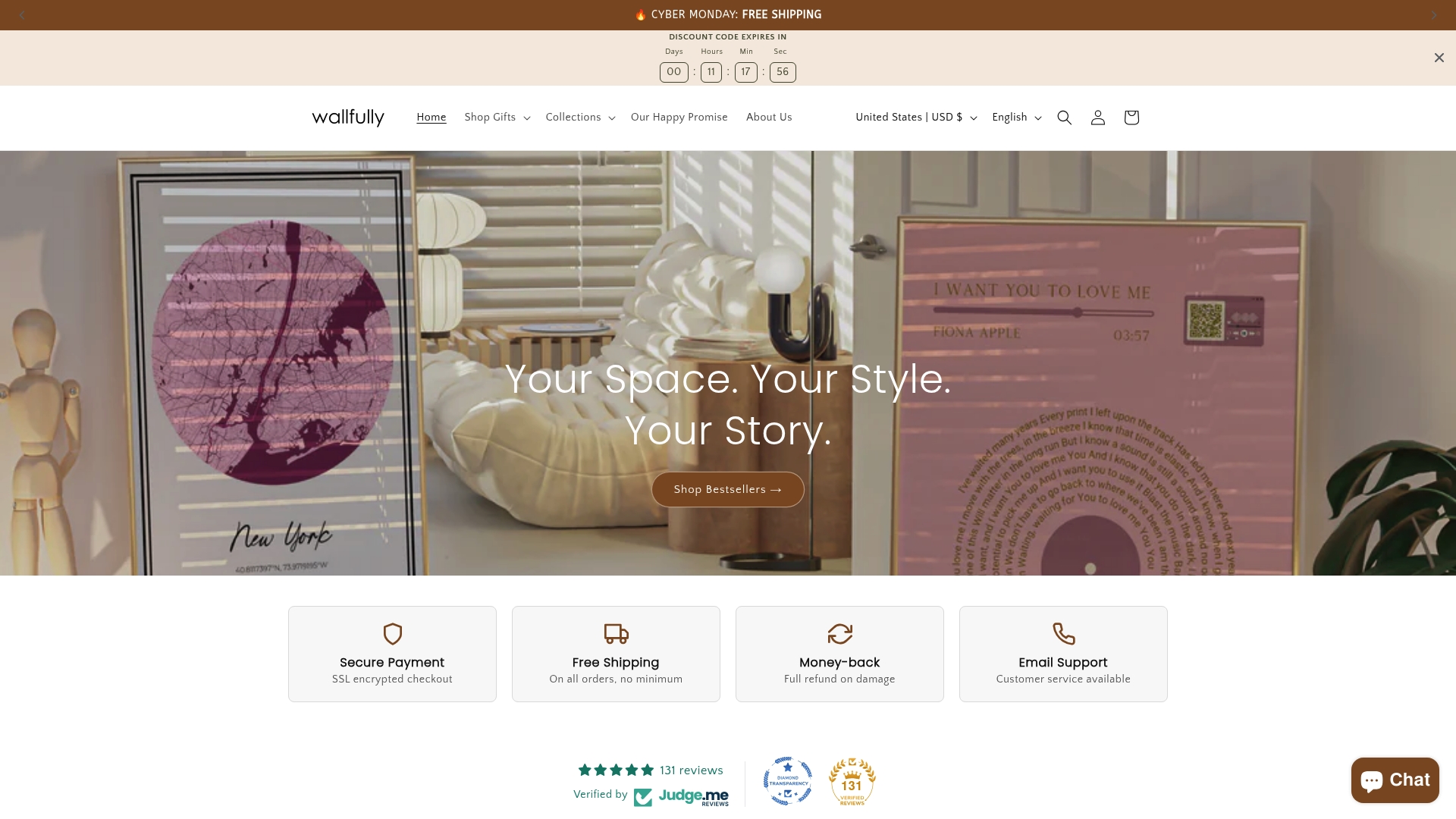
Our personalized wall art collection makes it easy to create something meaningful with a guided process, real previews, and eco-friendly printing. Free shipping is included on every order, and our satisfaction guarantee means you can shop with confidence. If you’ve been waiting for the right moment to transform your space or find a gift that actually means something, this is it.
Frequently asked questions
Does personalized decor really add value to my home?
Personalized decor adds significant emotional value and improves daily satisfaction, but for resale purposes, neutral staging typically delivers a stronger financial return. Think of personalization as an investment in your quality of life, not your listing price.
What are the easiest ways to personalize a rental space?
Focus on portable, non-permanent items like custom wall art, layered textiles, and freestanding furniture. Renter-friendly personalization gives you maximum impact without risking your deposit.
How can I make personalized decor sustainable?
Look for pieces made with recycled or FSC-certified materials and support small-batch creators who use responsible production methods. The global wall art market is responding to this demand with more eco-conscious options every year.
Why is personalized decor so popular among millennials?
Millennials prioritize self-expression and functionality in their homes, with 63% customizing their spaces to match their personal tastes and needs. For this generation, a home that doesn’t reflect who they are simply doesn’t feel like home.