
The Gift Personalization Process: A Step-by-Step Guide
WallfullyTL;DR:
- Gift personalization creates emotional bonds by customizing gifts to reflect the recipient’s identity and preferences. The process takes 7 to 14 weeks, requiring careful planning, detail confirmation, and matching personalization style to the recipient’s well-being orientation. Thoughtful effort and early planning deliver more impact than higher spending or generic gifts.
Gift personalization is the practice of customizing a gift to reflect the recipient’s identity, memories, or preferences, creating an emotional connection that generic gifts cannot replicate. The gift personalization process covers everything from your first design idea to the moment a finished, custom piece arrives at someone’s door. Personalized gifts activate psychological levers including perceived effort, identity reinforcement, and irreplaceability, producing stronger emotional bonds and higher gratitude scores than standard gifts. Getting this process right requires clear steps, realistic timelines, and a genuine understanding of who you are gifting.
What are the key steps in the gift personalization process?
The gift personalization process follows a clear sequence. Skipping any step increases the chance of errors, delays, or a gift that misses the mark emotionally.
Step 1: Define the recipient and occasion. Start by writing down three things you know to be true about the person: a shared memory, a defining interest, and a milestone they have recently crossed. A wedding anniversary calls for something different than a college graduation. This framing shapes every decision that follows.
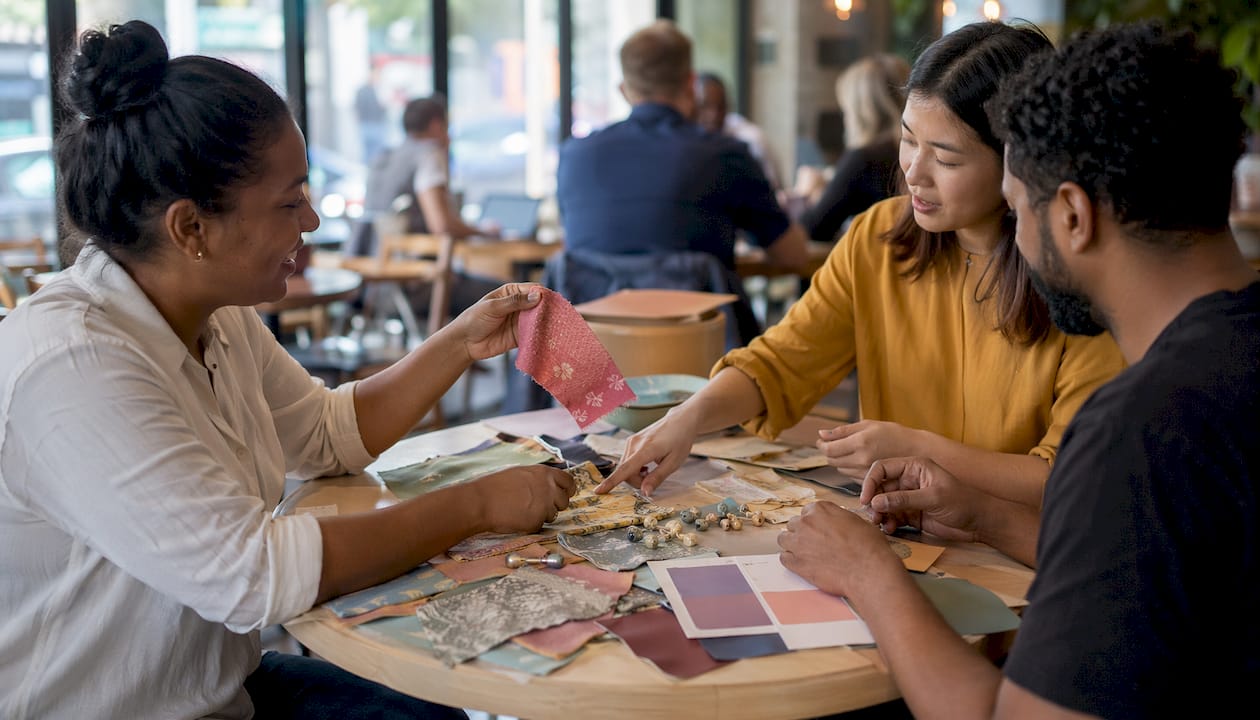
Step 2: Select a gift type suited to customization. Not every product personalizes equally well. Wall art, custom maps, photo collages, engraved jewelry, and embroidered textiles all carry different production requirements and emotional registers. Choose the format before you choose the design details.
Step 3: Make your design and customization choices. This is where printing, engraving, embroidery, or photo editing enters the picture. Decide on text, images, color palette, size, and finish. Successful customization platforms enforce guardrails like minimum image resolution and maximum text length to prevent errors before production begins. Use those guardrails as a checklist, not a nuisance.
Step 4: Confirm every detail before submission. Read names, dates, and locations twice. A typo on a custom map or a wrong anniversary year cannot be fixed after printing without restarting production. Cross-reference spellings against official documents when the stakes are high.
Step 5: Review the proof or digital preview. Most quality personalization services provide a preview before committing to production. Approve it only after checking every element at 100% zoom. This stage is your last chance to catch errors at no extra cost.
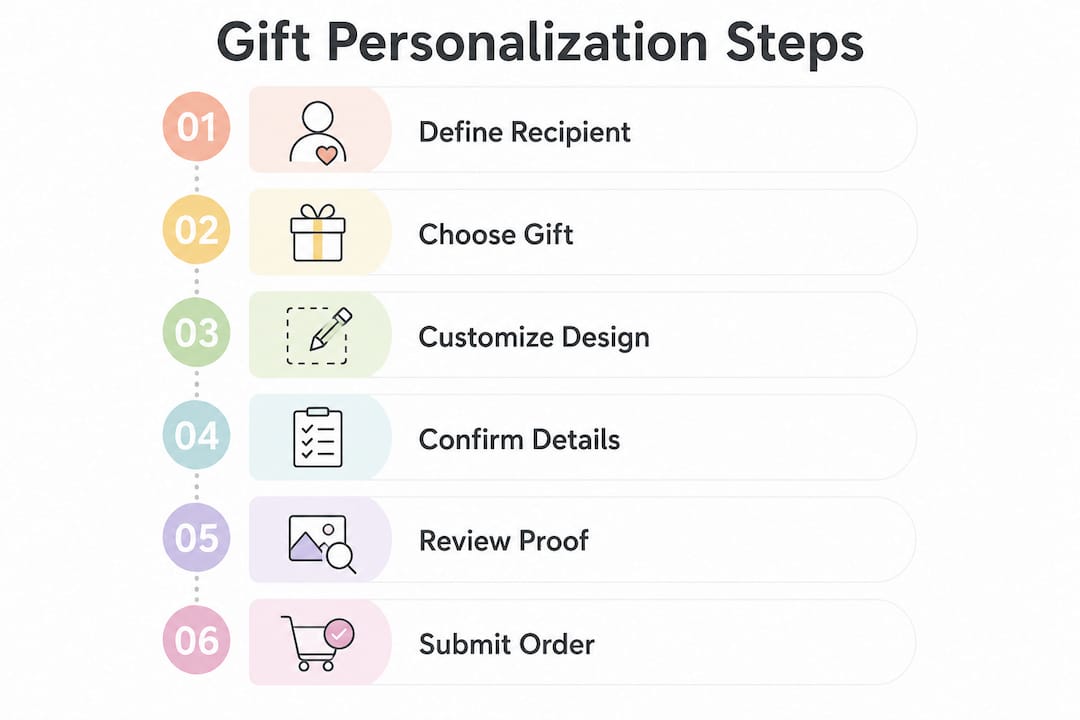
Step 6: Submit and track production. Once approved, the gift enters the production queue. Keep your order confirmation and estimated completion date. If the platform provides progress indicators, check them rather than contacting support prematurely.
Pro Tip: Write your personalization details in a plain text document first, then copy and paste them into the order form. This eliminates autocorrect errors that slip through when typing directly into web forms.
How long does the gift personalization process take?
The full timeline for a personalized gift runs longer than most people expect. A typical personalized gift spans 7–14 weeks from initial design through delivery, broken into four distinct phases.
| Phase | Typical Duration | What Happens |
|---|---|---|
| Pre-production | 2–4 weeks | Design approval, sampling, tooling setup |
| Production | 2–4 weeks | Manufacturing, printing, or fabrication |
| Shipping | 2–4 weeks | Transit from facility to recipient |
| Buffer | 1–2 weeks | Absorbs delays from typos, carrier backlog, or remakes |
The pre-production phase catches most people off guard. Design approval and sampling alone add 2–4 weeks before a single item enters manufacturing. Treating the production lead time as the total timeline is the single most common planning mistake.
For major occasions like Christmas or a milestone birthday, the math gets tighter fast. Complex gift campaigns require a 12-week head start, with artwork finalized by week 8. That means starting in september for a december delivery. Most people start in november and wonder why their gift arrives in january.
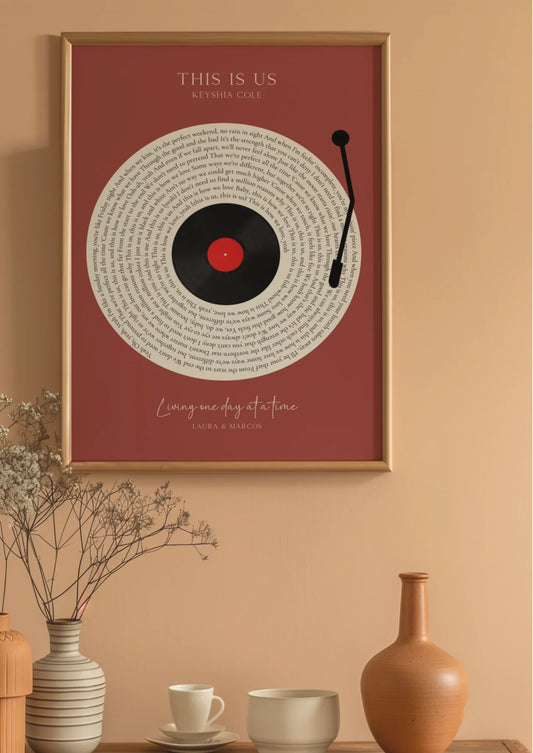
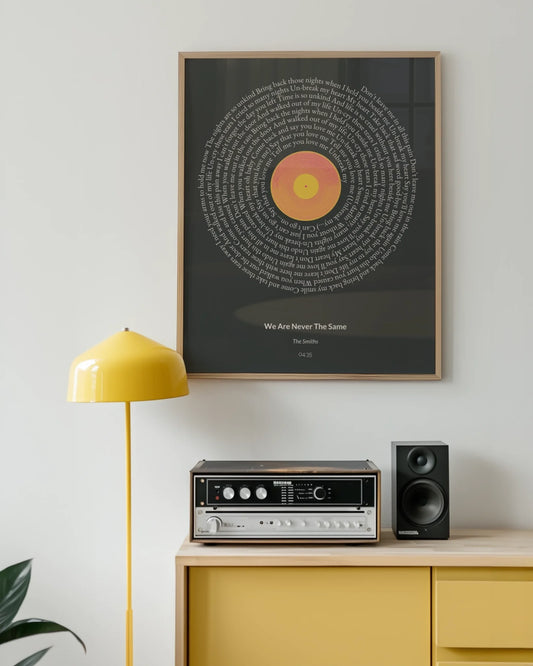
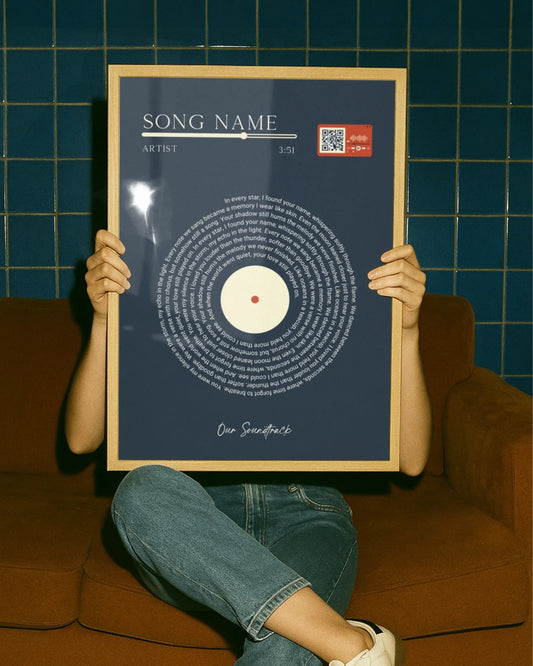
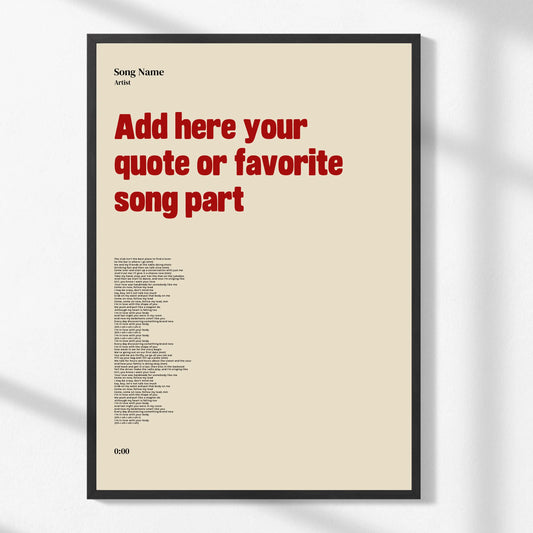
Simpler personalized gifts, like a custom poster or a song lyric print from Wallfully, compress this timeline significantly. Digital printing and guided online customization tools cut pre-production to hours rather than weeks. Still, building a 1–2 week buffer into any personalized order protects against carrier delays and last-minute corrections.
Pro Tip: Order personalized gifts for major holidays by the first week of november at the latest. Carrier networks slow down significantly after the third week of november, and production queues fill up fast.
How do you choose personalization options that resonate?
Choosing the right customization details separates a gift that gets displayed from one that gets stored in a closet. The key is matching the personalization style to the recipient’s well-being orientation.
Research with 574 participants shows that personalized gifts land better when they align with the recipient’s orientation: hedonic (pleasure and enjoyment) or eudaimonic (meaning and purpose). A person who values experiences and fun responds differently to a gift than someone who values reflection and legacy.
Use these questions to guide your choices:
- Does this person celebrate milestones publicly or privately? Public celebrators often love bold, display-worthy pieces. Private types prefer intimate, understated personalization.
- What shared memory carries the most weight? A specific date, a location, a song, or a phrase you both know. Specificity signals effort.
- Does the personalization serve their daily life or their emotional life? A custom map of where they met their partner serves both. A generic “best friend” print serves neither.
- What aesthetic fits their home or style? A beautifully personalized gift that clashes with someone’s decor gets hidden. Check their Instagram or Pinterest if you are unsure.
- Is the message timeless or time-sensitive? Avoid inside jokes that will feel dated in five years. Anchor the personalization to something permanent: a name, a place, a date.
Choosing personalized gifts that truly delight requires thinking about the recipient’s life, not just the occasion. The effort signal, not the price tag, drives appreciation. Thoughtful customization outperforms higher spending as relationships mature, which means a $40 custom print chosen with care beats a $150 generic luxury item every time.
Gift givers also fall into what researchers call the desirability-feasibility gap: focusing on excitement over practical fit. A dramatic, elaborate gift might excite you to give, but the recipient may find it impractical or overwhelming. Balance creativity with what the person will actually use and display.
What are common mistakes in the gift personalization process?
Most personalization problems are preventable. They cluster around four failure points.
- Incomplete or incorrect details. A missing middle name, a wrong year, or a misspelled location ruins a custom piece. Always verify details against a reliable source before submitting.
- Underestimating the timeline. Assuming a personalized gift works like an in-stock product is the fastest path to a late delivery. Pre-production alone adds weeks that most people do not account for.
- Skipping the proof stage. Approving a digital preview takes five minutes. Restarting production after an error takes two weeks and often costs money. Never skip the proof.
- Ignoring seasonal ordering pressure. December, Valentine’s Day, and Mother’s Day create production backlogs across the industry. Ordering even one week late during peak season can push delivery past the occasion.
“Shipping speed does not accelerate production. A two-day shipping upgrade on a gift that has not finished manufacturing will not save a late order. The buffer week exists precisely for this reason. Build it in from the start, and you will never scramble.”
When delays do happen, contact the platform immediately with your order number and the occasion date. Most quality services will prioritize remakes or offer expedited options when given enough lead time. Panicking at the last minute with no buffer leaves you with no good options. Exploring unique gift alternatives with shorter production cycles is also a practical backup when timelines collapse.
Key Takeaways
The gift personalization process succeeds when you align recipient psychology, design choices, and production timelines from the very first step.
| Point | Details |
|---|---|
| Start earlier than you think | Full personalization timelines run 7–14 weeks; start at least 12 weeks out for major occasions. |
| Match personalization to the recipient | Align customization style with hedonic or eudaimonic preferences for stronger emotional impact. |
| Never skip the proof stage | Reviewing the digital preview before production is your only cost-free chance to catch errors. |
| Build in a buffer week | Add 1–2 weeks to every timeline to absorb carrier delays, typos, or unexpected remakes. |
| Effort beats price every time | Thoughtful, specific personalization outperforms expensive generic gifts as relationships deepen. |
Why personalization is worth every extra step
I have watched people spend three times more on a gift and get half the emotional response of someone who spent an afternoon thinking carefully about one specific detail. That gap never stops being instructive.
The mistake most people make is treating personalization as decoration. They pick a generic product and add a name to it. Real personalization starts with the recipient and works backward to the object. When you understand the role of personalization in gifting, you stop asking “what should I get?” and start asking “what does this person need to feel seen?”
The logistics matter too, and I will not pretend otherwise. Missing a delivery date because you underestimated the timeline is genuinely painful, especially for a milestone occasion. But the solution is not to avoid personalized gifts. It is to plan them with the same seriousness you would give any meaningful project. Set a calendar reminder three months before the occasion. Finalize your design details before you even open the order form. Approve the proof the same day it arrives.
The effort you put into the process is exactly what the recipient feels when they open the gift. That is not sentiment. That is psychology.
— Luanda
Wallfully makes custom gift creation straightforward
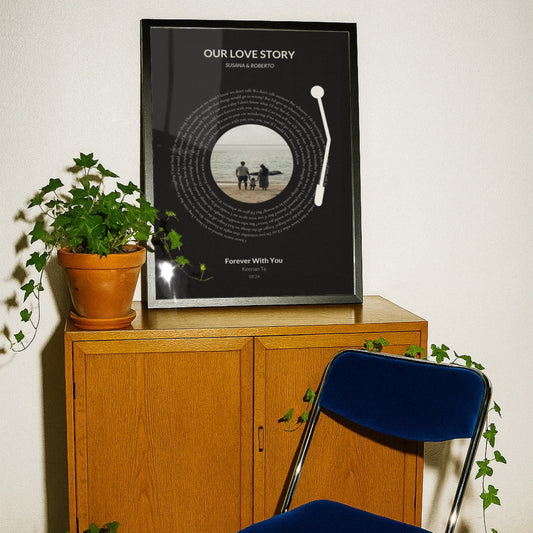
Wallfully specializes in personalized wall art that turns meaningful details into display-worthy prints. Song lyric posters, custom maps, photo collages, zodiac prints, and milestone art are all built through a guided customization process with live previews, so you see exactly what you are ordering before it goes to print.
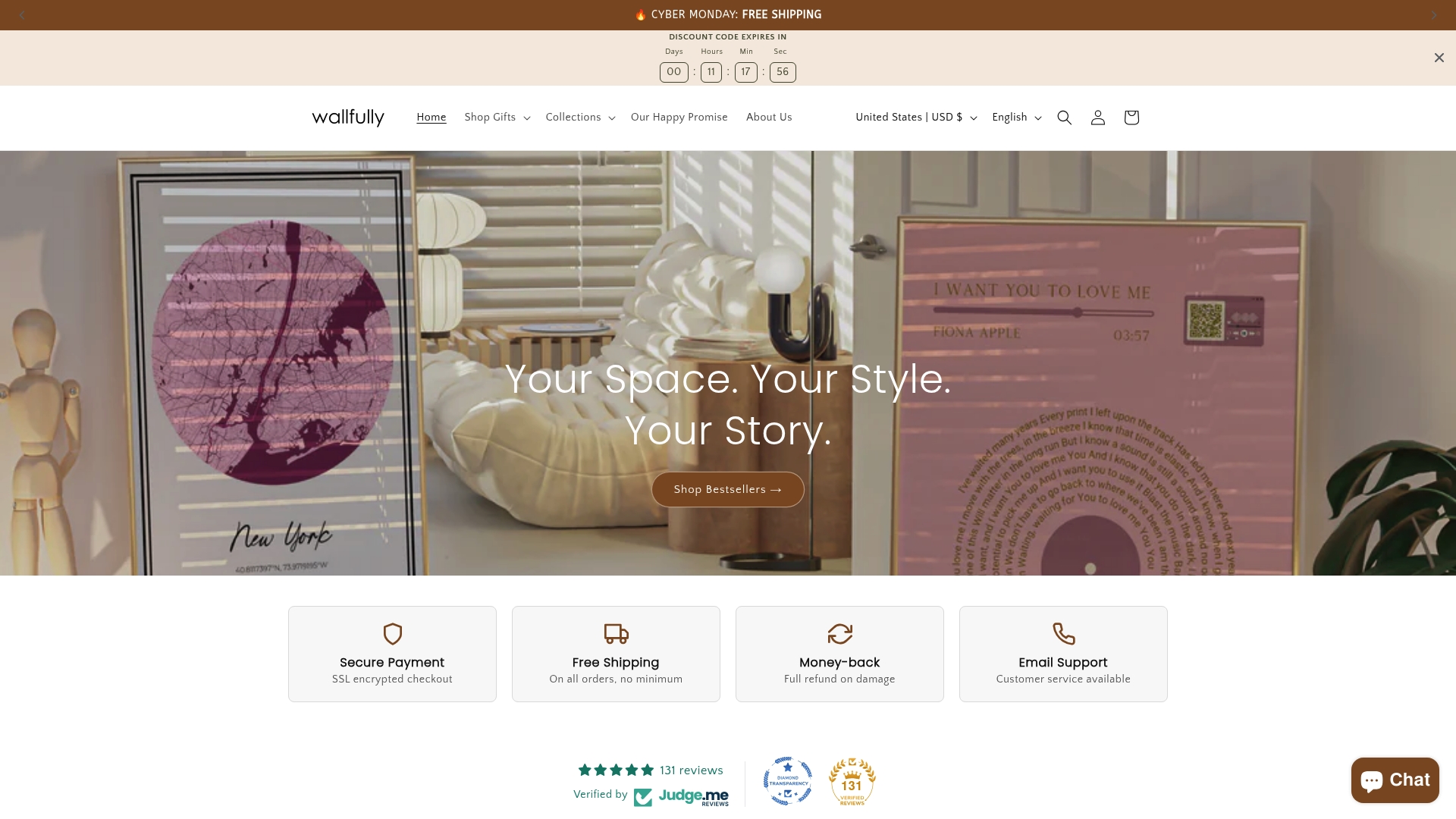
Every order ships free, and Wallfully backs each print with a satisfaction guarantee and eco-friendly materials. The step-by-step custom art process is designed to prevent the most common personalization errors before they reach production. Whether you are gifting for a birthday, anniversary, or holiday, Wallfully gives you the tools to get the details right the first time.
FAQ
What is the gift personalization process?
The gift personalization process is the sequence of steps used to customize a gift, from selecting the recipient’s details and design choices through proof approval and final delivery. It typically includes pre-production, production, shipping, and a buffer phase.
How early should I start personalizing a gift?
For major occasions like Christmas or a milestone anniversary, start at least 12 weeks in advance. Simpler digital print orders from platforms like Wallfully compress that timeline significantly, but a 1–2 week buffer is always worth building in.
Does a more expensive personalized gift have more impact?
No. Thoughtful customization outperforms higher price as relationships deepen. The effort signal, not the monetary value, drives appreciation and strengthens emotional bonds over time.
What is the most common mistake in gift personalization?
Skipping the proof stage is the most costly mistake. Approving a digital preview before production is the only point where errors can be corrected without restarting the entire manufacturing process.
How do I choose the right personalization details?
Match the customization to the recipient’s well-being orientation. Hedonic recipients respond to pleasure-focused, celebratory details, while eudaimonic recipients connect more deeply with meaningful symbols, dates, or shared memories.