
Why Personalization Is Trending: What You Need to Know
WallfullyTL;DR:
- Personalization is increasingly driven by AI, unified data, and rising consumer expectations for relevant interactions. Consumers prefer personalized experiences because they foster trust, reduce effort, and strengthen emotional connections. Effective scaling requires breaking down organizational silos and maintaining transparency to build genuine customer loyalty.
Personalization is the practice of tailoring experiences, products, and communications to the individual preferences and behaviors of each consumer. It is the defining force behind modern marketing and customer engagement, and it is accelerating fast. Nearly 75% of consumers are more likely to buy from brands that personalize, and those brands generate up to 40% more revenue than peers who do not. Why personalization is trending comes down to three converging forces: advances in AI, the rise of unified customer data, and a fundamental shift in what consumers expect from every brand interaction.
Why personalization is trending now: the AI and data revolution
Static personalization is dying. Inserting a customer’s first name into an email or recommending products based on a single past purchase no longer moves the needle. Static purchase-history personalization dropped in effectiveness by 24% as of early 2026, with consumers increasingly viewing it as lazy or even intrusive. The industry has moved on to something far more powerful.
The new standard is called agentic personalization. It actively orchestrates a customer’s entire journey based on real-time intent, sentiment, and context rather than fixed rules. Think of it as the difference between a store clerk who remembers your name and one who already knows what you need before you ask. Generative AI now enables predictive personalization that anticipates consumer needs before those consumers have expressed them.
The adoption numbers confirm this shift is mainstream, not experimental. 60% of consumers interact with AI weekly, and 73% of B2C marketers already use or actively explore AI for personalization. That level of adoption means AI-driven personalization is no longer a competitive edge. It is the baseline expectation.
Underneath all of this sits the unified customer data platform. Brands that connect data from sales, marketing, and customer support can build a complete picture of each person. Without that unified view, personalization breaks down into contradictory messages that confuse and frustrate customers. The technology is ready. The brands that invest in connecting their data are the ones pulling ahead.
Pro Tip: If you want to evaluate how well a brand personalizes for you, check whether their recommendations change based on your recent behavior, not just your first purchase. Real-time adaptation is the hallmark of modern personalization.
- Agentic personalization adapts in real time to intent and context, not static rules.
- Generative AI predicts what customers want before they search for it.
- 73% of B2C marketers use or explore AI for personalization.
- Unified data platforms connect sales, marketing, and support into one customer view.
- Static personalization based on purchase history has lost significant effectiveness.
Why do consumers prefer and expect personalization?
The psychological pull of personalization is stronger than most brands realize. Feeling known and understood by a brand triggers the same emotional response as being recognized by a person. That feeling reduces anxiety around purchase decisions and cuts buyer’s remorse significantly. Personalization builds 1:1 relationships that triple the likelihood of customer retention.
Consumer demand for tailored experiences has also shifted from preference to expectation. The majority of shoppers now assume brands will use their data to serve them better. When a brand fails to do that, it does not feel neutral. It feels like the brand does not care.
“Consumers now expect digital interactions to feel as relevant and connected as human relationships. Brands that meet that expectation build loyalty. Brands that miss it lose customers to those that do.”
Loyalty is the real payoff. Customers who feel a brand understands them come back more often, spend more per visit, and refer others. The benefits of personalization compound over time because each interaction adds data that makes the next one better.
There is a nuance worth understanding, though. Personalization works best when it feels helpful rather than surveillance-like. 21% of consumers feel uncomfortable when AI personalization appears too familiar or inauthentic. Transparency about how data is used is not just a legal requirement. It is a trust signal that separates brands consumers love from brands they tolerate.
Here is what drives consumer preference for personalized experiences:
- Relevance reduces friction. Seeing exactly what you need, when you need it, removes the mental effort of searching.
- Recognition builds trust. Brands that remember your preferences signal that they value you as an individual.
- Reduced regret. Tailored recommendations lead to better purchase decisions and fewer returns.
- Emotional connection. Personalized products and communications create memories, not just transactions.
- Time savings. Relevant content and product suggestions cut the time spent browsing by a significant margin.
How personalization is reshaping retail, gifts, and everyday life
Personalization trends extend well beyond email subject lines and product recommendations. Retail has been transformed at every touchpoint, from the moment a customer lands on a website to the physical product they receive. Personalized retail experiences create deep emotional connections that drive higher repeat purchase rates and long-term loyalty.

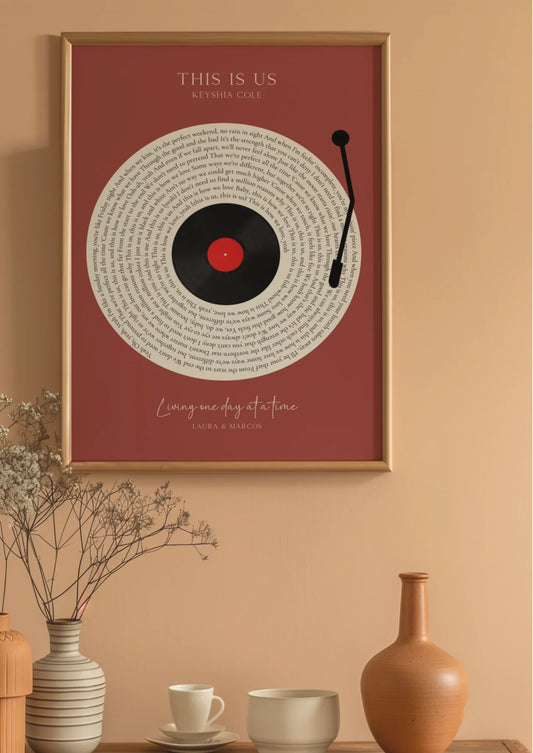
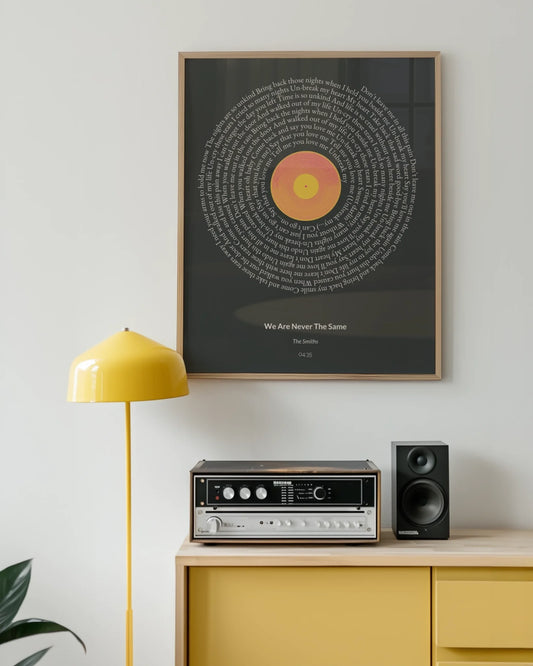
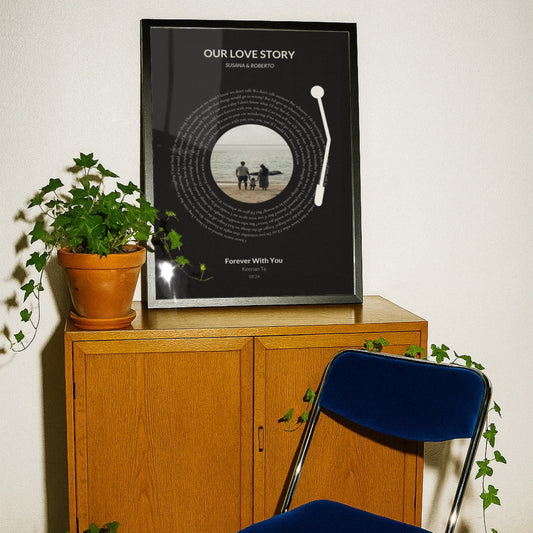
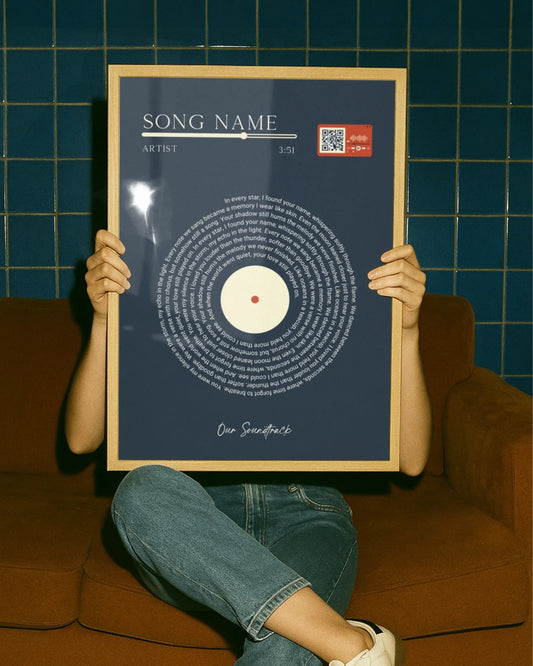
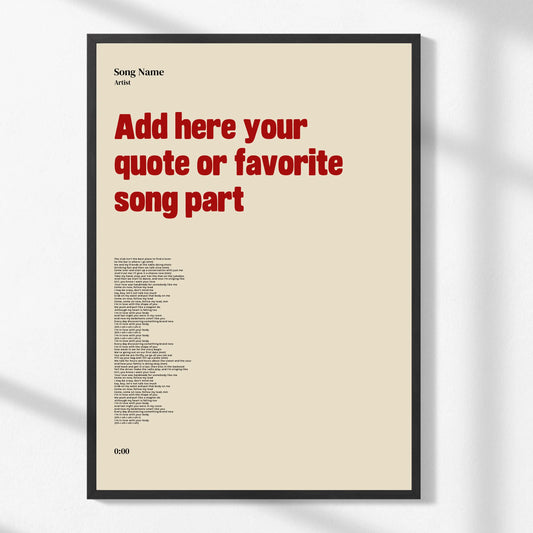
The gift market is one of the clearest examples of this shift. Generic gifts are losing ground to items that carry personal meaning: a poster printed with the coordinates of a meaningful place, a custom print featuring the lyrics of a song tied to a specific memory, or a photo collage that tells a family’s story. These products do not just decorate a wall. They mark a moment in time that matters to the recipient.
| Experience type | Generic approach | Personalized approach |
|---|---|---|
| Home decor | Mass-produced print | Custom map, lyric poster, or milestone print |
| Gift giving | Standard item from a catalog | Item tied to a specific date, name, or location |
| Marketing message | Broadcast email to all customers | Message based on past behavior and stated preferences |
| Retail recommendation | Bestseller list | Curated suggestions based on browsing and purchase history |
Technology is also reshaping how personalization shows up in everyday life. Streaming platforms use listening and viewing history to surface content you did not know you wanted. Fitness apps adapt workout plans to your progress and recovery data. Custom poster trends in 2025 showed that consumers increasingly want physical products that reflect their digital identity, blending technology and personal style into tangible objects.
Pro Tip: When shopping for a gift, ask yourself whether the item could belong to anyone or only to that specific person. The more specific the answer, the more meaningful the gift.
The personal relationships angle is underappreciated. Personalization in gifting and decor signals effort and attention. Research consistently shows that personalized gifts create deeper connections than generic alternatives because they communicate that the giver paid attention. That signal matters more than the price tag.
What makes scaling personalization so difficult?
Personalization at scale is harder than it looks from the outside. The biggest obstacle is not technology. It is organizational structure. Most brands store customer data in separate systems across sales, marketing, and customer support. When those systems do not talk to each other, the result is the “Empathy Paradox”: a brand that claims to know its customers but sends contradictory messages that prove it does not. Unified data across departments is the single most important structural requirement for effective personalization.
Marketing budgets allocated to personalization increased by 30% in 2025 compared to the previous year. That investment signals intent, but money alone does not solve the cultural problem. Brands that scale personalization successfully treat it as a company-wide priority, not a marketing department project.
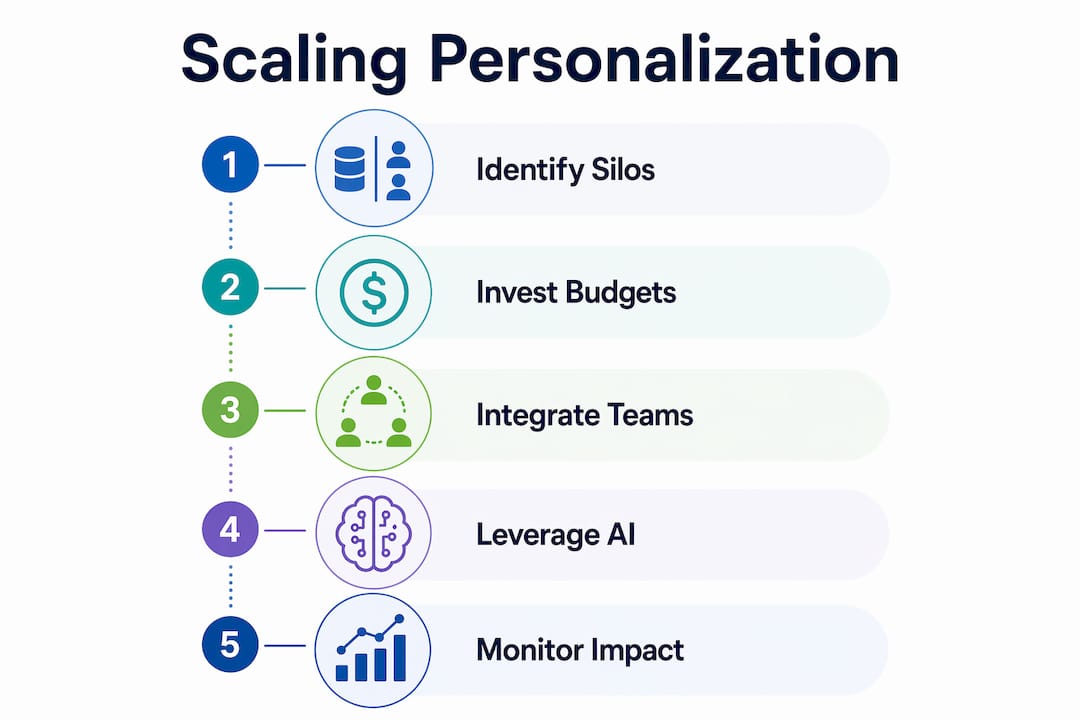
The compliance dimension adds another layer of complexity. Privacy regulations like GDPR and CCPA require brands to be transparent about data collection and use. Brands that handle this well turn compliance into a trust advantage. Brands that ignore it face both legal risk and customer backlash.
Key obstacles brands face when scaling personalization:
- Data silos across sales, marketing, and support create contradictory customer experiences.
- Compliance gaps with privacy regulations erode customer trust and create legal exposure.
- Over-familiarity in AI-driven messaging makes 21% of consumers uncomfortable.
- Cultural resistance within organizations that treat personalization as a campaign rather than a strategy.
- Technology fragmentation when multiple platforms cannot share data in real time.
Businesses that scale personalization successfully break down internal silos and treat it as a cultural foundation rather than a marketing task. That shift requires leadership commitment, not just a new software subscription.
Key Takeaways
Personalization is trending because AI, unified data, and rising consumer expectations have made tailored experiences the standard, not the exception, across retail, marketing, and everyday life.
| Point | Details |
|---|---|
| AI drives the shift | Agentic personalization adapts in real time, replacing static purchase-history approaches that lost 24% effectiveness. |
| Consumer demand is high | 75% of consumers prefer brands that personalize, and those brands earn up to 40% more revenue. |
| Emotional impact is real | Personalized gifts and decor create deeper connections and triple the likelihood of customer retention. |
| Data unification is critical | Brands must connect sales, marketing, and support data to avoid contradictory messages and the Empathy Paradox. |
| Trust requires transparency | 21% of consumers feel uncomfortable with overly familiar AI, making clear data practices a competitive advantage. |
Personalization will keep accelerating. Here is what that means for you.
I have watched personalization shift from a marketing buzzword to a genuine behavioral science in a short span of time. The change that stands out most to me is not the technology. It is the expectation gap. Consumers now arrive at every brand interaction already expecting to be known. When that expectation is not met, the brand does not just miss a sale. It loses a relationship.
What I find most interesting is how this plays out in physical products. Digital personalization is everywhere, but there is something uniquely powerful about holding an object that was made specifically for you or someone you love. A poster printed with the exact coordinates of the city where two people met carries weight that no algorithm can replicate. The role of personalization in gifting is not just commercial. It is deeply human.
My advice for consumers navigating this trend: pay attention to which brands actually adapt to you over time versus which ones just use your name in a subject line. The difference is obvious once you know what to look for. And when you are choosing a gift, lean into specificity. The more personal the detail, the more the gift communicates that you were paying attention. That is what people remember.
— Luanda
Personalized wall art and gifts at Wallfully
Personalization is not just a trend to observe. It is something you can put on your wall.
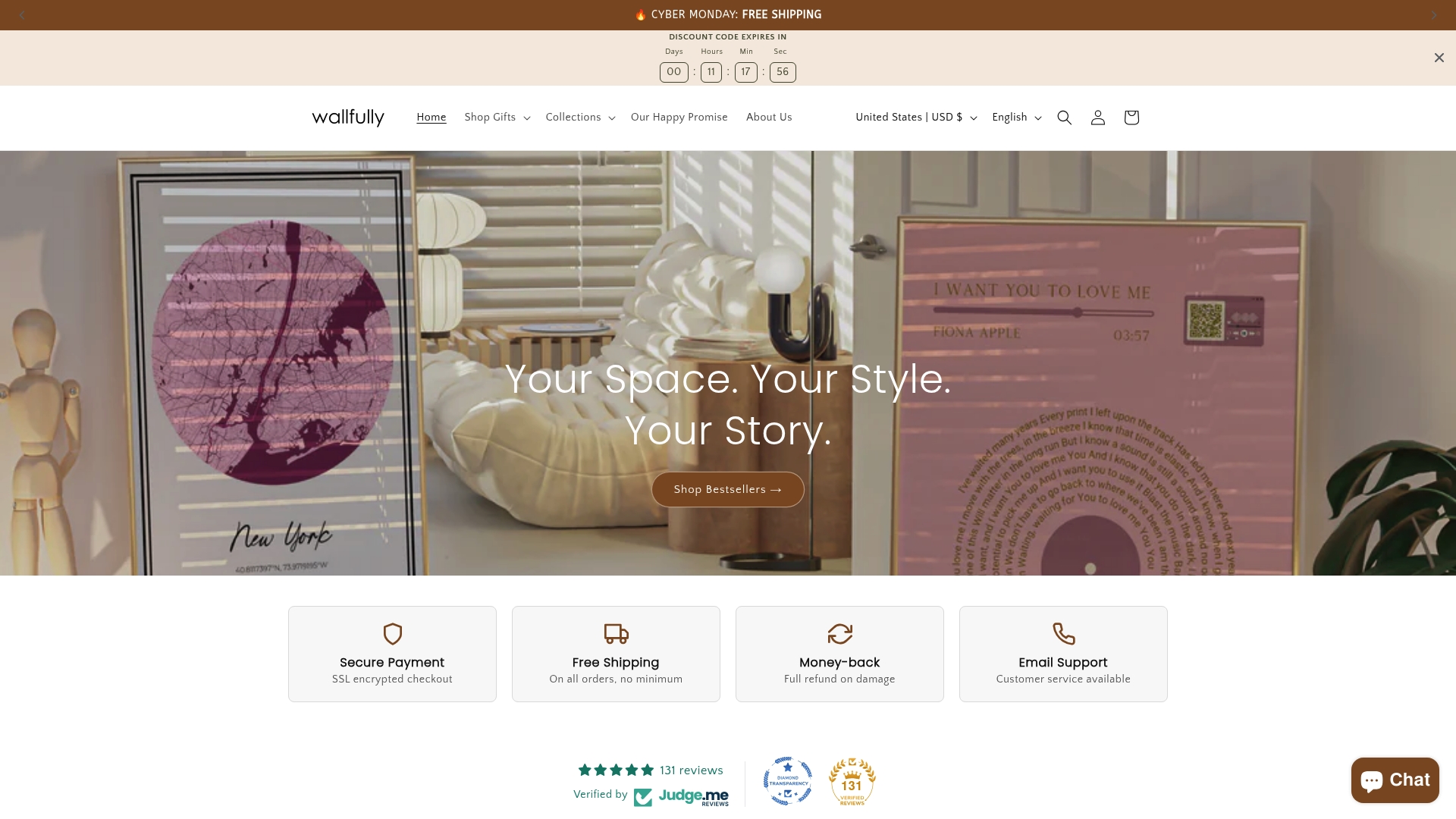
Wallfully specializes in custom prints that turn personal details into lasting decor. Song lyric posters, city map prints, zodiac art, milestone prints, and photo collages are all built around the details that make your story unique: a name, a date, a place, a memory. Every order ships free, prints on eco-friendly materials, and comes with a satisfaction guarantee. If you are looking for a gift that actually means something, or a piece of decor that reflects who you are, visit Wallfully to create something made specifically for you.
FAQ
Why is personalization trending so strongly right now?
Personalization is trending because AI now enables brands to adapt experiences in real time based on individual behavior, and consumers have come to expect that level of relevance in every interaction.
What are the main benefits of personalization for consumers?
Personalization reduces the effort of finding relevant products, builds trust with brands, and leads to better purchase decisions with less regret. It also creates stronger emotional connections, especially in gifting and decor.
How does personalization affect consumer behavior?
Personalized experiences triple the likelihood of retention and make consumers significantly more likely to purchase, return, and refer others to a brand.
What is agentic personalization?
Agentic personalization is an AI-driven approach that orchestrates a customer’s journey in real time based on intent, sentiment, and context, rather than relying on fixed rules or past purchase history alone.
How can consumers tell if a brand personalizes well?
A brand personalizes well when its recommendations and communications change based on your recent behavior, not just your first interaction. Real-time adaptation, not just name insertion, is the true signal.