
Eco-Friendly Wall Art Explained: Sustainable Decor
WallfullyWalk into any home decor store or scroll through an online marketplace and you’ll find dozens of products wearing the “eco-friendly” badge. But how many of them actually earn it? Greenwashing is common in the art and design world, where vague labels get slapped onto products without any real proof. For eco-conscious shoppers, this creates a frustrating maze of half-truths and marketing spin. This guide cuts through the noise. You’ll learn exactly what eco-friendly wall art means, which materials and certifications matter, and how to shop with confidence so your home decor choices reflect your actual values.
Table of Contents
- What does ‘eco-friendly’ actually mean for wall art?
- Materials, processes, and certifications: Separating fact from fiction
- Popular types of eco-friendly wall art for your home
- How to choose eco-friendly wall art: Tips for smart, sustainable buying
- The uncomfortable truth: Why ‘eco-friendly’ labels alone aren’t enough
- Discover truly eco-friendly artwork at Wallfully
- Frequently asked questions
Key Takeaways
| Point | Details |
|---|---|
| Scrutinize green claims | Many ‘eco-friendly’ labels lack real proof, so always check for clear details and transparency. |
| Choose sustainable materials | Opt for wall art made from recycled, certified, or natural resources to lower your decor footprint. |
| Look for third-party certifications | Certifications like FSC add credibility to sustainability claims in wall art. |
| Explore personal, sustainable styles | Handmade, upcycled, and custom options let you blend unique style with sustainability. |
What does ‘eco-friendly’ actually mean for wall art?
With so many products claiming the eco-friendly label, it’s essential to break down what that actually means for wall art.
At its core, “eco-friendly” wall art refers to pieces created with minimal harm to the environment. That covers the full lifecycle: raw materials, production methods, packaging, shipping, and even what happens when the piece eventually leaves your wall. A truly sustainable artwork considers every one of those stages, not just one or two.
So what qualifies? Genuine eco-friendly wall art typically uses recycled or sustainably sourced materials, non-toxic water-based inks, and low-waste production processes. It’s made by brands that can actually show their work, not just claim it. Defining eco-friendly wall art goes deeper than a single label.
“Vague terms like ‘eco-friendly’ without proof are a red flag. Real sustainability means transparency, specific metrics, and third-party verification.”
Here’s where most shoppers get tripped up. Greenwashing, the practice of making misleading environmental claims, is widespread. A brand might use one recycled component and call the whole product green. Or they’ll use nature-themed imagery and earthy colors to create a feeling of sustainability without any substance behind it.
| Genuine eco-friendly indicator | Greenwashing red flag |
|---|---|
| FSC-certified paper or wood | “Natural” with no specifics |
| Water-based, non-toxic inks | “Eco-conscious” with no proof |
| Third-party certification | Self-made green logo |
| Transparent supply chain | Vague origin claims |
| Minimal or recycled packaging | Recyclable label on non-recyclable item |
Experts advise checking for transparency, specific metrics, and avoiding self-made labels when evaluating any eco-friendly claim. If a brand can’t tell you exactly what makes their product sustainable, that’s your answer.
Pro Tip: Search for a brand’s sustainability page before buying. If it’s full of stock photos of forests but short on actual data, keep looking.
Materials, processes, and certifications: Separating fact from fiction
Understanding the meaning isn’t enough. Next, let’s look at what goes into making eco-friendly wall art truly sustainable.
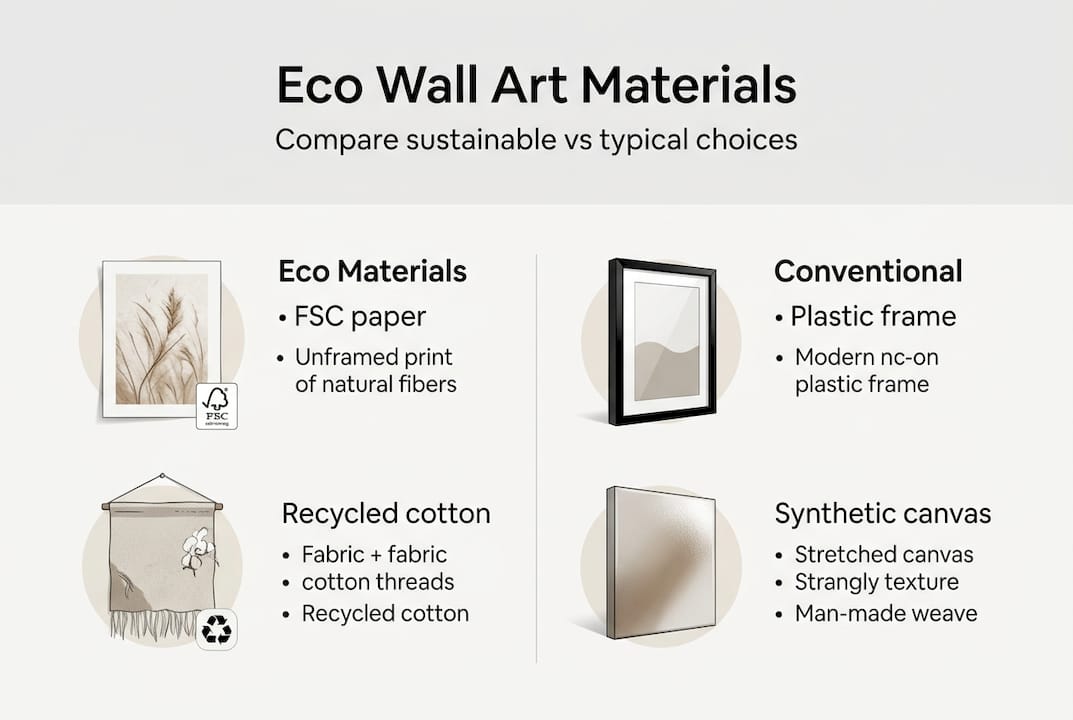
The materials used in wall art vary enormously, and their environmental impact does too. Here’s a quick comparison of common options:
| Material | Eco-friendly option | Conventional alternative |
|---|---|---|
| Paper/canvas | FSC-certified, recycled cotton | Virgin wood pulp, synthetic canvas |
| Frame | Reclaimed or FSC wood, recycled metal | Plastic, non-certified wood |
| Ink | Water-based, soy-based | Solvent-based, petroleum-derived |
| Packaging | Recycled cardboard, no plastic | Styrofoam, single-use plastic |
Beyond materials, production methods matter just as much. Low-energy printing, local manufacturing, and print-on-demand models all reduce waste significantly. Print-on-demand, in particular, eliminates overproduction since pieces are only made when ordered. That’s a major advantage over mass-produced decor that often ends up in landfills unsold.

For a thorough breakdown, the wall art materials overview at Wallfully covers the most common options and their real-world impact.
When it comes to certifications, not all labels carry the same weight. Here are the ones worth trusting:
- FSC (Forest Stewardship Council): Verifies that wood and paper come from responsibly managed forests.
- Green Seal: A rigorous third-party standard covering environmental performance across products.
- OEKO-TEX Standard 100: Confirms textiles are free from harmful substances.
- Rainforest Alliance: Covers sustainable farming and forestry practices.
Selective disclosure and green imagery can mislead buyers, so checking for specific materials and recognized certifications is the most reliable way to verify claims.
Pro Tip: When a brand lists certifications, look them up directly on the certifying organization’s website. Legitimate certifications are searchable and verifiable.
Popular types of eco-friendly wall art for your home
With the essentials of genuine eco-friendliness in mind, consider these popular wall art options for a greener home.
The good news is that sustainable wall art has never been more varied or visually compelling. You don’t have to sacrifice style to shop responsibly.
Handmade and upcycled art sits at the top of the sustainability ladder. Pieces made from reclaimed wood, vintage fabrics, or repurposed materials give new life to existing resources. Handmade wall decor also tends to be one-of-a-kind, which adds meaning beyond the aesthetic.
Print-on-demand custom art is one of the fastest-growing sustainable options. Because pieces are printed only when ordered, there’s virtually no overproduction waste. Print-on-demand wall art paired with eco-friendly inks and certified paper creates a genuinely low-impact product. It’s also highly personalizable, making it ideal for gifts.
Here are some of the most popular eco-friendly wall art styles right now:
- Botanical prints: Celebrate nature while using minimal ink and sustainable paper
- Minimalist line art: Less ink, less waste, and endlessly versatile for any room
- Custom map posters: Meaningful and location-specific, often printed on demand
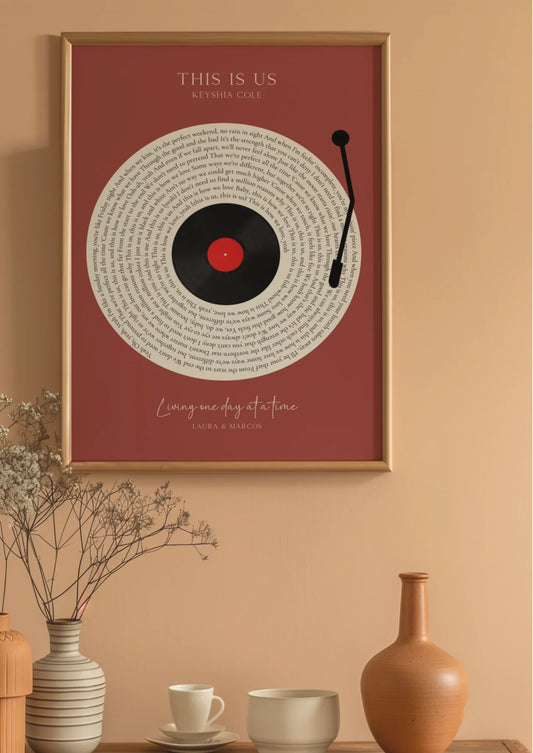
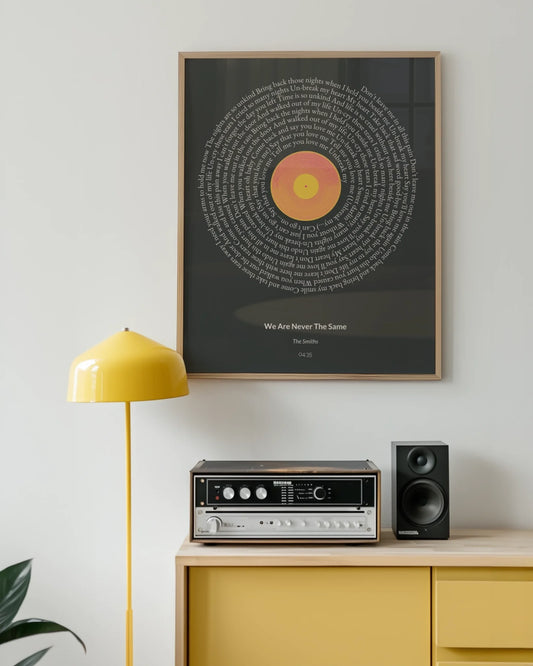
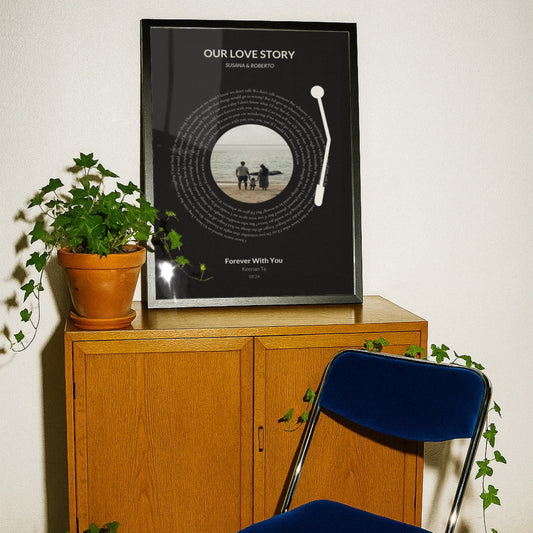
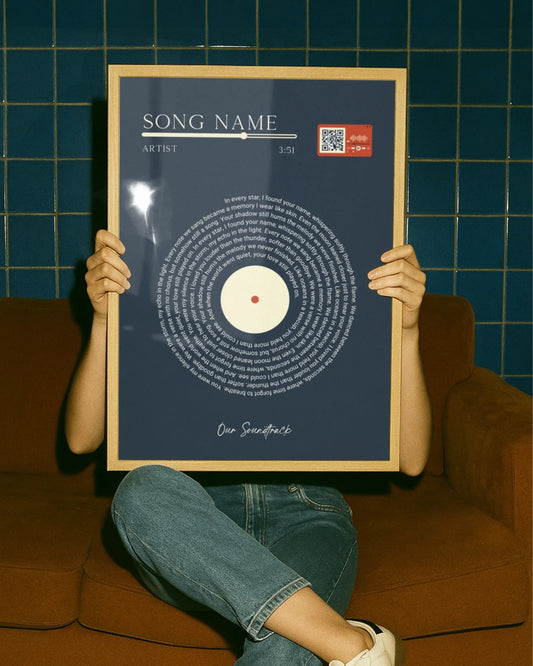
- Song lyric and milestone prints: Personalized, emotionally resonant, and zero physical resource extraction
- Watercolor-style digital prints: Low-impact production with high visual impact
Minimalist wall art is particularly worth noting because its design philosophy naturally aligns with sustainability. Less is more, both visually and environmentally.
Sustainable wall art also makes an exceptional gift. Unlike physical objects that may go unused, a personalized print carries emotional weight and lasts for years. Explore wall art style options to find something that fits the recipient’s personality and your values at the same time.
Stat to know: Handmade, upcycled, and print-on-demand options offer both personalization and genuine sustainability advantages over mass-produced alternatives.
How to choose eco-friendly wall art: Tips for smart, sustainable buying
Now that you know your options, these tips will help you select genuinely eco-friendly wall art for your space.
Shopping sustainably isn’t complicated once you know what to look for. The key is asking the right questions before you buy, not after.
Questions to ask before purchasing:
- What specific materials are used, and are they certified?
- Where is the art produced, and how far does it travel to reach you?
- Does the brand share third-party certifications or just self-made claims?
- What happens to the packaging? Is it recyclable or compostable?
- Can the piece be recycled or responsibly disposed of at end of life?
Experts recommend checking transparency and specific sustainability metrics before purchasing, rather than trusting surface-level eco-friendly claims.
Warning signs of greenwashing to watch for:
- No specific information about materials or production
- A green logo or leaf icon with no certification behind it
- Claims like “natural” or “conscious” without any supporting data
- No mention of where the product is made
For long-term sustainable decorating, buy fewer pieces but choose them more intentionally. A single meaningful print you love for years beats a rotating collection of trend-driven decor that ends up in a landfill.
Personalized art is a smart move here. The personalized wall art benefits go beyond aesthetics. When a piece is made specifically for you or someone you love, it’s far less likely to be discarded. The custom wall decor guide at Wallfully walks you through creating something genuinely lasting.
Pro Tip: Treat wall art like an investment rather than a trend purchase. The most sustainable piece is the one you keep for a decade.
The uncomfortable truth: Why ‘eco-friendly’ labels alone aren’t enough
All these practical steps matter, but let’s challenge the comfortable narrative even further.
Here’s something most sustainability guides won’t tell you: the majority of “eco-friendly” wall art on the market today relies entirely on self-reported claims. There’s no universal standard, no mandatory audit, and no penalty for stretching the truth. A brand can print “sustainable” on its packaging tomorrow without changing a single thing about how it operates.
This doesn’t mean eco-friendly wall art is a myth. It means the responsibility sits with you as the buyer, and that’s genuinely uncomfortable. We’d all prefer to trust a label and move on. But real sustainability requires a little friction.
What we’ve found is that the brands worth buying from are the ones that make transparency easy. They publish their material sourcing. They name their certifications. They don’t hide behind nature photography and vague promises. Those brands exist, and they’re worth seeking out even if it takes a few extra minutes.
Context also matters. A locally made piece with no certification can have a lower carbon footprint than a certified product shipped across three continents. Sustainability isn’t a checklist. It’s a conversation between your values, your budget, and the actual impact of your choices. Ask questions. Expect answers. That’s the standard.
Discover truly eco-friendly artwork at Wallfully
If you’re looking for a place that values real sustainability in art, here’s a solution.
At Wallfully, eco-conscious decorating doesn’t mean settling for generic. Every piece is created with intention, using high-quality, eco-friendly materials and a print-on-demand model that eliminates waste from overproduction. You choose exactly what you want, and it’s made specifically for you.

From custom song lyric posters to personalized map prints and milestone art, Wallfully makes it easy to find wall decor that’s both meaningful and responsibly made. Free shipping on every order means no hidden costs, and the satisfaction guarantee means no risk. If you want wall art that reflects your values and your story, this is where to start.
Frequently asked questions
How can I tell if wall art is genuinely eco-friendly?
Look for specific materials, clear certifications, and transparent sourcing. Experts recommend verifying transparency and specific metrics rather than trusting vague eco-friendly claims at face value.
Are recycled materials always better for the environment?
Recycled materials reduce new resource use, but they still need real verification. Materials and production claims require actual evidence to avoid falling into greenwashing territory.
What certifications should I look for when buying eco-friendly wall art?
Prioritize third-party certifications like FSC or Green Seal. Recognized certifications indicate genuine environmental responsibility rather than self-declared green status.
Is personalized wall art sustainable?
Yes, when it’s made with eco-friendly materials and a print-on-demand model. Personalized and handmade art can align strongly with sustainability goals while also reducing the likelihood of disposal.