

The Role of Eco-Friendly Printing for Sustainable Results
WallfullyTL;DR:
- Eco-friendly printing minimizes environmental harm using sustainable resources, low-impact inks, and energy-efficient methods. Combining responsible material choices with digital processes reduces waste, energy use, and emissions in print production. A balanced approach between sustainable print and digital communication best promotes genuine environmental responsibility.
Eco-friendly printing is the practice of producing printed materials using sustainable resources, low-impact inks, and energy-efficient technologies to minimize environmental harm. The role of eco-friendly printing extends far beyond swapping one ink for another. It covers the full production lifecycle, from FSC-certified paper stocks and soy-based inks that cut VOC emissions by 80% to digital processes that use 20–60% less energy per job than traditional methods. For individuals ordering custom prints and for businesses running marketing campaigns, understanding sustainable printing practices means making choices that protect the environment without sacrificing quality.
What is the role of eco-friendly printing in reducing harm?
Eco-friendly printing reduces environmental harm by replacing high-impact materials and processes with verified, lower-footprint alternatives. The industry term for this practice is “sustainable print production,” and it covers three interconnected areas: raw materials, production technology, and operational management. Each area compounds the benefit of the others.
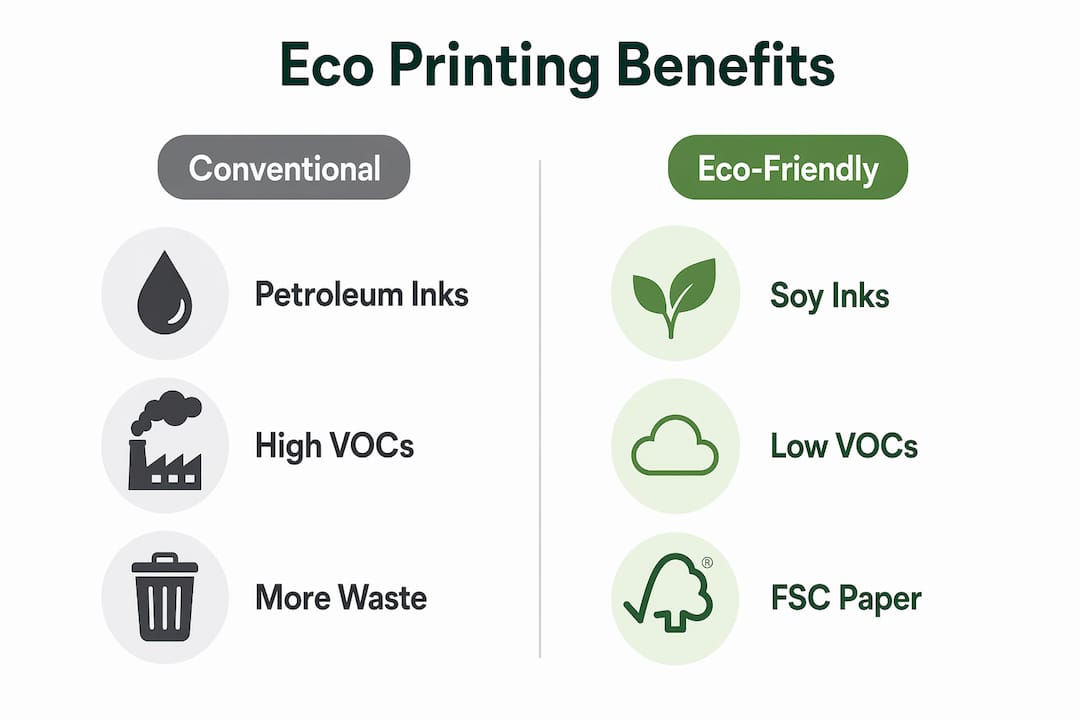
The most direct impact comes from materials. Petroleum-based inks release volatile organic compounds (VOCs) into the air during printing and drying. Soy-based and water-based inks address this at the source. Eco-friendly printing technologies reduce chemical usage by up to 90% and cut energy consumption per job by 20–60%. That is not a marginal improvement. It represents a fundamental shift in how print production affects air quality, worker health, and downstream waste.
Paper choice compounds the ink benefit. FSC certification ensures paper comes from forests managed to environmental, social, and economic standards, with chain of custody audits verifying every step. Recycled paper reduces landfill pressure but requires chemical treatment in processing, which affects its overall footprint. The right choice depends on the project. High-detail art prints often need virgin FSC-certified stock for color accuracy, while packaging and marketing collateral can use recycled content effectively.
How do eco-friendly inks and materials work?
Soy-based inks outperform petroleum alternatives in two measurable ways. First, they spread about 15% further per unit because soy oil is a clearer carrier than petroleum, which means less ink is needed to cover the same area. Second, their vibrancy requires less pigment for equivalent color saturation. Less ink and less pigment per job means lower material cost and lower environmental load over time.

Water-based inks take a different approach. They replace solvent carriers with water, which eliminates most VOC emissions at the source. Both ink types also improve recyclability of the printed substrate. Paper printed with soy or water-based inks is easier to de-ink during recycling, which supports the circular economy model that sustainable print cycles depend on.
Choosing the right paper stock requires balancing quality against environmental impact:
- FSC-certified virgin paper delivers the highest print quality and comes from responsibly managed forests. Best for fine art prints, photo products, and premium marketing materials.
- Recycled paper reduces landfill and lowers demand for virgin fiber. Best for internal documents, packaging inserts, and lower-resolution print jobs.
- Mixed-content stocks blend recycled and FSC-certified fiber. They balance quality and sustainability for most commercial print applications.
Pro Tip: When ordering custom wall art or personalized prints, ask specifically for FSC-certified paper and soy or water-based inks. These two choices alone cover the majority of a print job’s environmental footprint.
How does digital printing reduce energy and waste?
Digital printing eliminates printing plates entirely. That single change removes a major source of hazardous chemical waste from the production process. Digital printing waste runs at 1–3%, compared to 3–10% for traditional offset printing. The gap widens further when you factor in energy: digital processes use 20–60% less energy per job than offset.
On-demand production amplifies these gains. When a printer produces only what is ordered, overproduction waste drops by 20–40% and inventory storage needs fall by up to 50%. That matters for businesses running short-run marketing campaigns or individuals ordering one-off custom prints. No excess stock sits in a warehouse consuming space and eventually going to landfill.
The table below compares key environmental metrics across printing methods:
| Metric | Digital printing | Offset printing |
|---|---|---|
| Waste rate | 1–3% | 3–10% |
| Energy use per job | 20–60% less than offset | Baseline |
| Plates required | None | Yes (chemical process) |
| Minimum viable run | 1 unit | Typically 500+ units |
| Overproduction risk | Low (on-demand) | High (fixed run sizes) |
Energy-efficient printer design, heat recovery systems, and waterless printing methods further lower environmental impact beyond what material choices alone achieve. Process efficiency and material sustainability work together. Neither is sufficient on its own.
Pro Tip: For short-run custom projects like personalized posters or milestone prints, digital on-demand printing is the most sustainable choice. You get exactly what you need with minimal waste.
How can businesses integrate sustainable printing practices?
Sustainable printing aligns directly with corporate social responsibility (CSR) goals, and the business case is concrete. Brand authenticity and customer loyalty grow when businesses demonstrate verifiable sustainability commitments through recognized certifications and transparent supply chains. Credible claims reduce greenwashing risk. Unverified claims create legal and reputational exposure.
The most effective approach for businesses combines three elements:
- Certified materials: Use FSC-certified paper and verified eco-ink suppliers. Certifications provide third-party proof that your claims are accurate.
- Verified supply chains: Standardized certifications such as FSC and ISO for paper and operations build genuine market and consumer confidence. Transparency here separates credible sustainability from marketing language.
- Carbon reduction, not just offsetting: Carbon offsetting supplements emissions reduction but does not replace it. True sustainability integrates reduction, certification, and responsible operational management.
Small and medium businesses face real barriers. High capital costs and low consumer awareness challenge adoption of green printing among SMEs. Education and financial incentives are the primary levers for growth in this segment. Partnering with print suppliers who already hold certifications is the fastest path for smaller businesses. It transfers the compliance burden to the supplier while still delivering the brand benefit.
Reviewing your sustainable print materials choices at the start of each campaign, rather than at the end, prevents costly reprints and ensures your environmental claims hold up to scrutiny.
Is digital always greener than print?
Digital communication is not automatically more sustainable than print. This is one of the most persistent myths in the sustainability conversation. Environmental impact assessments must consider digital infrastructure energy use, not just print materials. Data centers, device manufacturing, and network transmission all carry significant carbon footprints that rarely appear in simple print-versus-digital comparisons.
Consumer preference reinforces the case for print. 76% of consumers prefer not to be forced into digital-only communications, valuing physical print’s security and tangibility. That preference is not nostalgia. It reflects real differences in how people engage with physical versus digital content.
“Digital and print both have environmental footprints. Strategic balance leads to optimal sustainability rather than choosing one exclusively. The goal is not to eliminate print but to make every print count through responsible material and process choices.”
The practical conclusion is a balanced approach. Use digital channels for high-frequency, low-permanence communications. Use print for materials that need to last, build trust, or carry emotional weight. Sustainable printing practices make the print portion of that mix responsible without sacrificing its unique value.
Key Takeaways
Eco-friendly printing reduces environmental impact through verified material choices, energy-efficient digital processes, and transparent supply chains that together cut waste, lower emissions, and build genuine brand credibility.
| Point | Details |
|---|---|
| Soy-based inks cut VOCs | Soy inks reduce VOC emissions by 80% and spread 15% further, lowering total ink use. |
| Digital printing wastes less | Digital waste runs at 1–3% versus 3–10% for offset, with 20–60% less energy per job. |
| FSC certification matters | FSC-certified paper provides third-party proof of responsible forest management and supply chain integrity. |
| On-demand printing cuts overproduction | Printing only what is ordered reduces overproduction waste by 20–40% and storage needs by up to 50%. |
| Print and digital are both needed | 76% of consumers value physical print; a balanced approach delivers better sustainability than eliminating either channel. |
Why I think the “go paperless” argument misses the point
The loudest sustainability advice in marketing circles is still “go digital, go paperless.” I understand the appeal. It sounds decisive. But after watching businesses apply that logic and then quietly reintroduce print when their engagement metrics dropped, I think the framing is wrong.
The real question is not print or digital. It is responsible or irresponsible. A single well-made, FSC-certified custom print that someone keeps on their wall for ten years has a lower per-impression carbon footprint than a digital ad served ten thousand times to people who ignore it. That math rarely gets discussed.
What I have seen work in practice is treating print as a deliberate choice rather than a default. When you choose soy-based inks, certified paper, and on-demand production, you are not compromising on quality. You are often improving it. Soy inks produce sharper color. FSC paper holds detail better. On-demand production means you only print what you actually need.
My advice: start with your ink and paper choices. Those two decisions cover most of a print job’s environmental footprint. Then look at low-energy print processes as your next step. Certifications come after that. Build the habit before you build the certification portfolio.
— Luanda
Wallfully’s approach to eco-conscious custom prints
Wallfully produces personalized wall art and custom posters using eco-friendly materials and responsible print processes. Every order is printed on demand, which means nothing goes to waste before it reaches you.

Wallfully’s commitment to sustainable materials shows up in the quality of the finished product. Soy-based inks and certified paper stocks deliver the color accuracy and longevity that personalized prints deserve. Whether you are ordering a custom milestone print for a gift or a set of art prints for your home, you get a product made with genuine care for both quality and environmental responsibility. Free shipping on every order means no minimum run size and no pressure to over-order.
FAQ
What is eco-friendly printing?
Eco-friendly printing is the production of printed materials using sustainable resources such as FSC-certified paper, soy-based or water-based inks, and energy-efficient digital processes to minimize environmental impact.
How do soy-based inks help the environment?
Soy-based inks reduce VOC emissions by approximately 80% compared to petroleum-based alternatives and spread about 15% further per unit, lowering both air pollution and total ink consumption per project.
Is digital printing more sustainable than offset printing?
Digital printing generates 1–3% waste versus 3–10% for offset and uses 20–60% less energy per job. It also eliminates printing plates, removing a significant source of hazardous chemical waste.
Does going paperless make a business more sustainable?
Not automatically. Digital infrastructure, including data centers and device manufacturing, carries its own carbon footprint. A balanced approach using responsible print practices alongside digital channels delivers better overall sustainability.
What certifications should I look for in sustainable printing?
FSC certification for paper and ISO standards for operational processes are the two most recognized benchmarks. Both provide third-party verification that sustainability claims are accurate and supply chains are audited.