
Printing Techniques in 2025: Your Complete Method Guide
WallfullyTL;DR:
- Printing techniques in 2025 include offset, digital, screen, flexographic, gravure, and advanced methods like TVAM and DTF. The best method depends on project variables such as quantity, substrate, budget, and deadline, not on popularity. Sustainable practices like water-based inks and eco-friendly materials are now standard across the industry.
Printing techniques in 2025 are defined as the full range of processes used to transfer ink, material, or light onto a substrate, from offset lithography to volumetric 3D printing. This explanation of printing techniques 2025 covers both proven commercial methods and the breakthrough technologies reshaping what print can do. The right method depends on four variables: order quantity, material type, budget, and turnaround time. Innovations from Oak Ridge National Laboratory (ORNL), tomographic volumetric additive manufacturing (TVAM), and Direct-to-Film (DTF) printing are pushing the boundaries of speed, cost, and application. Whether you are an artist ordering 50 custom posters or a professional specifying packaging for 50,000 units, the method you choose determines the outcome.
What are the main printing techniques used in 2025?
Offset, digital, screen, flexographic, and gravure printing form the commercial backbone of the industry. Each method works differently and suits a different set of project conditions.
Offset printing transfers ink indirectly through a rubber blanket onto the substrate. This indirect transfer preserves sharp detail and allows Pantone color precision. Standard lead times run 7–15 business days, and the method becomes cost-efficient only above 1,000 units because of fixed plate setup costs.
Digital printing eliminates setup costs entirely. That means 50 and 500 copies cost roughly the same per unit, making digital the clear choice for proofs, custom notebooks, packaging samples, and urgent short runs. Turnaround is measured in days, not weeks.
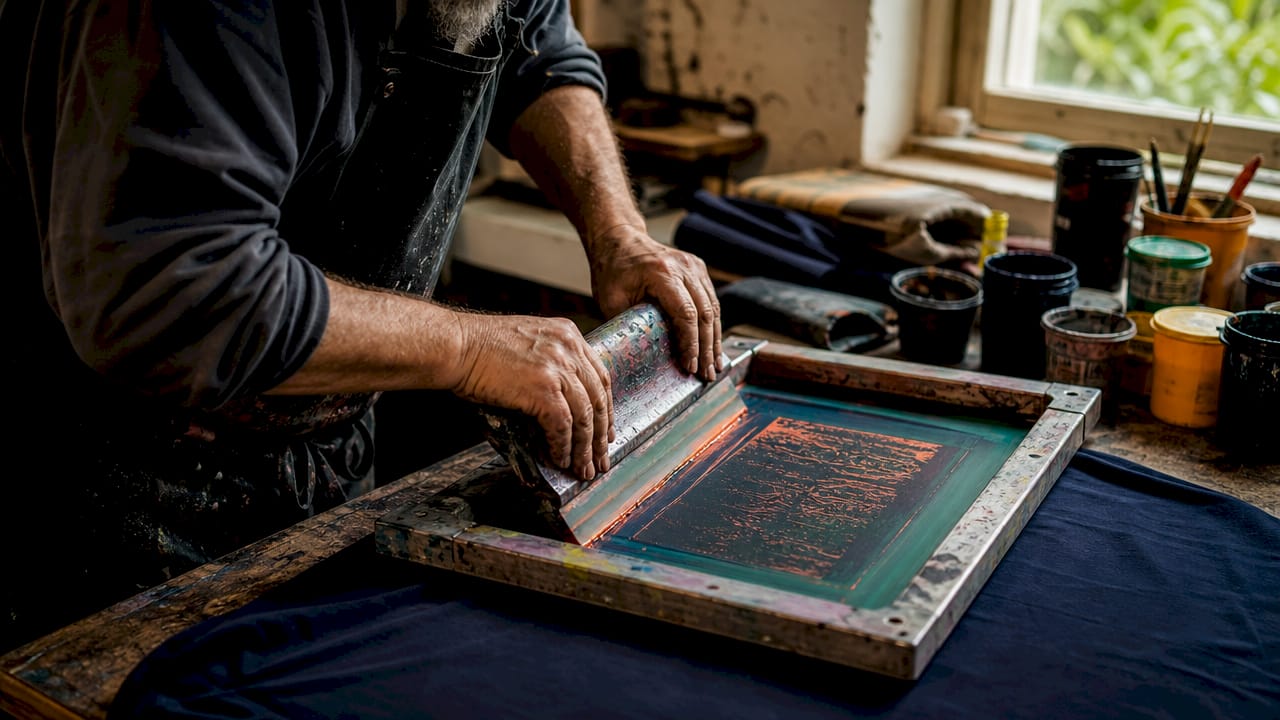
Screen printing forces ink through a mesh stencil onto the substrate. It delivers vivid, opaque color on fabric and rigid surfaces, which is why it dominates promotional apparel and fine art prints. The limitation is setup time per color, so it rewards larger runs of the same design.
Direct-to-Film (DTF) printing gained significant momentum in 2025 and 2026 by offering broader substrate compatibility and lower per-unit cost than Direct-to-Garment (DTG) and heat transfer methods. DTF prints a design onto a film, applies a hot-melt adhesive powder, and then heat-presses the film onto fabric. The result is a durable, full-color transfer that works on cotton, polyester, nylon, and blended fabrics. For textile customization in retail printing, DTF has become the preferred method.
Flexographic and gravure printing serve high-volume packaging and label production. Flexo uses flexible relief plates and fast-drying inks, making it the standard for food packaging and corrugated boxes. Gravure uses engraved cylinders and suits extremely long runs where image consistency across millions of impressions is non-negotiable.
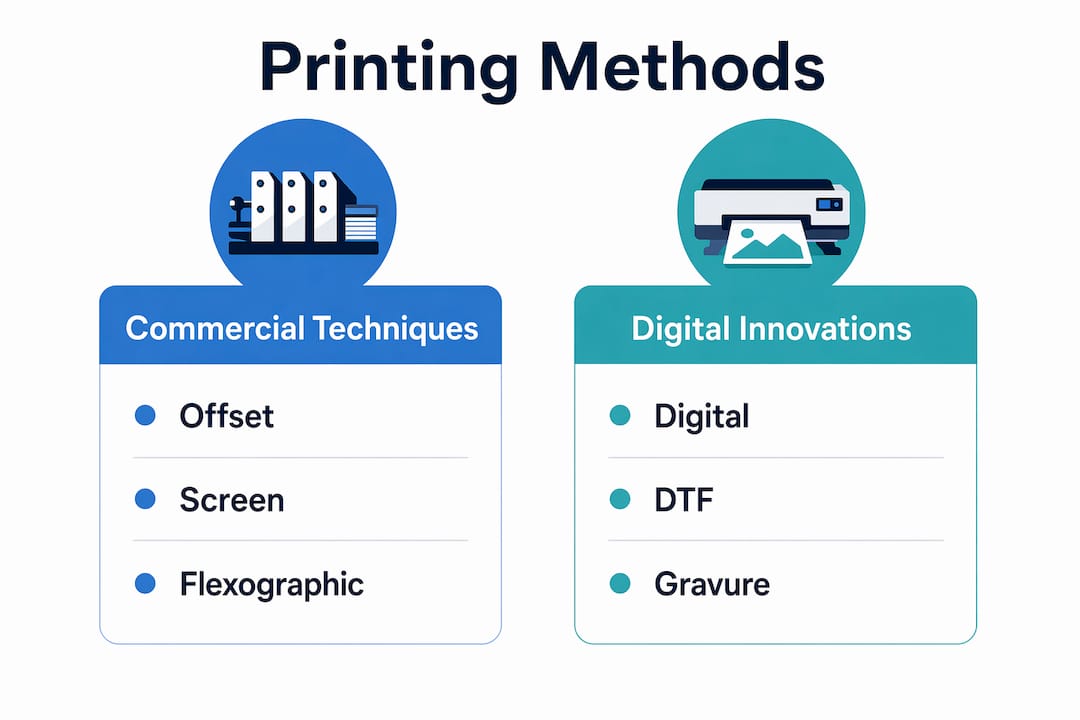
Printing method comparison
| Method | Best volume | Typical turnaround | Cost profile | Key strength |
|---|---|---|---|---|
| Digital | Under 250 units | 1–5 days | Low fixed cost | Personalization, speed |
| Offset | Over 1,000 units | 7–15 days | Low per-unit at scale | Color precision, quality |
| Screen printing | 50–500+ units | 5–10 days | Medium setup cost | Vivid color on fabric |
| DTF | Any volume | 2–7 days | Low per-unit | Substrate versatility |
| Flexographic | 10,000+ units | 10–20 days | High setup, low run cost | Packaging, labels |
| Gravure | 100,000+ units | 15–30 days | Very high setup | Consistency at scale |
Pro Tip: Always request a printed proof before committing to a full offset or screen print run. A digital proof on screen does not replicate how ink behaves on your chosen substrate.
What cutting-edge printing innovations are reshaping the industry?
The most significant advances in the printing techniques overview for 2025 and 2026 do not come from incremental improvements to existing presses. They come from entirely different production logics.
ORNL’s mold-free additive manufacturing reduces composite fabrication time by up to 95% and cuts costs by 90%. Traditional composite manufacturing requires expensive molds for every new geometry. ORNL’s method uses origami-inspired folding techniques so materials bond at the molecular level, producing large, integrated components without any mold at all. The aerospace and automotive industries are the immediate beneficiaries, but the principle applies to any application requiring complex, lightweight structures.
Tomographic volumetric additive manufacturing (TVAM) takes a fundamentally different approach to 3D printing. Standard layer-by-layer 3D printing builds objects one slice at a time. TVAM projects light patterns into a rotating resin volume, solidifying the entire object at once. The result is 70 times more energy efficient than previous volumetric methods. One-centimeter biocompatible objects print in minutes using low-power lasers, and the process is now compatible with living cells. That compatibility opens direct applications in tissue engineering and personalized medicine.
Water-based nano-transfer printing addresses a different problem: putting precise metal circuits onto surfaces that cannot tolerate heat or adhesives. 20nm metal films float on water and adhere to the target surface through capillary and intermolecular forces after the water evaporates. The process works even on hydrophobic surfaces and irregular 3D geometries. Wearable electronics and flexible sensors are the primary application areas.
Breakthrough technology comparison
| Technology | Speed gain | Primary application | Key differentiator |
|---|---|---|---|
| ORNL mold-free composites | 95% faster fabrication | Aerospace, automotive | No mold required |
| TVAM volumetric 3D printing | 70x more energy efficient | Biomedical, prototyping | Living cell compatible |
| Nano-transfer printing | Near-instant film transfer | Wearable electronics | Adhesive-free, heat-free |
Pro Tip: If you work in product development, track TVAM and nano-transfer printing closely. Both are moving from laboratory to commercial application faster than most industry forecasts predicted.
How do you choose the right printing technique for your project?
The most common mistake buyers make is searching for the single best printing method. Experts consistently stress that the right method is always relative to specific project variables. Chasing an abstract “best” leads to cost overruns and missed deadlines.
Use this decision sequence:
-
Determine your quantity. Digital printing suits runs under 250 units because zero setup costs keep per-unit prices flat. Offset becomes economical above 1,000 units where fixed plate costs spread across the run. Flexo and gravure only make financial sense at very high volumes.
-
Identify your substrate. Paper, fabric, plastic, metal, and ceramic each respond differently to ink and heat. DTF handles mixed-fiber fabrics that DTG cannot print reliably. Offset and digital work best on coated and uncoated paper stocks. For outdoor signage, substrate durability matters as much as print quality. A useful outdoor material comparison shows how substrate choice affects both method selection and long-term print performance.
-
Set your budget ceiling. Digital has low entry costs but higher per-unit costs at scale. Offset has high entry costs but low per-unit costs at volume. Screen printing sits in the middle. Hidden costs include color matching fees, proofing charges, and shipping for large format work.
-
Define your deadline. Digital turnaround runs days; offset takes 7–15 business days; gravure has the longest lead times and is unsuitable for urgent small runs. If your project has a hard event date, work backward from that date before selecting a method.
Sustainability is now a fifth variable worth factoring in. Flexographic and digital printing lead in water-based ink adoption. Businesses that prioritize eco-friendly processes without sacrificing quality are increasingly specifying these methods by default. For artists and individuals, choosing a printer that uses water-based inks and FSC-certified paper is a straightforward way to reduce environmental impact. Wallfully’s eco-friendly printing process reflects this shift toward sustainable materials in custom wall art production.
Pro Tip: Always ask your print vendor for a full cost breakdown that includes setup fees, proofing, and minimum order charges. The quoted per-unit price rarely tells the complete story.
What printing trends are driving the industry in 2025 and beyond?
The printing technology trends for 2025 and beyond reflect three converging forces: sustainability pressure, personalization demand, and the maturation of advanced manufacturing methods.
-
Water-based inks are becoming standard. Solvent-based inks are losing ground as water-based alternatives match their color performance while reducing volatile organic compound emissions. Digital and flexographic presses are leading this transition.
-
Print-on-demand is reshaping retail. Digital printing’s zero-setup economics make it possible to print one unit as cheaply as ten. Artists selling through online platforms and brands offering personalized products both benefit from this model. The custom poster trends for 2025 show how personalization is driving demand for short-run, high-quality digital output.
-
DTF is displacing DTG in textile customization. Direct-to-Film’s broader substrate compatibility and lower cost per transfer have made it the preferred method for print-on-demand apparel businesses. For anyone ordering personalized garment designs, understanding the DTF process helps set realistic expectations for color vibrancy and wash durability.
-
3D and nano-printing are entering commercial production. TVAM and nano-transfer printing are no longer purely experimental. Healthcare, electronics, and aerospace companies are piloting both technologies for production applications.
-
Personalization at scale is now technically feasible. Variable data printing allows every unit in a digital print run to carry unique text, images, or codes. This capability is transforming direct mail, packaging, and custom art production simultaneously.
Key takeaways
The right printing technique in 2025 is always determined by project variables, not by any single method’s reputation.
| Point | Details |
|---|---|
| Match method to quantity | Use digital under 250 units and offset above 1,000 units for the best cost per unit. |
| DTF leads textile printing | Direct-to-Film outperforms DTG on substrate range, cost, and durability in 2025. |
| Breakthroughs change the ceiling | ORNL’s mold-free method and TVAM cut fabrication time and cost by up to 95%. |
| Turnaround drives decisions | Digital delivers in days; offset takes 7–15 business days; gravure takes the longest. |
| Sustainability is now standard | Water-based inks and energy-efficient digital presses are the new baseline for responsible print production. |
Why chasing the “best” printing method is the wrong question
I have watched artists and print buyers spend weeks researching the “best” printing technique, only to order the wrong method for their actual project. The question is never which method is best in the abstract. The question is which method fits this quantity, this substrate, this budget, and this deadline.
The breakthroughs from ORNL and TVAM are genuinely exciting. But most artists and small-run buyers will not interact with mold-free composites or living-cell printing for years. What matters right now is understanding that digital printing has permanently changed short-run economics, and that DTF has made textile customization accessible at any volume.
Sustainability is not a trend to track. It is a baseline expectation. Water-based inks and FSC-certified substrates are available from most commercial printers today. Specifying them costs little extra and signals professionalism to clients and collaborators.
My honest advice: learn the four decision variables cold. Quantity, substrate, budget, deadline. Apply them to every project before you open a conversation with a printer. You will save time, avoid reprints, and spend your budget where it actually improves the outcome. Experimentation is valuable for artists, but experiment with method choices deliberately, not by accident.
— Luanda
Wallfully’s approach to custom printing
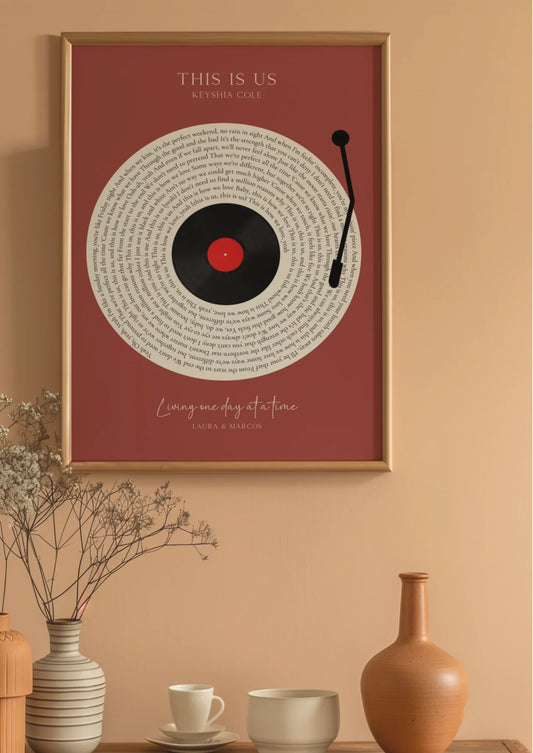
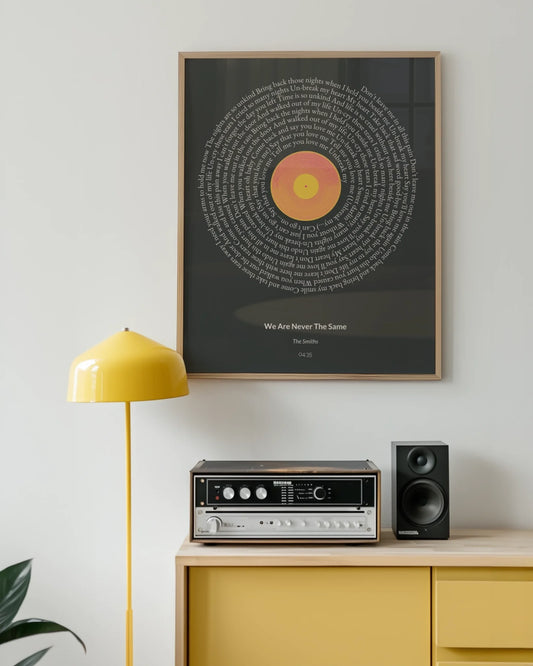
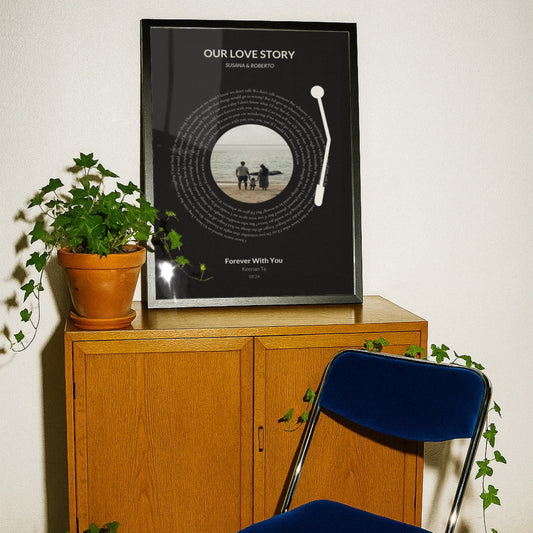
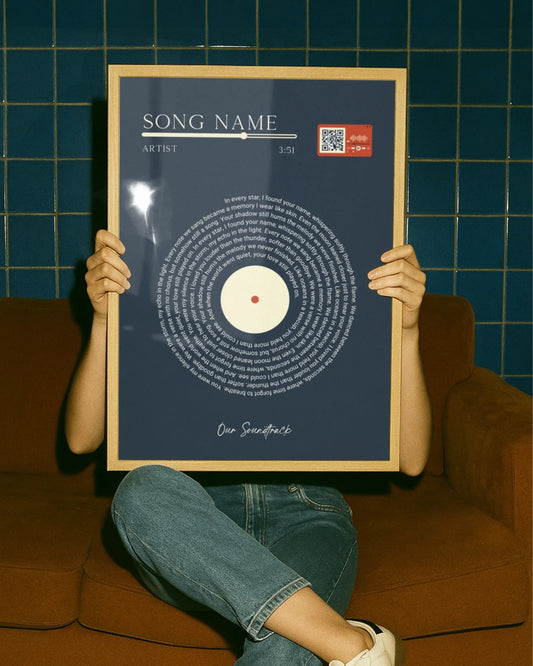
Wallfully specializes in personalized wall art and custom posters built on high-quality digital printing with eco-friendly materials. Every order ships free, and the guided customization process lets you preview your design before it goes to print.
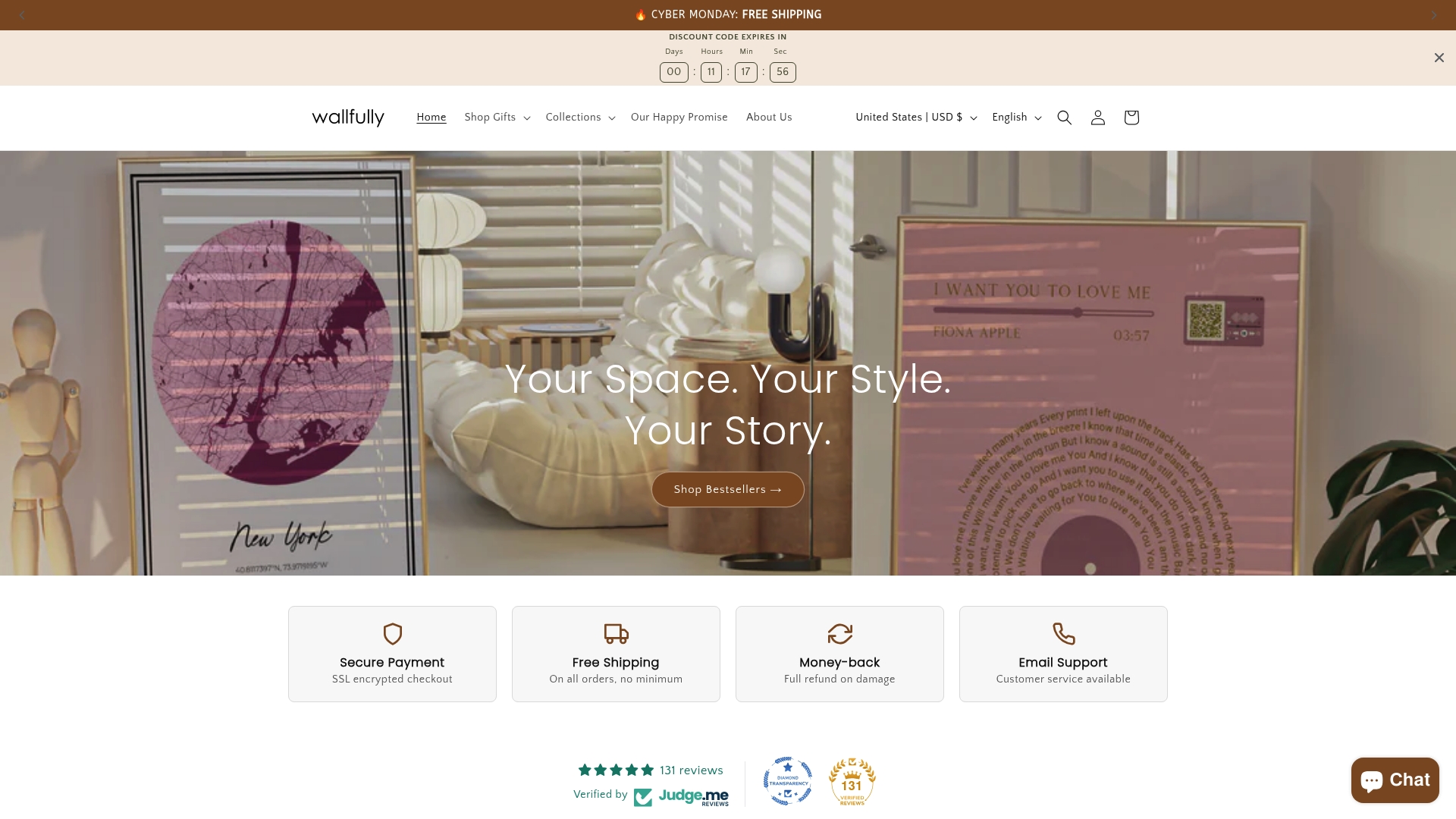
If you want to understand how bespoke printing works before placing an order, Wallfully’s guides walk through the process clearly. From song lyric posters to milestone maps and photo collages, the platform applies the same print quality standards covered in this article to every custom piece. Visit Wallfully to start building your personalized print today.
FAQ
What is the best printing method for small orders?
Digital printing is the best method for orders under 250 units because it has zero setup costs, keeping per-unit prices flat regardless of quantity. Turnaround typically runs 1–5 days.
How does DTF differ from DTG printing?
Direct-to-Film (DTF) prints onto a film first, then heat-presses the transfer onto fabric, while Direct-to-Garment (DTG) prints directly onto the garment. DTF works on a wider range of fabrics, including polyester and blended materials, and generally costs less per unit.
What is TVAM and why does it matter?
Tomographic volumetric additive manufacturing (TVAM) solidifies an entire 3D object at once using projected light, rather than building it layer by layer. It is 70 times more energy efficient than previous volumetric methods and is now compatible with living cells, opening applications in biomedical printing.
How long does offset printing take?
Offset printing typically takes 7–15 business days from approved artwork to finished product. The method suits runs above 1,000 units where its high setup cost is offset by a low per-unit price.
What makes a printing process eco-friendly?
Eco-friendly printing uses water-based inks instead of solvent-based inks, FSC-certified paper, and energy-efficient digital or flexographic presses. These choices reduce volatile organic compound emissions and paper waste without sacrificing print quality.