
Why Home Decor Matters for Your Wellbeing and Mood
WallfullyWhy home decor matters more than most people realize
Your living space is not neutral. The colors on your walls, the light filtering through your windows, and the objects you choose to display all shape how you feel, think, and recover from daily stress. Home decor directly affects mental and emotional wellbeing by determining the quality of the environment you spend most of your life in. It also serves as a form of personal identity expression and supports social connection in ways that go far beyond aesthetics.
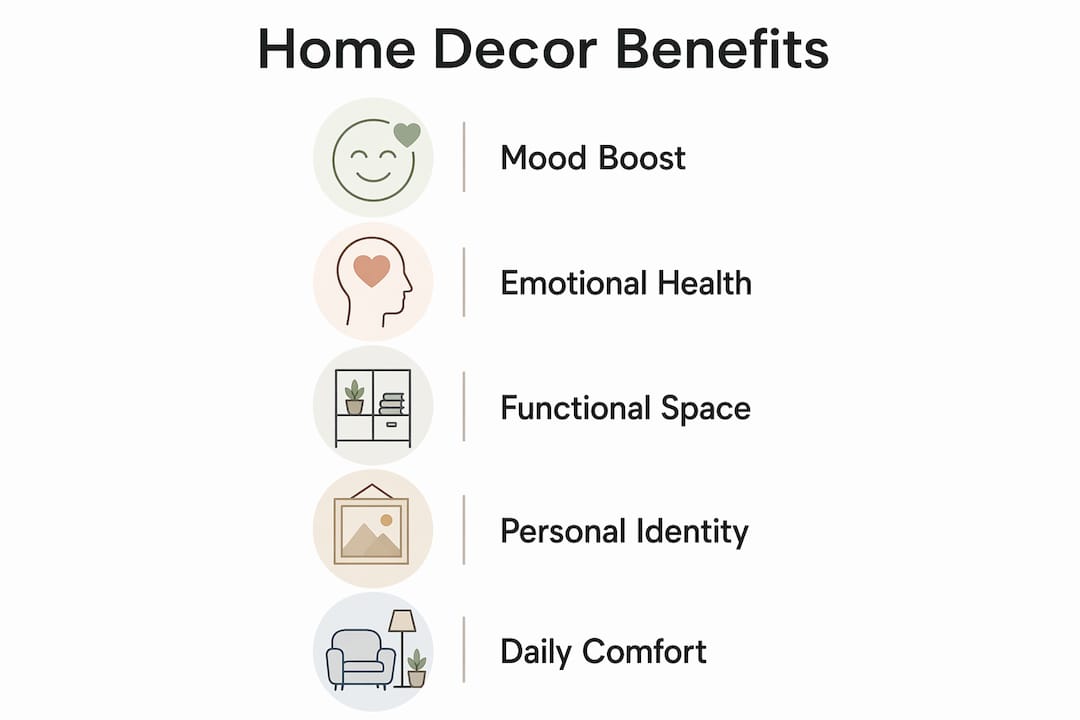
The core reasons decorating matters come down to a few clear categories:
- Psychological health: Lighting, spatial layout, and sensory elements influence stress levels, anxiety, and cognitive function.
- Emotional regulation: Decor helps you select environments that shift your mood, a process psychologists call situation selection.
- Personal identity: What you display communicates who you are, to yourself and to others.
- Social connection: Thoughtfully arranged spaces shape how comfortable guests feel and how relationships develop at home.
- Functional comfort: Good decor improves productivity, safety, and physical ease in daily routines.
How your home environment shapes your psychological health
Environmental psychology examines how physical spaces influence perception, emotion, and behavior. Applied to interior design, its principles show that lighting, spatial configuration, color, and material choices are not decorative extras. They are variables that measurably affect how your brain and body respond to being home.
A 2026 study of 1,001 adult residents found that residential environment quality directly increases subjective wellbeing, with safety and hygiene having the greatest impact on life satisfaction. Brighter rooms, better window views, and lower noise disturbance each correlate with reduced anxiety scores, even after accounting for lifestyle variables like physical activity and sleep. The home environment explained more variance in anxiety than common lifestyle factors in that research.
Specific design factors carry particular weight:
- Light modulation: Human-centric lighting calibrated to activity and time of day supports circadian rhythm, reduces visual fatigue, and improves mood.
- Biophilic elements: A 2025 study in Frontiers in Psychology found that rooms with plants feel more restorative, more fascinating, and less monotonous than identical rooms without greenery.
- Spatial flexibility: Research from 2024 links home adaptability to both short-term and long-term mental health outcomes, covering both hedonic wellbeing (feeling good) and eudaimonic wellbeing (living with purpose).
- Safety and noise: Perceived security and low noise disturbance are among the strongest predictors of lower self-reported anxiety at home.
Pro Tip: If you can only change one thing about a room’s psychological impact, start with light. Swap harsh overhead bulbs for layered, warm-toned lighting you can dim in the evening. The shift in how the room feels is immediate.
How decor reflects who you are and supports your emotional life
Decor is one of the most direct ways people communicate identity, both to themselves and to visitors. The art you hang, the colors you choose, and the objects you keep visible all signal your values, history, and personality without a word being spoken. Psychologists Graham and Gosling identified six ambiance dimensions that people seek in their homes: restoration, kinship, stimulation, intimacy, productivity, and storage. Each room tends to serve a different ambiance, and aligning your decor with that intended function produces measurable emotional benefits.
Active personalization goes deeper than style preference. Research from Birmingham City University found a direct link between transformability and life satisfaction. People who actively adapt and personalize their homes report higher overall wellbeing than those living in static, unchanged environments. The act of decorating itself, not just the finished result, contributes to a sense of autonomy and competence.
The emotional benefits of thoughtful decor include:
- Surrounding yourself with meaningful objects lowers stress by reinforcing a sense of safety and personal history.
- Aligning a bedroom’s ambiance with restoration (soft tones, minimal clutter, natural textures) supports better sleep and recovery.
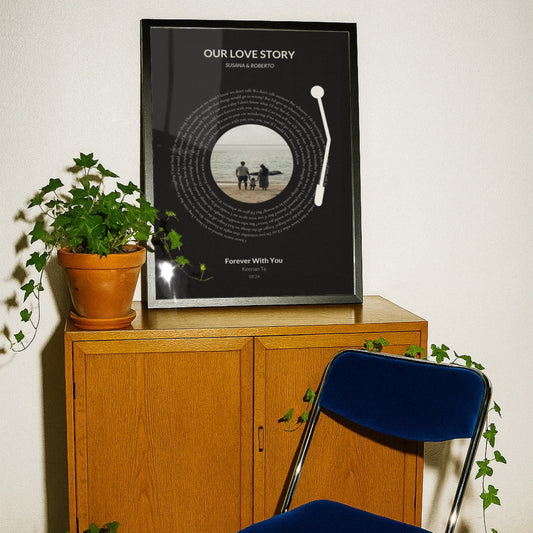
- Displaying photos, custom prints, or personal milestones creates a daily reminder of relationships and achievements that matter to you.
- Decor choices in shared spaces shape how welcome guests feel, directly influencing the quality of social interactions at home.
- Ongoing customization, swapping art seasonally or rearranging furniture, keeps the environment responsive to your changing emotional needs.
The emotional impact of personalized decor extends to how you give and receive it as well. A custom print tied to a specific memory or relationship carries a different weight than a generic purchase, and that weight is felt every time you see it on the wall.

Functional benefits that thoughtful decor delivers every day
Beyond mood and identity, decor has a practical job to do. The way a room is arranged determines how easily you move through it, how safely you use it, and how well it supports the activities you actually do there. A poorly lit home office produces eye strain and reduced focus. A living room with furniture blocking natural pathways creates friction that most people never consciously notice but feel as low-level irritation.
Interior design principles drawn from environmental psychology address these functional realities directly. Spatial perception, the way furniture placement affects how large or small a room feels, influences both comfort and behavior. Clear pathways improve flow. Designated zones for different activities (work, relaxation, socializing) reduce cognitive overlap and help your brain shift between modes more cleanly.
Key functional benefits of deliberate decor choices:
- Productivity: A home office with good task lighting, minimal visual clutter, and a stimulating but not distracting color palette supports sustained focus.
- Safety: Adequate lighting in hallways and staircases, secure furniture placement, and non-slip rugs reduce accident risk, particularly for older adults.
- Comfort: Ergonomic furniture, appropriate room temperature, and acoustic control (rugs, curtains, soft furnishings absorb sound) all reduce physical fatigue.
- Adaptability: Flexible layouts that can shift between uses, such as a dining table that doubles as a workspace, extend the functional life of a room as your needs change.
- Sustainability: Choosing eco-friendly materials in decor reduces environmental impact while often improving indoor air quality.
Pro Tip: Multifunctional decor elements earn their place twice. A large mirror in a small room reflects light and creates the perception of more space. A gallery wall of custom prints adds visual warmth while anchoring the room’s identity. Think about what each piece does beyond looking good.
Cultural background also shapes functional preferences in ways that are easy to overlook. Color associations, spatial norms, and the symbolic meaning of certain objects vary across cultures, and decor that feels calming in one cultural context can feel cold or chaotic in another. Decorating with your own cultural references is not just an aesthetic choice. It is a functional one that affects how at home you actually feel.
How to bring meaningful decor into your home
Decorating with intention does not require a renovation budget or a design degree. It requires knowing what you want each room to do for you, then making choices that support that function.
Start by identifying the primary ambiance you want in each room. A bedroom optimized for restoration calls for soft, warm lighting, natural materials, minimal visual clutter, and a few personally meaningful objects rather than a gallery’s worth of stimulation. A living room designed for kinship and social connection benefits from flexible seating, warm tones, and decor that invites conversation, such as a custom map of a place that matters to your family, or a photo collage of shared experiences.
Practical steps for decorating with purpose:
- Layer your lighting. Use ambient, task, and accent lighting in each room so you can adjust the mood without changing the furniture.
- Bring in natural elements. Even a single potted plant in a living room or bedroom improves perceived restorativeness and makes the space feel less monotonous, according to 2025 research.
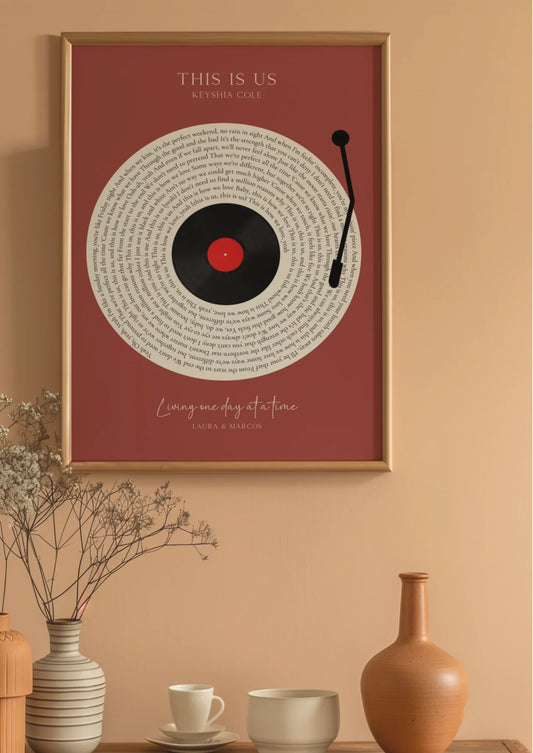
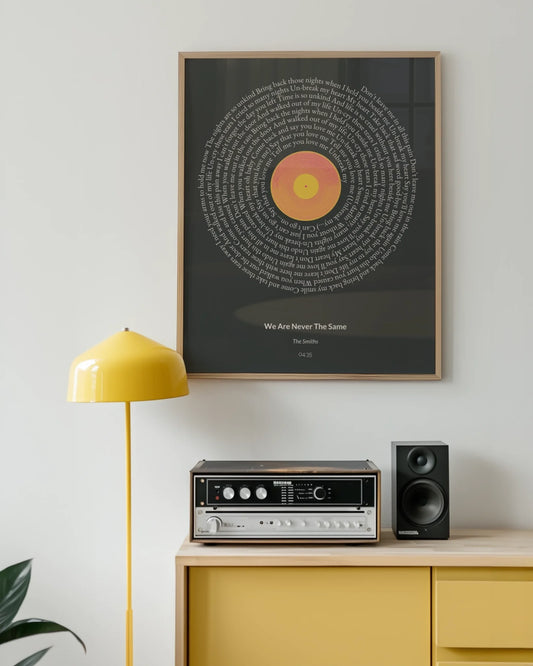
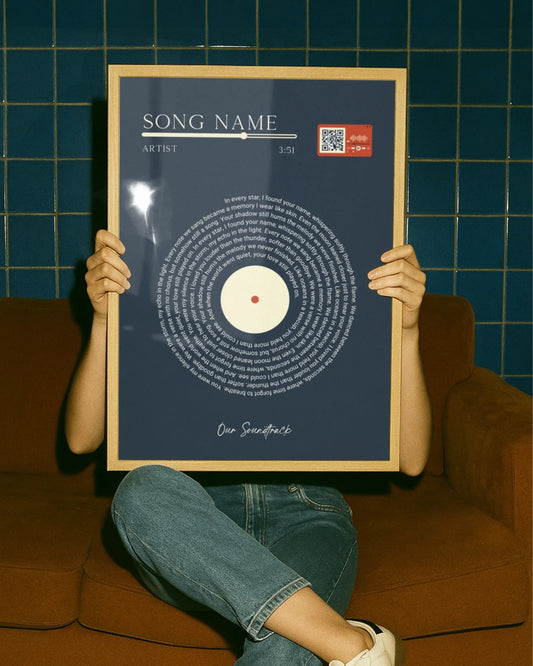
- Personalize with specificity. Generic art decorates a room. A custom song lyric poster or a print of the coordinates of a place you love tells a story that only you can tell.
- Build in flexibility. Furniture on casters, modular shelving, and lightweight accent pieces let you adapt the room as your needs shift across seasons and life stages.
- Align decor with room function. Stimulating colors and energizing art belong in a workspace. Restorative textures and calming tones belong in a bedroom. Mixing these up works against the room’s purpose.
- Edit regularly. Transformability, the ongoing adaptation of your space, predicts life satisfaction more reliably than a one-time decorating project. Treat your home as a living environment, not a finished product.
Thoughtful home personalization does not have to be expensive. A few well-chosen pieces that carry real personal meaning outperform a room full of trend-driven purchases every time. Wallfully’s custom prints, from milestone maps to photo collages, are designed specifically for this kind of intentional, identity-driven decorating.
Pro Tip: Before buying anything new, walk through your home and identify one thing in each room that genuinely means something to you. Build outward from those anchors. Decor that starts from meaning tends to stay coherent without much effort.
Key Takeaways
Home decor shapes psychological wellbeing, emotional health, and daily function through specific, measurable environmental factors, not just aesthetic preference.
| Point | Details |
|---|---|
| Environment affects anxiety directly | Perceived safety, brightness, and low noise disturbance are strong predictors of lower anxiety scores and directly influence subjective wellbeing, as highlighted by the 2026 study involving 1,001 residents. |
| Personalization drives life satisfaction | Active home transformation (transformability) links directly to higher satisfaction with residence and life overall. |
| Plants improve restorativeness | Rooms with greenery feel more restorative, fascinating, and less monotonous than identical rooms without plants. |
| Ambiance alignment matters | Matching decor to a room’s intended function (restoration, productivity, kinship) produces measurable emotional benefits. |
| Ongoing adaptation beats one-time decorating | Regularly updating and personalizing your space sustains wellbeing more effectively than a static finished environment. |