
Eco-Friendly Wall Art Guide for Conscious Homes
WallfullyTL;DR:
- Choosing eco-friendly wall art involves selecting sustainable materials like reclaimed wood, recycled paper, and natural fabrics. It also requires evaluating the entire lifecycle, including production, shipping, and end-of-life disposal, to minimize environmental impact. Prioritizing durability and verifying certifications ensure a sustainable and long-lasting decor.
Eco-friendly wall art is artwork created using sustainable materials and practices that minimize environmental impact while beautifying your home. The term covers a wide range of pieces, from prints on recycled paper to reclaimed wood panels and organic fabric hangings. The United States generates around 250 million tons of waste annually, and non-recyclable decor materials contribute meaningfully to that total. Choosing sustainable wall decor is one of the most direct ways to reduce your household’s environmental footprint without sacrificing style. This guide walks you through materials, lifecycle evaluation, design principles, and common mistakes so you can make confident, eco-conscious choices.
What materials make wall art eco-friendly?

Sustainable wall decor starts with the raw material. The most credible eco-friendly options share three qualities: they come from renewable or reclaimed sources, they require minimal processing, and they avoid toxic finishes.
Common sustainable materials
- Reclaimed wood. Salvaged timber from old buildings or furniture carries no new deforestation cost. It also brings natural texture and character that new wood cannot replicate.
- Recycled paper and cardboard. Recycled material wall art printed on post-consumer paper reduces pulp demand. Look for papers certified under the Forest Stewardship Council (FSC) standard, which ensures timber is harvested sustainably.
- Organic and natural fabrics. Linen, hemp, and undyed cotton make excellent canvas alternatives. They biodegrade cleanly and avoid the petrochemical inputs of synthetic textiles.
- Low-VOC and water-based finishes. Low-toxicity coatings protect artwork longer and reduce indoor air pollution. They also prevent the off-gassing that can damage delicate prints over time.
The bamboo paradox
Bamboo is widely marketed as a green material because it grows fast. The reality is more complicated. Industrial bamboo plantations reduce local biodiversity by 40–60% compared to natural forests. That is a significant ecological cost that most product labels never mention. Bamboo composites also frequently use urea-formaldehyde adhesives, which off-gas indoors and can degrade acrylic artwork nearby. If you want bamboo, look for products that specify formaldehyde-free bonding agents and sourcing from mixed-species forests rather than monoculture plantations.
Durability is itself a sustainability metric. A piece that lasts 20 years replaces far fewer resources than a cheaper piece replaced every three. Prioritize materials with proven longevity over materials that simply sound green.
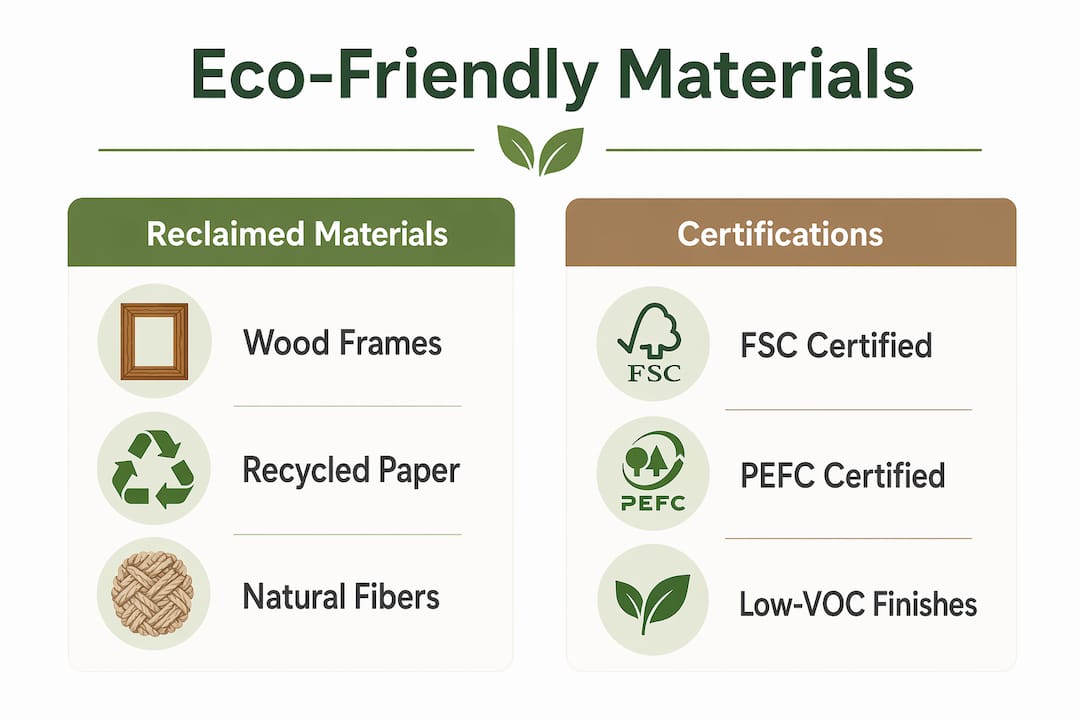
Pro Tip: Ask suppliers for FSC or PEFC certification documentation before purchasing framed art. Certified timber provides verified environmental, social, and economic benefits that a marketing claim alone cannot.
How do you evaluate the full lifecycle impact of wall art?
Material choice is only the starting point. Life cycle assessments recommend evaluating raw materials, production, transport, installation, maintenance, and end-of-life to get an accurate picture of environmental impact. A piece made from recycled paper but shipped by air freight from overseas can carry a larger carbon footprint than a locally produced print on virgin paper.
The six-stage lifecycle framework
- Raw materials. Confirm the source is renewable, reclaimed, or certified. Ask for batch-level documentation, especially for multi-room projects where replacement pieces need to match original specs.
- Production. Manufacturing energy and water consumption matter as much as the base material. A supplier running on renewable energy produces a fundamentally different footprint than one on coal-powered grids.
- Packaging. Plastic wrapping and foam inserts add waste. Prefer suppliers using recycled cardboard, paper tape, and minimal void fill.
- Shipping. Air freight is the main driver of shipping-related carbon emissions. Sea or consolidated road freight cuts that impact significantly. Buying locally produced art eliminates most shipping impact entirely.
- Installation. Adhesive strips, chemical-based wall anchors, and solvent-based sealants all add to your indoor chemical load. Choose mechanical fixings or low-VOC adhesives.
- End of life. Can the piece be composted, recycled, or repurposed? A frame that can be disassembled and reused scores far better than one glued together permanently.
Supplier transparency: what to look for
| Signal | What it tells you |
|---|---|
| FSC or PEFC certification | Timber sourced from verified sustainable forests |
| Batch-level traceability | Replacement pieces will match original environmental specs |
| Published energy or water data | Manufacturer measures and manages production impact |
| Recycled or compostable packaging | End-of-packaging waste is minimized |
| Local or regional production | Shipping footprint is reduced at the source |
Supplier transparency is the fastest filter you have. A brand that cannot answer basic questions about its paper source or ink chemistry is unlikely to have made serious sustainability investments. Wallfully, for example, publishes information about its sustainable print materials so buyers can verify claims before purchasing.
How do you incorporate eco-friendly art into your home decor?
Sustainable wall decor works best when it fits your space well. Poor placement wastes the visual impact of even the most beautiful piece, which can lead to early replacement and more waste.
Sizing and placement
The 2/3 rule is the most reliable sizing guideline in interior design. Art should be approximately two-thirds the width of the furniture it hangs above. A sofa that is 84 inches wide calls for art or a gallery arrangement roughly 56 inches wide. Getting the scale right the first time means you will not be swapping pieces out after a week.
Green art ideas by room
- Living room. Large-format prints on recycled paper or reclaimed wood panels anchor the space. Nature-inspired imagery, botanical illustrations, and topographic maps all work well with an eco-conscious aesthetic.
- Bedroom. Organic fabric wall hangings in natural tones create warmth without synthetic materials. Woven pieces made from undyed wool or linen age gracefully and rarely need replacement.
- Home office. Digital art displayed on an energy-efficient screen is a zero-waste option. Optimizing hardware efficiency and scheduling for digital poster systems can reduce their climate impact by 28.6% compared to baseline processes.
- Kitchen and hallway. Smaller pieces made from cork, recycled metal, or pressed botanicals add texture without dominating the room.
DIY and mixed-media options
DIY projects using pressed leaves, dried flowers, or natural pigments cost almost nothing and produce zero shipping emissions. Framing foraged materials in a reclaimed frame is one of the most genuinely low-impact art options available. For mixed-media pieces, combine natural elements with recycled paper backgrounds to add depth.
Pro Tip: Choose frames with UV-protective, low-VOC glazing. UV protection extends the life of prints significantly, which means fewer replacements and less material waste over time.
Frame selection
| Frame type | Eco credentials | Longevity |
|---|---|---|
| Reclaimed solid wood | High: no new timber, unique character | Excellent if properly maintained |
| FSC-certified new wood | High: verified sustainable sourcing | Excellent |
| Recycled aluminum | Moderate: energy-intensive to produce initially | Very good, fully recyclable |
| Bamboo composite | Variable: check adhesive type and sourcing | Good if formaldehyde-free |
| Plastic or MDF | Low: petroleum-based or formaldehyde-heavy | Poor to moderate |
What are the most common mistakes when choosing eco-friendly wall art?
The biggest mistake is treating “natural” as a synonym for “sustainable.” Bamboo, as covered above, is the clearest example. Fast-growing does not mean low-impact when the plantation model destroys biodiversity and the processing adds toxic adhesives.
- Ignoring the full lifecycle. Buyers focus on the material and ignore production energy, water use, and shipping. A lifecycle lens is the only way to compare options honestly.
- Skipping frame and finish evaluation. The base artwork may be eco-friendly, but a frame finished with solvent-based lacquer or glazed with standard acrylic negates much of that benefit. Always check the finish, not just the substrate.
- Underestimating shipping impact. Digital art files have near-zero shipping emissions. Physical art shipped by air freight from overseas can generate more carbon than the production process itself. If you are buying internationally, ask about freight method.
- Accepting certifications at face value. FSC and PEFC are credible standards, but counterfeit or expired certificates exist. Verify certification numbers directly on the FSC or PEFC public databases before purchasing.
- Buying for trend, not longevity. Trend-driven purchases get replaced faster. Each replacement cycle adds material and shipping waste. The fewer, better approach to collecting prioritizes durable, emotionally resonant pieces that you will keep for decades.
Sustainability in wall art is not a single attribute. It is the sum of every decision made from forest to wall. A piece that scores well on materials but poorly on shipping, finishing, and end-of-life is not a sustainable choice. Evaluate the whole, not the parts.
Key takeaways
Eco-friendly wall art requires evaluating materials, production, shipping, and longevity together. No single factor determines sustainability on its own.
| Point | Details |
|---|---|
| Materials are the starting point | Choose reclaimed wood, FSC-certified paper, or organic fabrics and verify with documentation. |
| Lifecycle matters more than materials | Assess production energy, packaging, freight method, and end-of-life before buying. |
| Bamboo needs scrutiny | Industrial bamboo reduces biodiversity by 40–60%; always check adhesive type and sourcing origin. |
| Sizing reduces waste | Apply the 2/3 rule to get placement right the first time and avoid early replacement. |
| Fewer, better pieces win | Durable, well-chosen art reduces replacement frequency and total environmental impact over time. |
Why I think “eco-friendly” labels deserve more skepticism
Luanda’s perspective on sustainable wall art has shifted considerably over the years. Early on, I bought into the idea that any piece labeled “natural” or “recycled” was automatically a good choice. That assumption cost me money and, ironically, generated more waste than I expected.
The market has gotten better at transparency, but it has also gotten better at greenwashing. A brand can print “eco-friendly” on packaging without a single certification to back it up. The buyers who navigate this well are the ones who ask specific questions: What certification covers this timber? What adhesive bonds this bamboo frame? What freight method does your supplier use?
The “fewer, better” principle changed how I shop entirely. I stopped chasing trends and started buying pieces I could genuinely see on my wall for 15 years. That shift alone reduced my decor-related waste more than any material swap I made. Personalized art, the kind tied to a specific memory or place, tends to stay on walls far longer than generic prints. That longevity is its own form of sustainability. You can read more about eco-friendly wall art benefits if you want a deeper look at how design choices and environmental values intersect.
The most sustainable piece of art is the one you never replace.
— Luanda
Wallfully’s approach to sustainable wall art
Wallfully specializes in personalized prints created with eco-conscious materials and processes. Every order ships with free delivery, and the platform’s guided customization process means you get exactly the size and design you want the first time, reducing the waste that comes from returns and reprints.
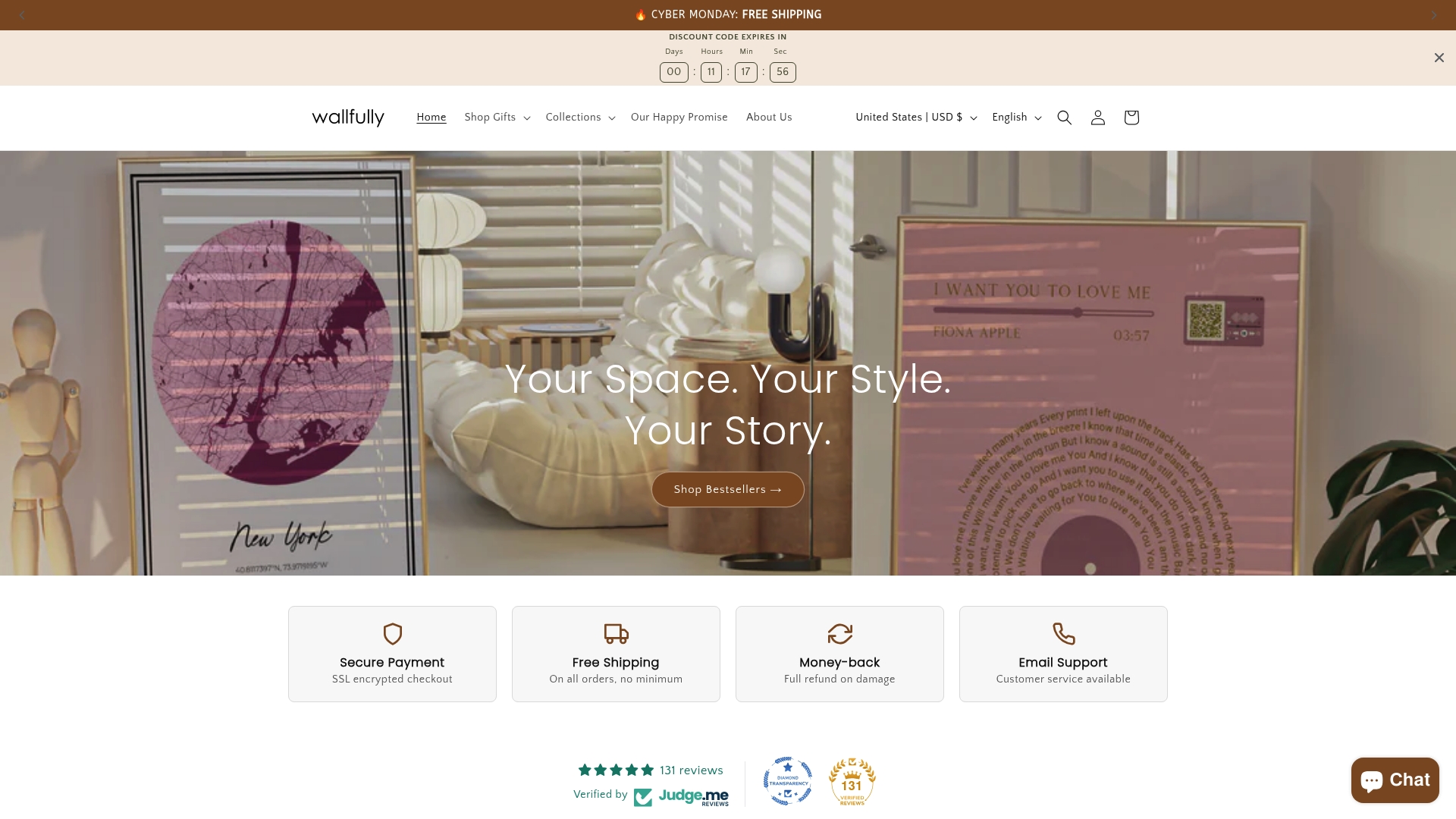
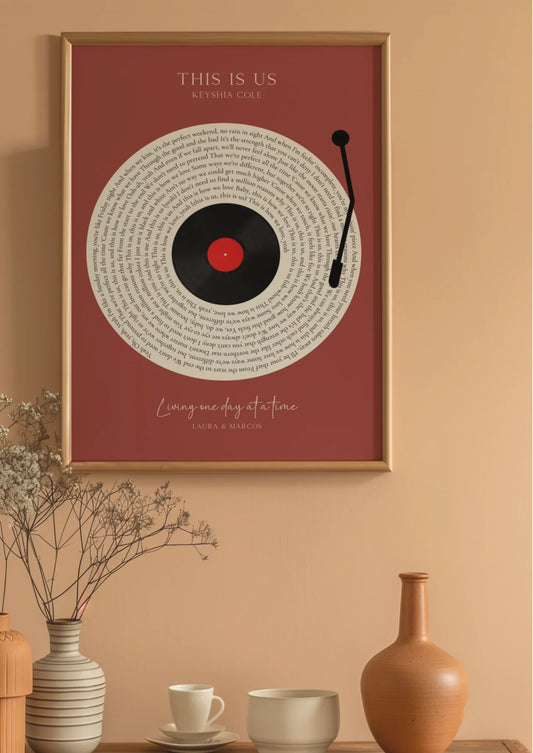
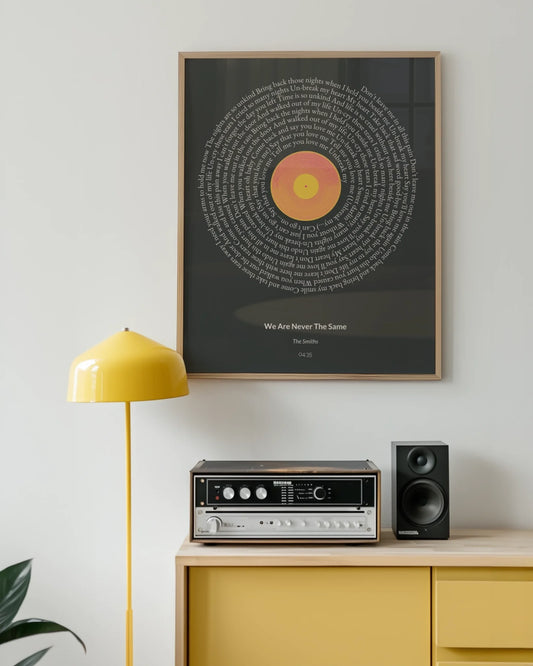
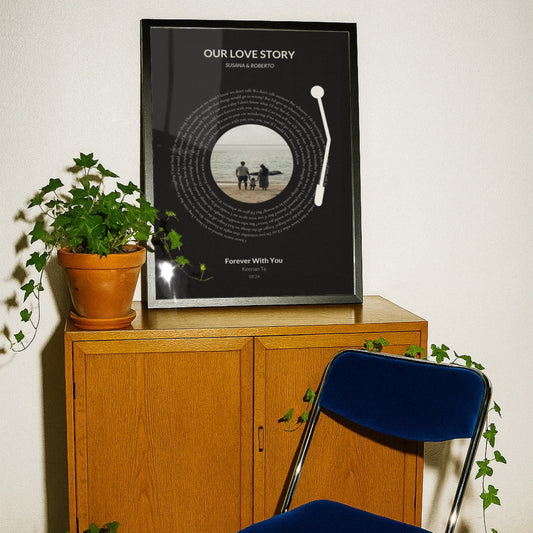
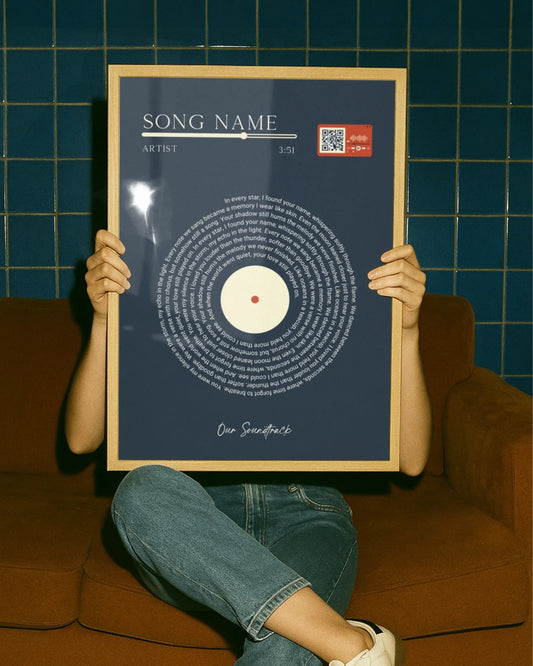
Wallfully’s catalog includes custom wall art options built around meaningful personal details: song lyrics, locations, milestone dates, and more. Pieces tied to real memories stay on walls longer, which aligns directly with the “fewer, better” principle this guide covers. If you want to understand how to choose wall art materials that match both your aesthetic and your values, Wallfully’s resource library is a practical starting point.
FAQ
What does eco-friendly wall art mean?
Eco-friendly wall art is artwork made with sustainable materials, low-toxicity finishes, and responsible production methods that minimize environmental impact across the full product lifecycle.
Is bamboo wall art actually sustainable?
Not always. Industrial bamboo plantations reduce local biodiversity by 40–60% compared to natural forests, and bamboo composites often use formaldehyde-based adhesives. Always verify sourcing and adhesive type before buying.
What certifications should I look for in sustainable wall art?
FSC and PEFC certifications confirm that timber used in frames and substrates comes from verified sustainable forests. Verify certification numbers on the FSC or PEFC public databases to confirm they are current.
How does shipping affect the sustainability of wall art?
Air freight is the primary driver of shipping-related carbon emissions for physical art. Choosing locally produced pieces or suppliers who use sea or consolidated road freight significantly reduces that impact.
Can digital wall art be eco-friendly?
Yes. Digital art files carry near-zero shipping emissions. Optimizing the hardware and scheduling of digital display systems can reduce their climate impact by 28.6% compared to standard processes.