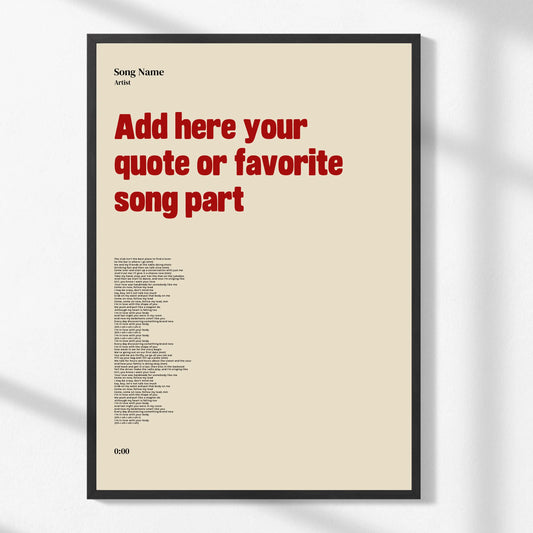

How art transforms interior design: Personalize any space
WallfullyTL;DR:
- Art influences a room’s mood, personality, and emotional resonance, shaping how you experience space.
- Proper scale, placement, and lighting are essential for displaying art effectively and harmoniously.
- Designing around art first creates more cohesive, personalized interiors, avoiding generic and disconnected decor.
Most people treat wall art like a final checkbox, something you pick up after the sofa is delivered and the paint has dried. That instinct leads to generic prints that never quite fit and rooms that feel assembled rather than lived in. Art is actually one of the most powerful tools you have in shaping how a space looks, feels, and tells your story, and getting it right changes everything about how you experience your home.
Table of Contents
- Why art matters: More than just decoration
- Art selection fundamentals: Scale, placement, and lighting
- Making art work in small or rental spaces
- Unifying your space: Telling your unique story
- Why most people get art in interior design backwards
- Ready to personalize your space?
- Frequently asked questions
Key Takeaways
| Point | Details |
|---|---|
| Art is foundational | Begin interior design with art to set mood and guide style choices. |
| Follow proven guidelines | Key measurements and rules help you choose and display art like a pro. |
| Small spaces can shine | Vertical and flexible wall art let renters and small-home dwellers personalize fearlessly. |
| Tell your story | Art that means something to you will always create a more personal home than following trends. |
Why art matters: More than just decoration
Walk into any room that stops you cold, and there is almost always a piece of art anchoring it. Not tucked in a corner or crammed above a doorframe, but genuinely commanding attention. That is not an accident. Art sets the emotional tone for a space before anything else registers, and wall art’s impact on how a room feels is far greater than most homeowners realize.
Decor’s effect on wellness is well documented. Color, texture, and imagery all trigger emotional responses. A moody abstract in dark plum and charcoal creates a completely different psychological atmosphere than a bright botanical print, even in the identical room. Art does not just reflect your taste. It actively shapes the mood of everyone who enters.
Here is what art actually does for a room when it is chosen well:
- Establishes a focal point that naturally organizes furniture and color choices around it
- Sets the color palette so your throw pillows, rugs, and accent pieces feel unified instead of random
- Communicates personality in a way that off-the-shelf furniture simply cannot
- Defines the scale and proportion of a room by drawing the eye to specific areas
- Creates emotional resonance, making a house feel like a home rather than a showroom
As the team at Architectural Digest notes when reviewing art-filled interiors, the best approach is to design around art rather than treat it as an afterthought, using the 60-30-10 rule for mixing styles and colors while balancing maximalism with restraint to create experiential, story-driven spaces.
“The rooms that people remember long after they leave are almost always built around a piece of art, not a sofa or a paint color.”
Even in challenging spaces, like a narrow hallway, a low-ceilinged apartment, or a rental with awkward walls, the right art choices transform what feels like a limitation into a signature feature. Art is not just decoration. It is a design decision with real consequences.
Art selection fundamentals: Scale, placement, and lighting
Understanding why art matters is one thing. Knowing how to actually hang it without making common mistakes is another. Most poorly displayed art is not a taste problem. It is a scale, placement, or lighting problem, and all three are fixable with a few simple rules.
Design pros consistently emphasize the same core methodology: match art scale to furniture using the two-thirds to three-quarters width rule, hang pieces at 57 to 60 inches from the floor to the center, position art 6 to 10 inches above furniture, and maintain consistent 2 to 4 inch spacing on gallery walls. These are not arbitrary numbers. They come from decades of interior design practice and how the human eye naturally finds comfort in proportional relationships.
Here is a practical breakdown for evaluating and installing new art:
- Measure your wall and furniture first. Never buy art before you know the width of the sofa, bed, or console table it will hang above.
- Apply the two-thirds rule. A sofa that is 84 inches wide needs art that is approximately 56 to 63 inches wide, whether that is a single piece or a grouped arrangement.
- Mark your center point. Use a piece of painter’s tape at 57 to 60 inches from the floor to visualize the exact center of your art before you hammer anything.
- Consider the light source. Natural light from windows can wash out art or create harsh glare. Artificial light works best when angled at 30 degrees from the wall to illuminate without reflection.
- Step back and evaluate. After hanging, view the piece from every entry point in the room, not just straight on, to check that it reads correctly from multiple angles.
| Art width guideline | Furniture width | Ideal art range |
|---|---|---|
| Two-thirds rule | 60 inches | 40 to 45 inches |
| Two-thirds rule | 84 inches | 56 to 63 inches |
| Three-quarters rule | 72 inches | 54 to 60 inches |
| Three-quarters rule | 96 inches | 72 to 80 inches |
When it comes to choosing accessories for harmony, the same principle applies as with art placement. Proportion and repetition create visual calm. Scattered, random sizing creates visual noise.
Pro Tip: Use paper templates cut to the exact size of your art and tape them to the wall with painter’s tape before hanging. This lets you test arrangement and scale without making a single hole.
For more creative options beyond the classic solo piece, creative art display ideas can open up approaches you might not have considered, from ledge shelves to layered frames.
Making art work in small or rental spaces
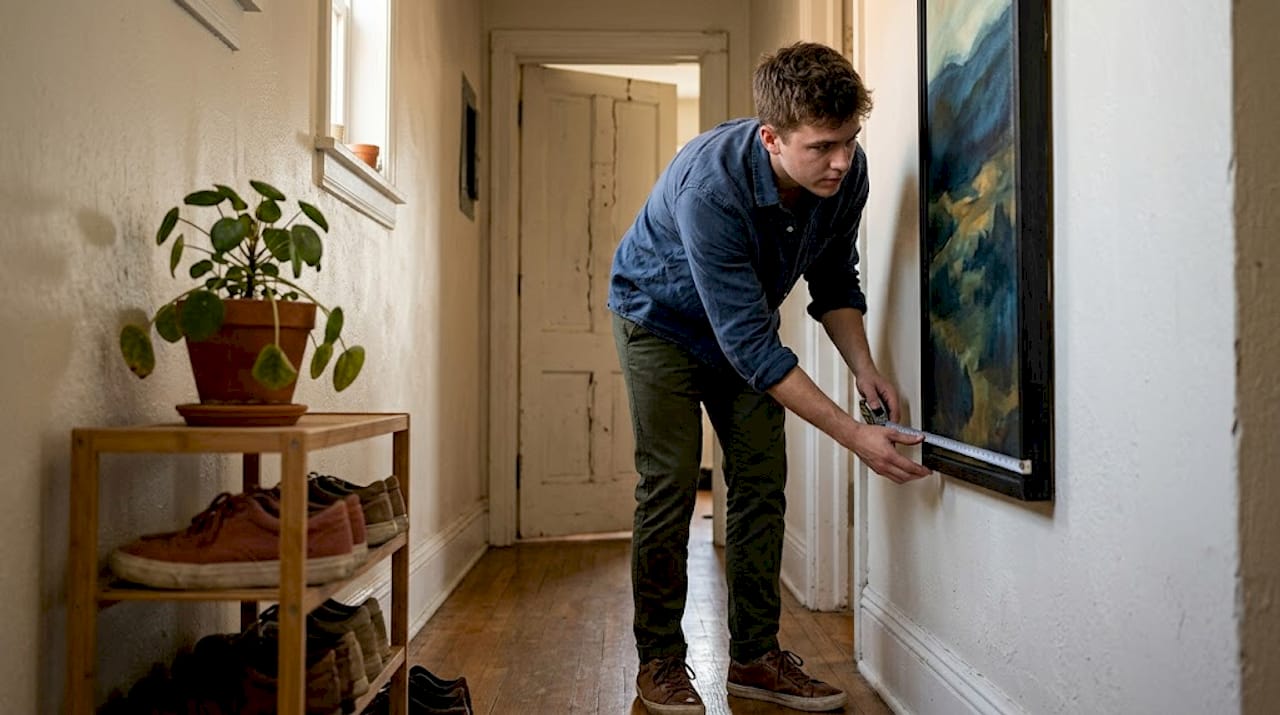
The biggest mistake people make in small rooms or rentals is playing it safe. They use small art because the room is small, hang it too high because they are nervous, and end up with a space that feels even more cramped and disconnected. Small rooms and rental apartments actually benefit the most from bold, confident art choices.
Vertical art is a game changer in compact spaces. A tall, narrow piece draws the eye upward, tricking the brain into perceiving more height. The same room with a wide, horizontal piece feels lower and more compressed. Per design professionals at Domino, vertical art in small spaces is one of the most effective tools for expanding spatial perception without changing a single structural element.
Here is a quick comparison to guide your choices based on your situation:
| Challenge | Common mistake | Better approach |
|---|---|---|
| Small room | Small, scattered art pieces | One large vertical piece or cohesive gallery wall |
| Low ceiling | Wide horizontal art | Tall, elongated pieces that direct the eye upward |
| Rental apartment | No art to avoid holes | Removable adhesive strips, ledge displays, leaning frames |
| Awkward wall shape | Ignoring the wall | Use the shape to your advantage with a custom-fit arrangement |
| Limited budget | Cheap filler prints | One meaningful, well-placed piece rather than many generic ones |
Renters have more options than they often realize:
- Adhesive hanging strips like Command hooks hold surprising weight without wall damage
- Leaning large prints against walls or on shelves creates a casual, layered look
- Picture ledges allow you to swap art freely without making new holes each time
- Gallery walls with templates let you plan and replicate a layout perfectly on move-in
Pro Tip: Build your gallery wall on the floor first. Arrange frames until you love the composition, photograph it, then transfer the layout to the wall using that photo as a guide.
For renters who want a more detailed strategy, gallery wall tips for small rooms offer specific layout guides for awkward and compact spaces. And if you want something that feels truly yours rather than catalog-standard, customizing art for unique style walks through how to make personalized pieces work in any room.
The core rule across all situations: avoid hanging art too high, avoid scattering random pieces without a plan, and resist filling every inch of wall just because you can. Restraint and intentionality always win.
Unifying your space: Telling your unique story
Once the practical decisions are made, placement, scale, and lighting, the more meaningful question becomes: what story are you actually telling? A room full of technically well-hung art can still feel cold and impersonal if the pieces have no relationship to each other or to the people who live there.
The most memorable, resonant interiors are built around a narrative. That might be the places you have lived, the music that shaped you, a relationship that matters, or simply a color palette that makes you feel calm. Art is the most direct way to put that narrative on the walls.
Here is how to approach curating a cohesive collection:
- Start with one piece you genuinely love, not one that matches your sofa. Build from there.
- Use the 60-30-10 rule to balance colors across your art and room. 60% dominant tone, 30% secondary, 10% accent. This creates visual harmony even when mixing very different styles.
- Connect pieces through theme, palette, or material rather than insisting every frame match perfectly. A gallery wall with mismatched frames but unified subject matter reads as intentional and curated.
- Resist trend-chasing. A piece you chose because it was everywhere in 2024 will feel dated by 2027. A piece connected to something real in your life never will.
As highlighted in Architectural Digest’s coverage of art-filled interiors, the most compelling spaces integrate art with storytelling to create experiential rooms rather than simply decorated ones. The 60-30-10 principle makes that process disciplined without stripping out the personality.
A compelling statistic worth noting: Studies consistently show that people rate their happiness in personalized spaces significantly higher than in generic ones, even when the furniture and layout are identical. The difference is almost always the art and personal objects they chose themselves.
Pro Tip: Walk through your home with fresh eyes and ask: “If a stranger walked in here, what would they learn about me?” If the answer is “not much,” it is time to let your art do more talking.
For a guided approach to building that visual vocabulary, creating custom wall decor is a great starting point. And if you want specific frameworks for making every piece count, tips for meaningful decor covers seven concrete methods for turning wall space into something genuinely worth looking at every day.
Why most people get art in interior design backwards
Here is something that most interior design articles will not say directly: the standard sequence for furnishing a home is backwards, and it is causing a lot of unhappy rooms.
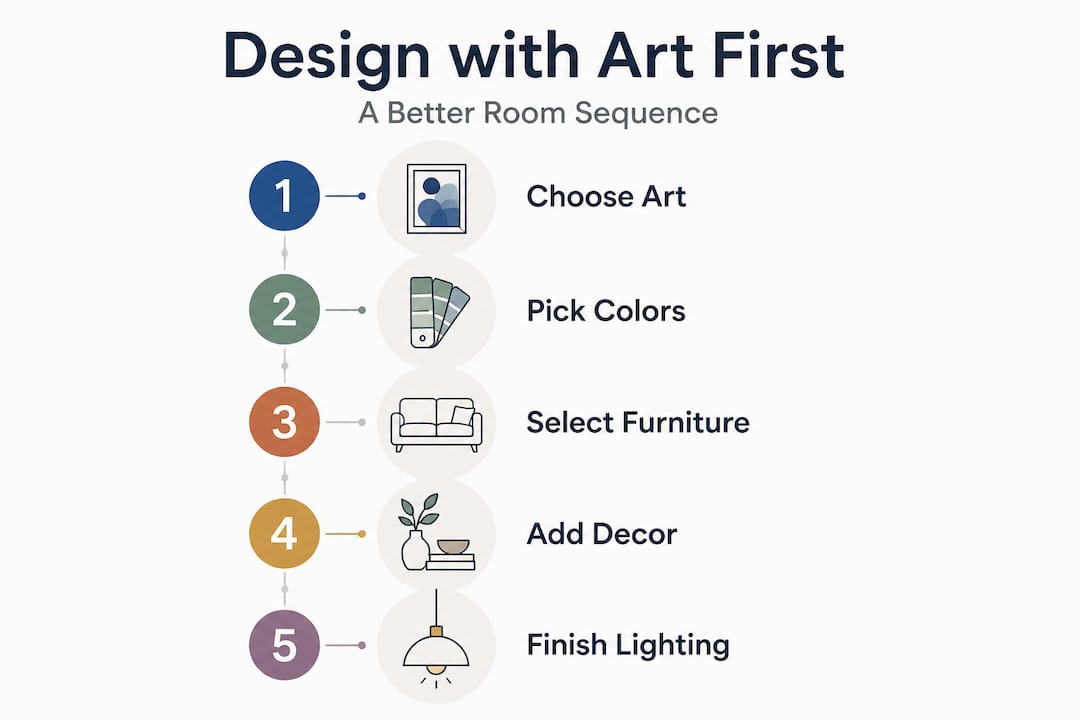
The typical approach goes: paint the walls, buy a sofa, find a rug, then scramble to find art that somehow fits with all the decisions already locked in. That approach forces art into a supporting role it was never designed to play, and it almost always produces results that feel safe, generic, and forgettable.
We have seen this pattern repeatedly in how people shop for their homes. They arrive at art last, constrained by a color palette already set in stone, a furniture style already purchased, and a budget already mostly spent. So they settle for something inoffensive rather than something meaningful.
Flipping that sequence changes everything. When you choose wall art first, the rest of the room becomes much easier to design. The art dictates the palette, hints at the mood, and sets a standard for everything else that follows. You stop asking “does this art match my room?” and start asking “does this sofa support my art?” That is a fundamentally more creative and satisfying question to answer.
The best designed rooms we have ever seen, not in architecture magazines but in real homes belonging to real people, were all built this way. The art was the anchor. The furniture, lighting, and accessories were chosen to support it. The result was always a room that felt like it belonged to someone specific, not a showroom mock-up.
This is not just aesthetic philosophy. It is practical advice that saves time and money, because when your art drives your decisions, you stop buying things that do not belong and start building something coherent from the beginning.
Ready to personalize your space?
If this article has shifted how you think about art in your home, the next step is finding pieces that actually reflect who you are and what matters to you.
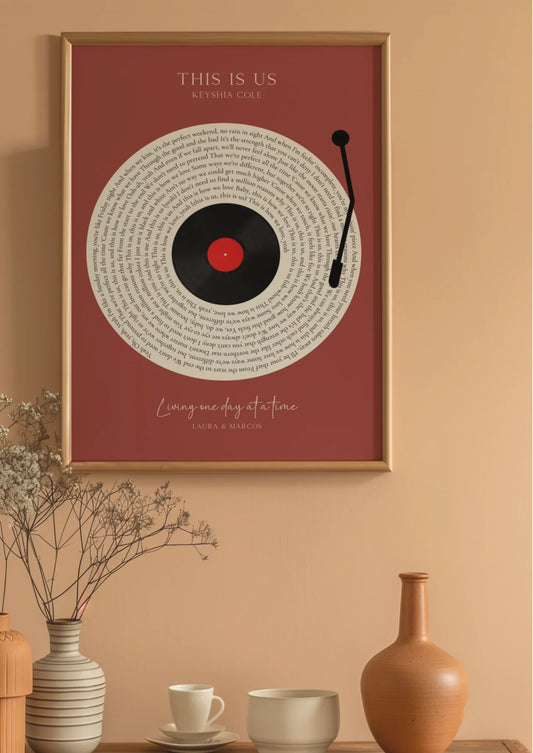
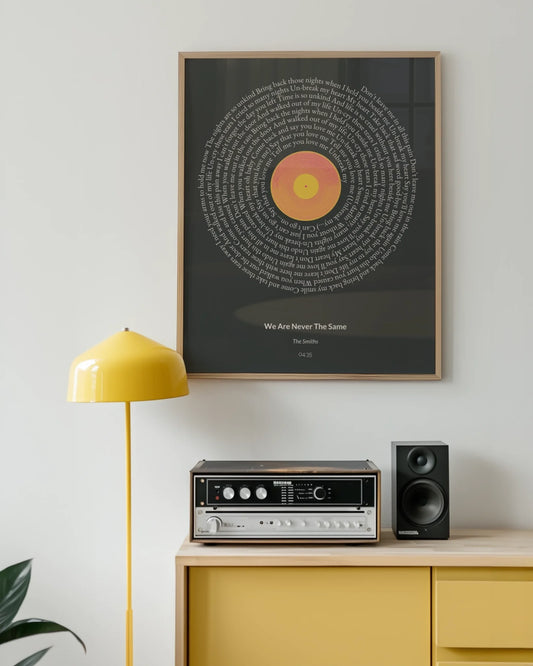
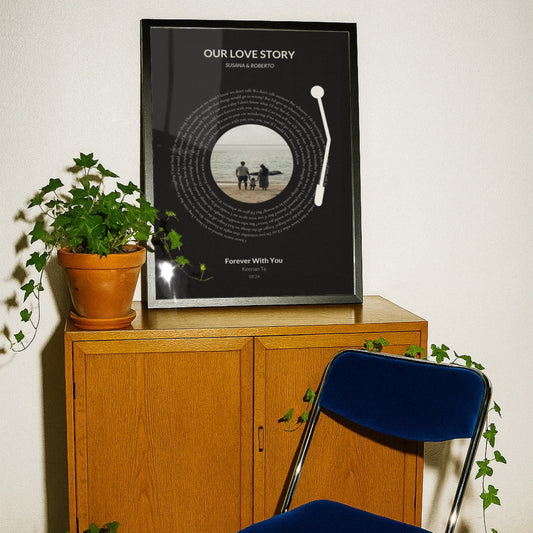
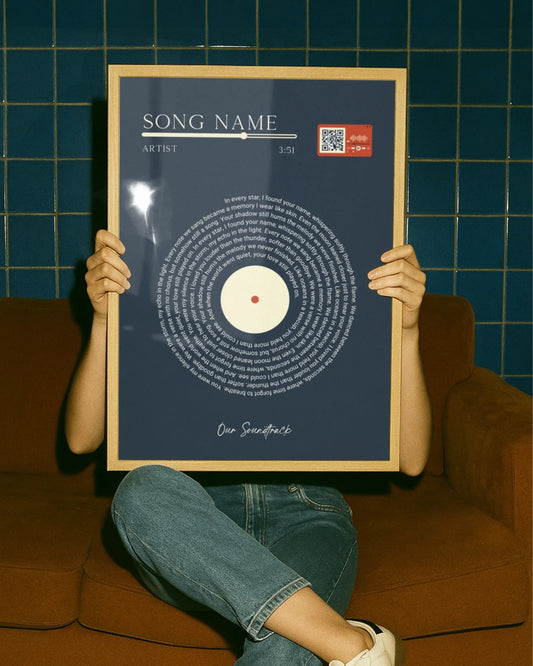
At Wallfully, we specialize in exactly that. From song lyric posters and custom maps to zodiac prints, photo collages, and milestone art, every piece can be personalized with your names, dates, locations, and details. Whether you are a homeowner building a gallery wall from scratch, a renter looking for damage-free options, or searching for a gift that genuinely means something, our guided customization process makes it easy to preview and create wall art that tells your specific story. All orders ship free, and every piece is printed on eco-friendly materials with a satisfaction guarantee.
Frequently asked questions
What is the 60-30-10 rule in interior design with art?
The 60-30-10 rule means using 60% dominant color, 30% secondary color, and 10% accent throughout your room, with art and decor working together to achieve that balanced distribution for a cohesive, intentional look.
How do I hang art at the right height?
Hang single pieces so the center of the art sits 57 to 60 inches from the floor, which aligns with average eye level and feels natural in most rooms.
Can I use art to make a small space feel larger?
Yes. Vertical pieces draw the eye upward and create the perception of height, making compact rooms feel significantly more spacious without any structural changes.
What are good art options for renters?
Removable prints hung with adhesive strips, leaning frames on shelves, and picture ledge systems all allow renters to display art boldly without risking their security deposit.
How does lighting impact the display of wall art?
Good lighting enhances color and detail in your art while avoiding glare; angling artificial light at roughly 30 degrees from the wall gives the best result for most pieces.
Recommended
- Types of Personalized Décor: Creating Meaningful Spaces
- Transform Spaces with Personalized Wall Art
- Why personalize home decor: 70% feel more connected
- Role of Wall Art in Home Decor – Transforming Spaces
- How to create artful interiors with diamond painting
- Transform your space: a DIY home décor guide for UK enthusiasts