

Why Choose Eco-Conscious Materials: Benefits for You
WallfullyChoosing eco-conscious materials lowers your environmental footprint, reduces exposure to harmful chemicals, and typically costs less over a product’s full lifespan. Three reasons stand out immediately:
- Greenhouse gas and waste reduction: Circular approaches to materials can cut GHG emissions by up to 28% and energy demand by up to 46% compared to linear supply chains.
- Indoor health improvements: Low-VOC and toxin-free materials reduce respiratory irritation, headaches, and long-term chemical exposure inside your home.
- Lifecycle value: Durable, well-made products from certified materials need replacing less often, which saves money and reduces waste over time.
Certifications like FSC, GOTS, and Cradle to Cradle give you a fast, reliable shortcut when evaluating products. Wallfully.com is a practical example of how these principles apply to everyday purchases like personalized wall art.
Key Takeaways
Choosing eco-conscious materials reduces GHG emissions, protects indoor air quality, and lowers lifecycle costs, with certifications like FSC, GOTS, and OEKO-TEX giving you fast, verifiable shortcuts.
| Point | Details |
|---|---|
| GHG and energy savings | Circular material approaches can cut GHG emissions up to 28% and energy demand up to 46% vs. linear supply chains. |
| Indoor health gains | Low-VOC and certified materials reduce chemical off-gassing, improving air quality in your home. |
| Lifecycle cost advantage | Durable, quality materials bought once typically cost less over time than cheap alternatives replaced repeatedly. |
| Certification shortcuts | FSC, GOTS, OEKO-TEX, GRS, and Cradle to Cradle are the labels worth trusting; verify certificate numbers online. |
| Wallfully for wall art | Wallfully offers personalized prints using eco-friendly materials; check material details and preview options before ordering. |
Table of Contents
- 1. Why eco-conscious materials reduce your environmental impact
- 2. Eco-conscious materials protect your health at home
- 3. Lifecycle thinking changes which materials are actually better
- 4. Common eco-conscious materials and when they make sense
- 5. Costs, savings, and U.S. incentives for eco-conscious buyers
- 6. How to choose: certifications, red flags, and a buyer checklist
- 7. Quick actions you can take today
- 8. How these principles apply to personalized wall art
- A note on practical consumer sustainability
- Eco-conscious personalized wall art from Wallfully
- Sources
1. Why eco-conscious materials reduce your environmental impact
The clearest reason to choose sustainable materials is what they spare the planet. Conventional production relies on virgin resource extraction, energy-intensive manufacturing, and end-of-life disposal that sends materials to landfills or incinerators. Eco-conscious alternatives interrupt that chain at multiple points.
Lifecycle GHG reductions are the most measurable win. Research on circular plastics packaging found GHG savings up to 28% and cumulative energy demand reductions up to 46% compared to a linear supply chain. Those figures come from optimized scenarios, but even partial shifts toward recycled content and closed-loop systems move the needle.
Waste reduction follows naturally. Products made with recycled content require less virgin extraction. When those products are also designed for disassembly or recycling, less material ends up in landfills. Global plastic pollution data underscores why this matters: plastic waste entering the environment has grown steadily, and packaging and single-use materials are a leading driver.
The circular economy model replaces the old take-make-dispose pattern with one that keeps materials in use. Choosing products with recycled content, recyclable packaging, or take-back programs is how individual purchases connect to that larger system.
2. Eco-conscious materials protect your health at home
The health case for sustainable materials is personal and immediate. Many conventional products off-gas volatile organic compounds (VOCs), a category of airborne chemicals released from paints, adhesives, composite boards, and synthetic textiles. Short-term exposure causes eye and throat irritation, headaches, and dizziness. Long-term exposure to certain VOCs is linked to more serious respiratory and neurological effects.
EPA guidance confirms that choosing greener products protects human health through safer chemical profiles and lower emissions. The practical translation: look for materials that have been tested and certified for chemical safety.
Quick substitution guide for common purchases:
- Paints and finishes: Choose zero-VOC or low-VOC formulas. Major paint brands now offer these across most color ranges.
- Composite wood products: Look for formaldehyde-free or CARB Phase 2-compliant boards in furniture and cabinetry.
- Textiles: OEKO-TEX Standard 100 certification means the fabric has been tested for harmful substances including pesticide residues, heavy metals, and formaldehyde.
- Adhesives and sealants: Water-based adhesives typically carry a much lower VOC load than solvent-based alternatives.
- Inks and coatings on printed products: Soy-based or water-based inks release fewer VOCs than petroleum-based inks during and after printing.
The connection between material choices and indoor wellbeing is direct. Swapping one high-VOC product for a certified alternative can measurably improve air quality in a single room.
3. Lifecycle thinking changes which materials are actually better
Surface-level “eco” claims often miss the bigger picture. A product made from a plant-based material is not automatically better if it requires high-energy manufacturing, ships across three continents, and gets replaced every two years. Embodied emissions, the total GHG released to produce, transport, and dispose of a material, are what actually determine environmental impact.
Embodied emissions defined: These are the upstream emissions locked into a product before it ever reaches you. For many manufactured goods, Scope 3 supply-chain emissions dominate the total footprint. In the printing industry, for example, the bulk of embodied carbon comes from paper sourcing, ink production, and logistics, not the printing process itself.
Durability changes the math significantly. A high-quality item that lasts ten years almost always has a lower per-year environmental cost than a cheap version replaced five times. Repairability matters for the same reason: a product designed to be fixed keeps its embodied emissions from going to waste.
Trade-offs are real, though. A life-cycle assessment of polyethylene packaging found that in several U.S. applications, PE performed better on global warming potential than some alternative materials, because the alternative required more energy to produce. Material switching only helps when the full lifecycle is considered.
| Variable | Circular/optimized scenario | Linear baseline |
|---|---|---|
| GHG emissions savings | Up to 28% | Reference |
| Cumulative energy demand savings | Up to 46% | Reference |
| Key driver | Recycled content + closed-loop design | Virgin material + landfill disposal |
4. Common eco-conscious materials and when they make sense
Knowing the category is one thing. Knowing which material fits which purchase is what makes the difference at checkout.
- Reclaimed and FSC-certified wood: Reclaimed wood carries lower embodied carbon than new-cut lumber and adds character. FSC certification on new wood guarantees responsible forestry. Both work well for furniture, frames, and flooring.
- Recycled PET (rPET): Made from post-consumer plastic bottles, rPET is widely used in textiles and some packaging. It reduces virgin plastic demand, though recycling rates for PET vary by region and collection infrastructure.
- Organic cotton (GOTS-certified): Uses significantly less synthetic pesticide than conventional cotton. GOTS certification covers both the fiber and the processing chemicals, so the label means more than just “organic fiber.”
- Natural fibers (linen, hemp, wool): Generally biodegradable and lower-impact than synthetics when grown without heavy chemical inputs. Hemp in particular requires minimal water and no pesticides.
- Low-VOC and water-based finishes: Applicable to paints, varnishes, and printing inks. Lower chemical load during application and after curing.
- Recycled paper and FSC-certified paper: Recycled content reduces virgin pulp demand. FSC certification on virgin paper ensures the fiber comes from responsibly managed forests.
- Compostable packaging: A genuine option when industrial composting infrastructure is accessible. Without that infrastructure, “compostable” packaging often ends up in landfill, where it behaves like conventional plastic. Home-compostable certification (look for the seedling logo or TÜV Austria OK compost HOME mark) is a higher bar and more practical for most U.S. households.
One nuance worth flagging: “biobased” does not mean biodegradable, and “compostable” does not mean home-compostable. Read the fine print on the label.
5. Costs, savings, and U.S. incentives for eco-conscious buyers
The upfront cost of sustainable materials is often higher. The lifecycle cost frequently is not.
- Durability reduces replacement frequency: A well-made item from quality materials bought once costs less over five years than a cheap version bought three times.
- Energy-efficient materials lower utility bills: Insulation, windows, and building materials with better thermal performance cut heating and cooling costs year over year.
- Lighter, minimal packaging lowers shipping costs: Sustainable packaging reduces life-cycle environmental impacts and can lower shipping costs through lighter weight and reduced material volume, a benefit that flows to both businesses and consumers.
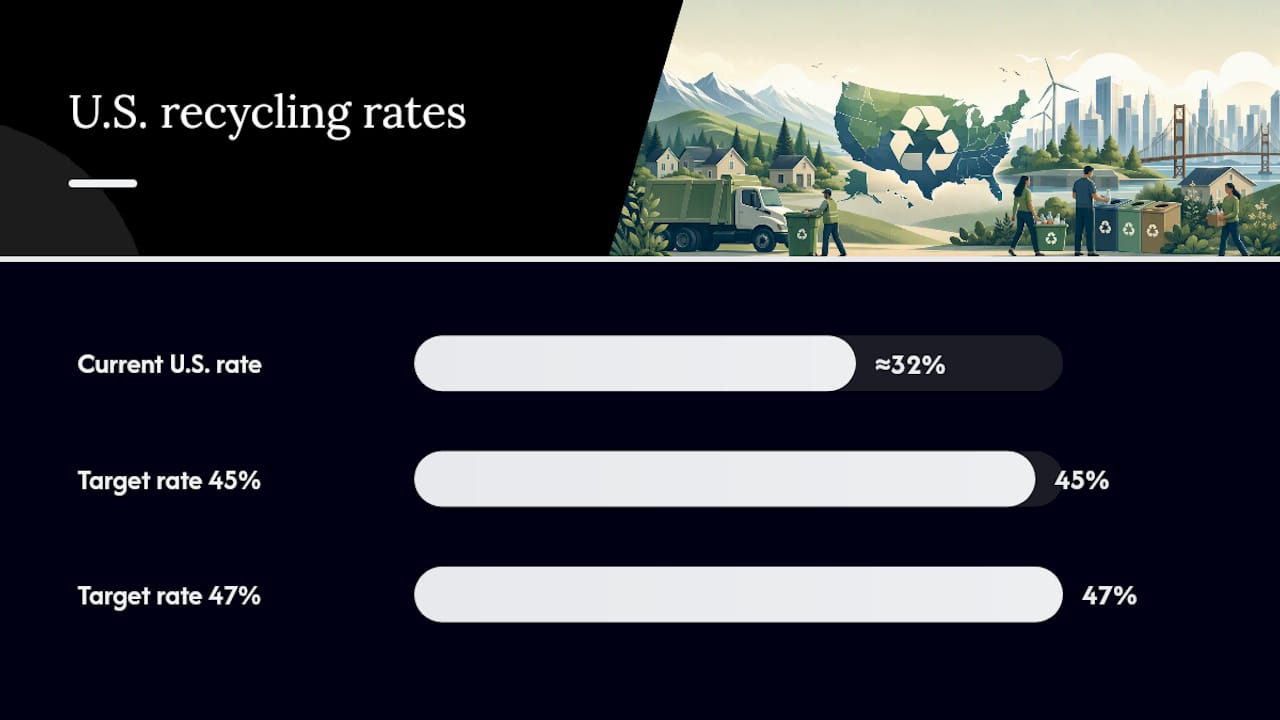
- U.S. recycling infrastructure gaps affect real-world value: The EPA estimates that raising U.S. recycling rates from roughly 32% to 45–47% for targeted packaging materials would require an investment of approximately $22–$28 billion. Until that infrastructure exists, the recyclability claim on a product is only as good as your local collection system.
- Federal and state incentives: Tax credits under the Inflation Reduction Act cover energy-efficient home improvements including insulation and windows. Some states offer additional rebates for recycled-content building materials. Check the Database of State Incentives for Renewables & Efficiency (DSIRE) for your state.
Regional recycling infrastructure is the variable most buyers overlook. A product marketed as recyclable may have no viable end market in your zip code. Before buying on recyclability alone, check what your local program actually accepts.
6. How to choose: certifications, red flags, and a buyer checklist
You do not need to become a materials scientist. A short checklist and a handful of trusted labels cover most purchase decisions.
Buyer checklist:
- [ ] Is the material durable enough to last? Longevity beats biodegradability in most lifecycle comparisons.
- [ ] Does it carry a recognized third-party certification (not just a brand’s own “eco” badge)?
- [ ] Is the packaging minimal and made from recycled or recyclable materials?
- [ ] Can it be recycled, composted, or returned through a take-back program at end of life?
- [ ] Is the certification relevant to your local infrastructure (industrial compost vs. home compost)?
Certifications worth trusting:
- FSC / PEFC: Wood and paper from responsibly managed forests.
- GRS (Global Recycled Standard): Verified recycled content in textiles and other materials.
- GOTS (Global Organic Textile Standard): Organic fiber plus safe processing chemicals.
- OEKO-TEX Standard 100: Fabric tested for harmful substances at every production stage.
- Cradle to Cradle Certified: Tiered certification (Basic through Platinum) covering material health, recyclability, renewable energy use, water stewardship, and social fairness.
Red flags:
- Vague claims like “eco-friendly,” “green,” or “natural” with no third-party certification behind them.
- A logo that looks official but links to no verifiable certifying body.
- “Compostable” without specifying industrial or home compostability.
- No information on recycled content percentage or sourcing.
7. Quick actions you can take today
Start with the swaps that deliver the most impact per dollar and effort.
- Switch to low-VOC or zero-VOC paint on your next interior project. The price difference is minimal; the air quality difference is immediate.
- Choose reclaimed or FSC-certified wood for furniture and frames. Ask the seller for the certification number if it is not printed on the product.
- Buy high-quality textiles once rather than fast-fashion alternatives repeatedly. GOTS or OEKO-TEX labels are your fastest quality check.
- Check packaging before you buy. Minimal, recycled-content packaging is a signal that the brand has thought through its full footprint.
- Ask three questions at checkout (in-store or online): What percent recycled content? Are finishes or inks low-VOC? Is there a take-back or recycling option?
Pro Tip: Ask for the certification number, not just the logo. Legitimate FSC, GOTS, and GRS certificates are publicly searchable on each organization’s database. A brand that cannot provide a certificate number when asked is likely using the logo without the backing.
For sustainable print materials, the same logic applies: paper certification, ink type, and frame sourcing are the three variables that matter most.
8. How these principles apply to personalized wall art
Wall art is a category where eco-conscious choices are easy to overlook because the product feels small. But paper type, ink chemistry, adhesives, and frame materials all carry embodied emissions and chemical profiles that matter, especially in a living space.
What to look for in wall art:
- Paper: FSC-certified or recycled-content paper stock. Ask what percentage of post-consumer recycled fiber the paper contains.
- Inks: Water-based or soy-based inks have a lower VOC profile than petroleum-based alternatives. This matters for art hung in bedrooms or children’s rooms.
- Frames: FSC-certified wood frames or frames made from recycled materials. Avoid frames with finishes that off-gas VOCs.
- Packaging: Minimal, recycled-content packaging reduces waste on delivery.
- Local fulfillment: Shorter shipping distances reduce transport emissions. A printer closer to you means lower logistics footprint.
Upstream supply-chain emissions dominate the total footprint for print products, which means paper sourcing and ink choices matter more than most buyers realize.
Wallfully uses eco-friendly materials in its personalized prints and offers framing options. You can review material details and use the preview tool before ordering at Wallfully. Their eco-friendly wall art guide covers specific material choices and what to look for when ordering a custom print.
A note on practical consumer sustainability
The evidence points in one direction: small, consistent material choices add up. Choosing a certified, durable product over a cheap, unverified one is rarely the dramatic sacrifice it sounds like. The most reliable path is to prioritize longevity first, then verified labels, then end-of-life options. Biodegradability and “natural” claims are the least reliable shortcuts; third-party certification numbers you can look up are the most reliable. Every purchase is a small vote for the supply chain behind it, and the supply chains that respond to demand for verified, lower-impact materials are the ones that scale.
Eco-conscious personalized wall art from Wallfully
Personalized wall art is one of the more considered purchases people make for their homes. Wallfully makes it possible to order custom prints, song lyric posters, maps, and milestone art using eco-friendly materials, with a live preview tool so you see exactly what you are getting before it ships.

Material transparency matters here. Wallfully’s eco-friendly printing process covers paper certification, ink type, and packaging choices, so you are not guessing about what ends up on your wall or in your home’s air. Framing options include certified wood frames. Free shipping is included on all orders.
If you are ready to put the buyer checklist to work on a real purchase, start with a custom print at Wallfully and check the material details on the product page before you order.
Sources
- Minimum GHG emissions and energy consumption of U.S. PET and polyolefin packaging supply chains in a circular economy - RSC Sustainability (RSC Publishing)
- Why Buy Greener Products? | US EPA
- Financial assessment of US recycling system infrastructure | EPA (PDF)
- Polyethylene packaging and alternative materials in the United States: A life cycle assessment
- Printing and related support activities emissions summary (U.S. Department of Energy PDF)
- Plastic pollution | Our World in Data
- Sustainable Packaging: 8 Examples & Solutions for You | DHL Global