
High-quality poster paper: what really matters for results
WallfullyMost people pick poster paper based on price or a quick glance at the weight listed on a product page. That approach leaves a lot on the table. The real factors behind a stunning custom poster, including vivid color, lasting durability, and a finish that looks intentional on your wall, go well beyond thickness. Paper weight of 180-250 GSM is a solid starting point, but it is only one piece of a much bigger picture. This guide breaks down every property that separates a forgettable print from one that genuinely impresses, so you can order with confidence every time.
Table of Contents
- What is high-quality poster paper?
- The core qualities: weight, finish, and durability explained
- Finish options: choosing the right look and feel
- Color, vibrancy, and clarity: the science of print quality
- Expert insights: what most buyers miss when choosing poster paper
- Quick reference: poster paper quality checklist
- Bring your custom poster project to life
- Frequently asked questions
Key Takeaways
| Point | Details |
|---|---|
| Balance matters most | Choose poster paper that offers the right mix of weight, finish, and durability for your needs. |
| Finish affects experience | Matte and semi-gloss finishes reduce glare and boost readability compared to glossy paper. |
| Specs for sharpness | High opacity, brightness, and whiteness deliver vivid color and clear text without show-through. |
| Durability isn’t just weight | Look for tear resistance and archival properties for posters that last, move, or get gifted. |
What is high-quality poster paper?
Now that you see what most people miss about paper selection, let’s define exactly what counts as high quality. High-quality poster paper is not a single product. It is a combination of properties that work together to produce a print that looks sharp, holds up over time, and suits the space where it will live.
Here are the core properties to evaluate:
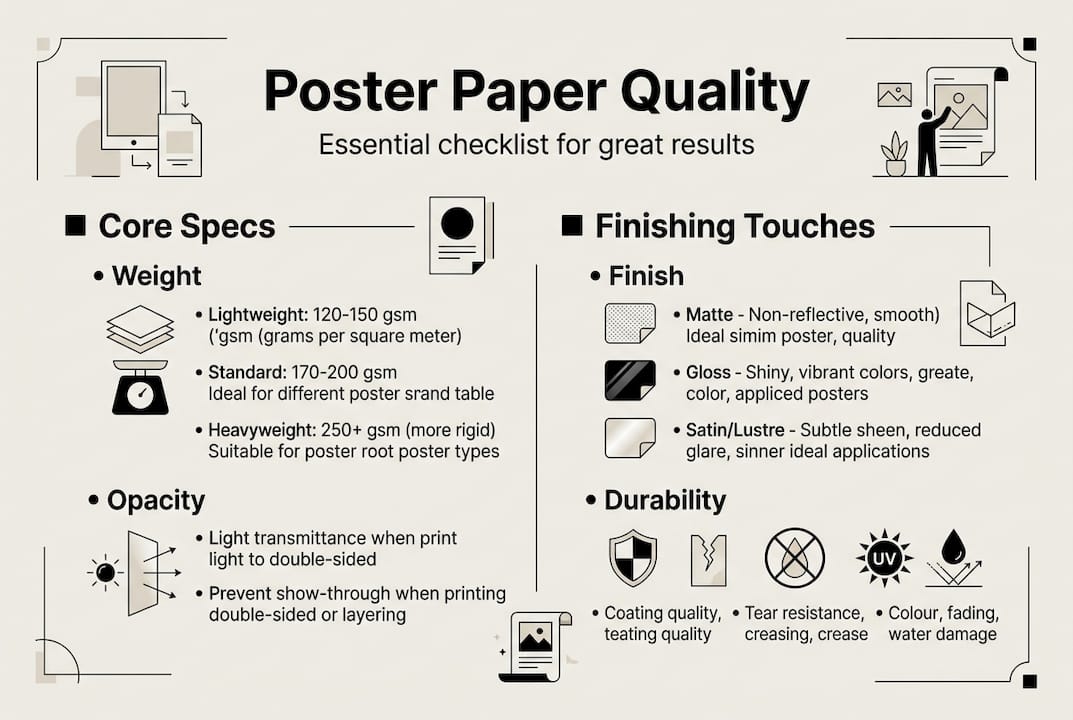
- Weight (GSM): Standard poster paper runs 180-200 GSM. Premium options sit between 200-250 GSM. Higher GSM means sturdier handling and a more substantial feel.
- Surface finish: Matte, semi-gloss (satin), and glossy each change how light interacts with your print.
- Opacity: Prevents the wall color or backing from showing through the paper.
- Brightness and whiteness: These specs control how vivid colors appear and how clean whites look.
- Durability: Includes tear resistance and tensile strength, not just thickness.
Understanding wall art material types helps you see how paper fits into the broader world of home decor choices. Different materials serve different purposes, and paper remains one of the most versatile and accessible options for custom projects.
“High-quality poster paper typically has a weight of 180-250 GSM for durability and premium feel.” The finish and opacity specs you choose on top of that weight are what truly determine the final result.
HP satin poster paper data shows how professional-grade media combines weight, coating, and brightness specs to achieve consistent, gallery-level output. That same logic applies when you are ordering a custom poster for your home.
The core qualities: weight, finish, and durability explained
Once you know what qualities set high-quality paper apart, it is time to understand how weight, finish, and durability specifically contribute to a poster’s look and lifetime.
| Property | Standard range | Premium range | Why it matters |
|---|---|---|---|
| Weight (GSM) | 180-200 | 200-250 | Sturdiness, handling feel |
| Thickness (microns) | 150-200 | 200-277 | Tear resistance, rigidity |
| Finish | Matte | Satin or glossy | Glare control, color vibrancy |
| Tensile strength | Moderate | High | Survives rolling, pinning, gifting |
Weight, finish, and thickness each play a distinct role. A 250 GSM matte sheet feels completely different from a 180 GSM glossy one, even if both are technically “poster paper.” The heavier sheet resists bending and holds its shape when framed or pinned. The lighter glossy sheet might look vivid but crease easily.
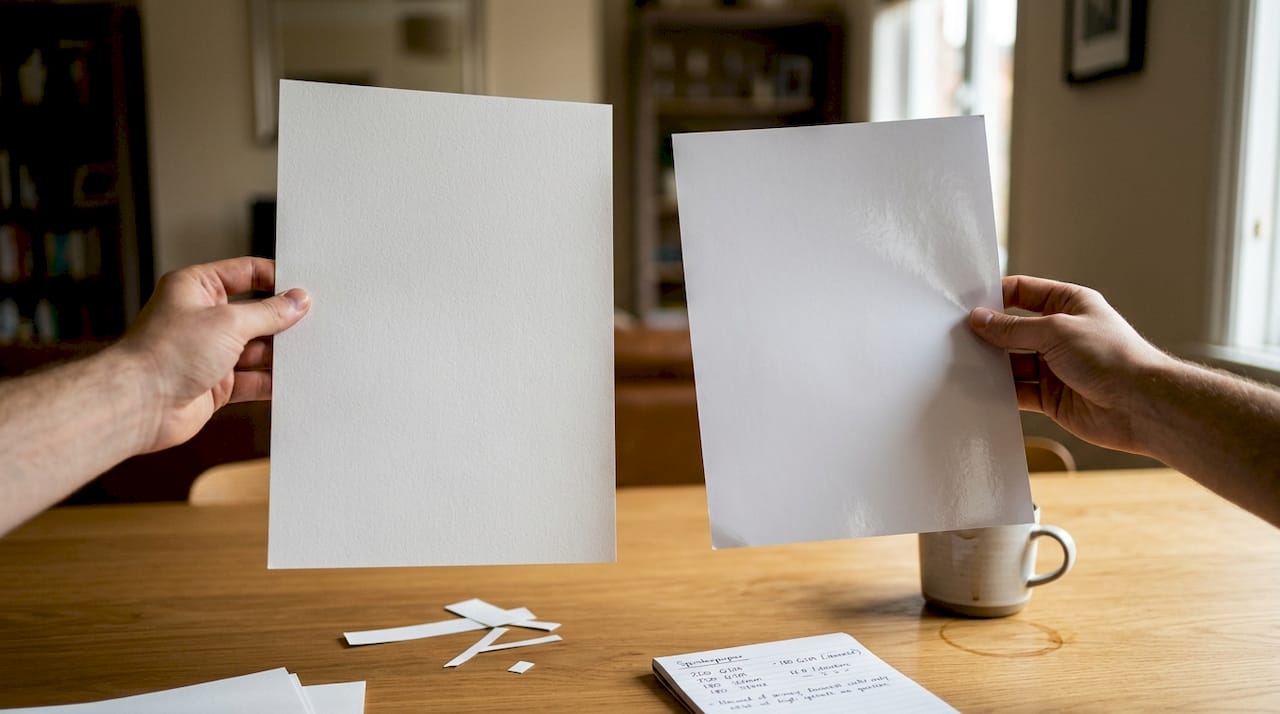
Durability is where many buyers get surprised. Tensile strength and tear resistance are separate from GSM. Two sheets can weigh the same but behave very differently when you roll one up to ship it as a gift or unpin it from a wall.
Pro Tip: If you want a poster that can be pinned, unpinned, or gifted without creasing, prioritize tear resistance over raw GSM. A 200 GSM sheet with high tear resistance will outperform a 240 GSM sheet with low tensile strength every time.
For more ideas on how paper quality connects to the overall design, check out these poster design tips that cover layout, color choices, and sizing for wall display.
Finish options: choosing the right look and feel
With durability set, the next biggest decision is finish, which greatly impacts both style and usability.
| Finish | Glare level | Color vibrancy | Best use case |
|---|---|---|---|
| Glossy | High | Very high | Gifts, dark image-heavy designs, low-light rooms |
| Semi-gloss/Satin | Low to medium | High | Everyday display, mixed text and image |
| Matte | None | Moderate | Bright rooms, text-heavy designs, living spaces |
Here is how each finish performs in real-world settings:
- Glossy makes colors pop and gives photos a rich, saturated look. The trade-off is glare under overhead lighting, which can wash out detail.
- Matte eliminates reflection entirely, making it ideal for rooms with large windows or bright overhead lights. Text stays crisp and readable.
- Semi-gloss/satin sits in the sweet spot. It resists fingerprints, keeps glare low, and still delivers bold, vibrant color balance that works in most home environments.
Pro Tip: For a living room or bedroom display, semi-gloss is almost always the safest choice. Save glossy for a gift with a dramatic photo design that will be displayed in a dimmer space.
If you are still deciding how a poster will fit into your space, these decorating with posters ideas show real-room examples that make the finish decision much easier. It also helps to understand the difference between posters and prints before you commit to a format.
The photo paper finish guide from Modern Memory Design offers a detailed visual breakdown of how each finish looks under different lighting conditions.
Color, vibrancy, and clarity: the science of print quality
Beyond touch and toughness, what you see, the colors and detail, depend on these hidden paper specs.
Three numbers matter most for visual quality:
- Opacity (96-98%): Prevents the wall color or backing material from bleeding through. Lower opacity means your print can look washed out or uneven depending on what is behind it.
- Brightness (93+): A higher brightness rating means colors appear more vivid and saturated. This is especially important for custom posters with bold graphics or photography.
- Whiteness (120-130): Controls how clean the white areas of your print look. Higher whiteness means crisper text and cleaner backgrounds.
High opacity above 95%, brightness above 93, and whiteness between 120 and 130 are the benchmarks used by professional print labs. These are not arbitrary numbers. They reflect what the human eye actually perceives as sharp and vivid.
Paper that meets these specs allows ink to sit on the surface cleanly, dry fast, and resist smudging, which means your poster looks as good in six months as it does on day one.
For a real-world look at how these specs translate to finished prints, matte poster examples show the kind of clarity and color depth that high-spec paper produces. The benefits of custom posters for home decor become much more obvious when the paper quality is doing its job.
Expert insights: what most buyers miss when choosing poster paper
Now that the technical criteria are clear, avoid these all-too-common mistakes and make confident choices like a pro.
- Relying only on GSM. Higher GSM alone is insufficient for handling without damage. Tensile strength and tear resistance are what protect a poster when it is rolled, shipped, or repositioned.
- Ignoring the room. Matte and semi-gloss work in everyday living spaces. Glossy is a special-use finish, not a universal upgrade.
- Skipping archival specs. Acid-free paper prevents yellowing over time. If you are buying a poster as a gift or keepsake, this matters more than almost any other spec.
- Forgetting how the poster will be used. A poster that gets pinned and unpinned regularly needs different paper than one that goes straight into a frame and stays there.
- Choosing the cheapest weight. For gifts especially, prioritize durability and a non-glare surface over the lowest price point.
The best poster paper for your project is the one that matches how you will use it, not just the one with the highest number on the label.
Pro Tip: Before ordering, think about where the poster will live and how often it will be handled. That single question will narrow your finish and weight choices faster than any spec sheet.
For display ideas that match different paper types, explore ways to display wall art and custom art tips that cover framing, pinning, and hanging options for every room.
Quick reference: poster paper quality checklist
To tie it all together, use this checklist to vet the quality of any poster paper before you order.
- Weight: 200-250 GSM for most home and gift projects
- Finish: Matte or semi-gloss for low glare and text-heavy designs; glossy for image-heavy prints in low light
- Opacity: 96% or higher
- Brightness: 93 or above
- Whiteness: Between 120 and 130
- Tear resistance: High, especially if the poster will be moved, rolled, or gifted
- Acid-free: Yes, for any print meant to last years or serve as a keepsake
| Spec | Minimum acceptable | Ideal target |
|---|---|---|
| Weight | 180 GSM | 200-250 GSM |
| Opacity | 95% | 96-98% |
| Brightness | 90 | 93+ |
| Whiteness | 110 | 120-130 |
| Thickness | 150 microns | 200-277 microns |
This checklist works whether you are ordering from a local print shop or an online platform. The custom wall art guide at Wallfully walks through how these specs translate into the finished products available on the site, so you always know what you are getting.
Bring your custom poster project to life
Armed with this knowledge, you are ready to bring your vision to life on paper that matches your standards.
Wallfully custom posters are printed on premium materials that meet the specs covered in this guide, so you never have to guess about opacity, brightness, or finish. Every order comes with free shipping and a satisfaction guarantee, which means the only thing you need to focus on is the design.

Whether you are creating a song lyric print, a custom map, or a milestone poster for someone special, Wallfully makes the process simple and the result stunning. If you want to explore more before you order, the print-on-demand wall art guide covers how the production process works and what to expect from start to finish. Your walls deserve paper that performs as well as the design on it.
Frequently asked questions
What is the ideal weight for high-quality poster paper?
Aim for 200-250 GSM for posters that feel sturdy, last longer, and look premium. 180-250 GSM covers the full range from standard to premium quality.
Is matte or glossy finish better for posters?
Matte or semi-gloss works best in bright rooms or for text-heavy designs. Semi-gloss is the best balance for most home environments, while glossy suits vivid photos in lower light.
How do I check a poster paper’s durability?
Look for high GSM combined with strong tear resistance and thickness over 150 microns for best results when handling, rolling, or gifting.
What specs ensure vivid colors and sharp text?
Seek opacity over 95%, brightness above 93, and whiteness between 120 and 130 for crisp images and clean whites.
Does acid-free paper make my poster last longer?
Yes. Acid-free paper prevents yellowing and extends the life of your print significantly, making it the right choice for long-term wall display or any poster meant as a keepsake.