
5 Lab and Museum Backed Questions Before Ordering Giclée Printing
WallfullyGiclée is the gallery term for high-quality pigment or dye inkjet fine-art prints, and the label alone guarantees nothing. Quality and longevity come from the full system behind the print: image capture, color correction, the printer itself, and the paper or canvas it lands on. The Smithsonian’s own glossary treats the term loosely, and ICC color profiles are what actually make output predictable, whether a shop prints your work or a brand like Wallfully handles it for you.
TL;DR:
- High-quality giclée depends on the entire production system, including color correction, ICC profiles, and the choice of paper or canvas, not just the label.
- Ink and substrate material choices, such as pigment versus dye inks and cotton rag versus synthetic canvas, significantly influence longevity and color accuracy.
- Confirm the specific ink brand, paper type, and ICC profile used, and always request a final-size hard proof to avoid soft, pixelated enlargements.
- “Archival” claims are only reliable if they specify the actual ink and paper combination tested for longevity, as durability varies widely with different materials.
- Use UV filters, handle prints carefully, and avoid direct sunlight to ensure the long-term preservation of giclée prints.
Table of Contents
- What Is Giclée Printing, Really? Origin and Common Uses
- How Giclée Prints Are Made: From File to Finished Piece
- Materials That Actually Determine Print Quality
- Color Management: How Pros Keep Color Consistent
- Open Edition vs. Limited Edition: What the Terms Actually Mean
- Archival Claims: Why “Museum-Quality” Needs Specifics
- How to Evaluate a Giclée Printer Before You Order
- Caring for a Giclée Print So It Actually Lasts
- When Giclée Printing Is Worth Paying For
- Why Material Transparency Matters More Than the Label
- Sources
- FAQ
What Is Giclée Printing, Really? Origin and Common Uses
Giclée comes from the French verb gicler, meaning “to squirt” or “to spray,” a nod to how inkjet nozzles fire microscopic droplets onto a surface. Most people pronounce it “thee-CLAY.” The word entered art vocabulary in the mid-1990s, when printmakers used early Iris inkjet proofers to produce fine-art reproductions far sharper than anything mass offset printing could match at the time. This shift is documented in the term’s own history.
Here’s the catch the Smithsonian’s glossary points out plainly: giclée is a marketing word, not a technical standard. It covers everything from a $20 poster run to a museum-grade limited edition.
Legitimate uses include:
- Photographers reproducing their own images at gallery scale
- Artists licensing limited-edition reproductions of an original painting
- Museums and archives producing display copies of fragile originals
- Print shops selling premium reproductions distinct from standard poster stock
How Giclée Prints Are Made: From File to Finished Piece
The process is more involved than “hit print,” and each stage is a place where quality can slip.
- Capture or scan. A high-resolution camera or flatbed scanner digitizes the original. Resolution at final print size matters more than raw megapixels; a file that looks sharp at 8x10 can turn muddy blown up to 24x36.
- Color correction and soft-proofing. The file gets adjusted on a calibrated monitor, with a soft proof simulating how ink and paper will render the colors.
- ICC profile matching. The shop pairs a custom or manufacturer profile to the exact printer, ink, and paper combination in use.
- Printing. A production-class printer lays down ink in multiple passes, with drying or curing time built into the schedule.
- Inspection and finishing. The print gets checked for banding or dust, then trimmed, coated, mounted, or framed.
Pro Tip: Ask whether your file will be checked against final print dimensions before it goes to press. A shop that skips this step is the one most likely to hand you a soft, pixelated enlargement.
Materials That Actually Determine Print Quality
Ink and paper choices matter more than the “giclée” label itself, and the two vary a lot.
- Pigment inks sit on top of the paper fiber and generally resist water and fading better over time.
- Dye inks absorb into the paper and produce vivid color, but Smithsonian conservation research notes they’re often more sensitive to water than pigment counterparts, though real-world behavior still depends on the specific printer, ink, and paper pairing.
- Substrates range from cotton rag and alpha-cellulose fine-art papers to museum-grade canvas, sometimes finished with a protective coating.
- Printer hardware varies too. High-end wide-format machines like the Epson SureColor P10000 use pigment ink sets with eight or more colors, which widens the range of tones and grays the printer can reproduce compared to a standard four-color desktop machine.
The gap between a nine-color pigment printer on cotton rag paper and a home inkjet on glossy photo stock is the difference between an archival investment and a poster that fades in a sunny window.
Color Management: How Pros Keep Color Consistent
Two shops printing the identical file can produce visibly different results, and the reason almost always traces back to color management. Calibrated monitors and custom ICC profiles are what let a printer predict, rather than guess, how a file will look once ink hits paper, a practice detailed in RIT’s research on fine-art reproduction workflows.
A soft proof (an on-screen simulation) is useful for catching obvious problems early. A hard proof, an actual printed sample on the real paper, is the only way to confirm color before a large or expensive run.
When ordering, ask for:
- The exact ICC profile used for your printer and paper combination
- Instructions for the lighting condition the proof was evaluated under
- A clear approval step before the full print run begins
Pro Tip: Never approve a giclée order sight unseen for anything larger than a small test print. A five-minute hard proof review can save you from a wall-sized surprise.
Open Edition vs. Limited Edition: What the Terms Actually Mean
An open edition means a print can be reproduced indefinitely, with no cap on quantity. A limited edition caps the run at a stated number, often numbered and signed by the artist.
Certificates of authenticity should specify the edition size, the exact materials used, and the artist’s signature or statement. The Smithsonian American Art Museum’s guidance on prints and reproductions makes an important distinction: the printing method alone doesn’t make something an original. Edition status and artist involvement do that work.
- Open edition: unlimited quantity, typically lower price point
- Limited edition: fixed run size, usually numbered and signed
- Edition status says nothing about ink quality, paper archival rating, or color accuracy
Archival Claims: Why “Museum-Quality” Needs Specifics
“Archival” is a conditional claim, not a fixed fact. A print’s expected lifespan depends entirely on the exact ink, paper, and coating combination used, plus how it’s displayed afterward.
Permanence testing from Wilhelm Imaging Research shows longevity estimates swing widely depending on the specific ink-and-paper pairing tested. A print rated for decades under one combination can fade far sooner under another, even from the same printer family.
The Library of Congress’s preservation training materials echo the same point: a permanence claim only means something when it names the exact ink and media tested. If a printer tells you a piece is “archival” without naming the ink brand and paper, ask which combination they’re actually referring to, and consider why archival-quality printing matters before committing to a large order.
How to Evaluate a Giclée Printer Before You Order
A short round of questions upfront prevents most of the disappointment that shows up after a print arrives.
- Ask for the ink brand and type. Pigment or dye, and which specific ink set.
- Ask for the paper or canvas brand. Cotton rag, alpha-cellulose, or synthetic canvas all age differently.
- Ask which ICC profile applies. A shop using a generic profile instead of one matched to its exact printer and paper is cutting a corner.
- Request a hard proof at final size, not just a small swatch, for anything going above roughly 16x20 inches.
- Ask for sample references or past client work printed on the same materials you’re considering.
Red flags worth walking away from: a shop that won’t name its ink or paper, one that skips proofing entirely, or one that uses “museum-grade” and “archival” without a single specific behind either word. Our guide to high-quality printing for wall art breaks down more of these quality signals in detail.
Caring for a Giclée Print So It Actually Lasts
Fading isn’t usually what kills a fine-art print first. Smithsonian conservation guidance notes that finger oils and surface abrasion during handling often cause damage well before light exposure becomes an issue.
- Handle prints by the edges, ideally with clean hands or cotton gloves for unmounted pieces
- Use UV-filtering glazing and matting that keeps glass off the print surface
- Keep display areas away from direct sunlight and away from high humidity swings
When Giclée Printing Is Worth Paying For
Giclée earns its price when color accuracy and long-term durability actually matter: original artwork reproductions, professional photography, and pieces you plan to keep for decades. For casual decor or mass-market posters, cheaper printing methods are perfectly reasonable. Whatever route you take, always ask for named ink and media, and insist on a proof before the full run prints.
Why Material Transparency Matters More Than the Label
The word “giclée” tells you almost nothing on its own; the ink, paper, and proofing process behind it tell you everything. That’s the uncomfortable truth most print shops would rather you not dig into, because vague language sells easier than specific answers.
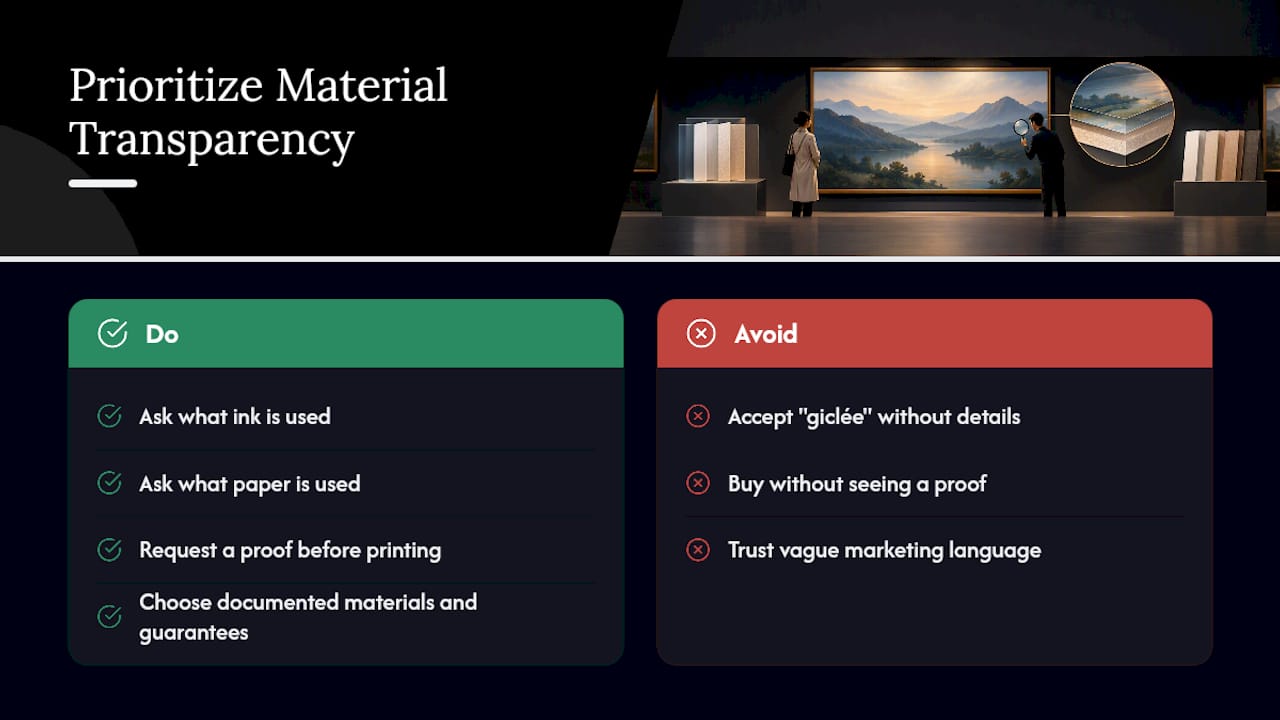
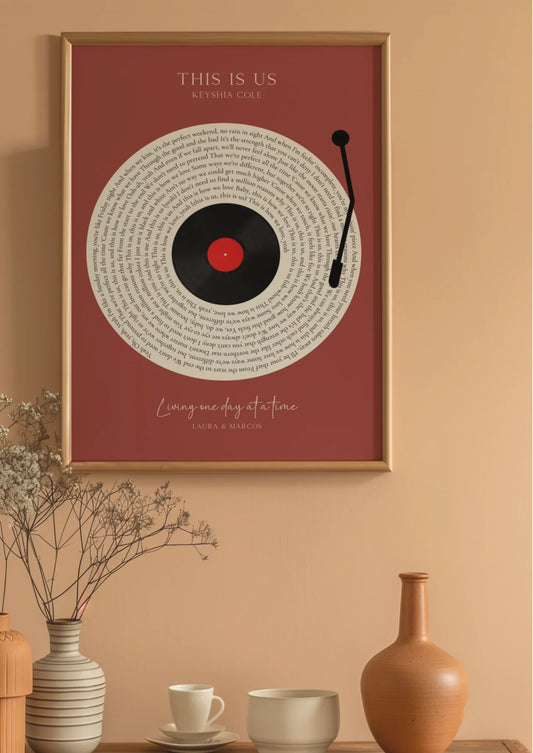
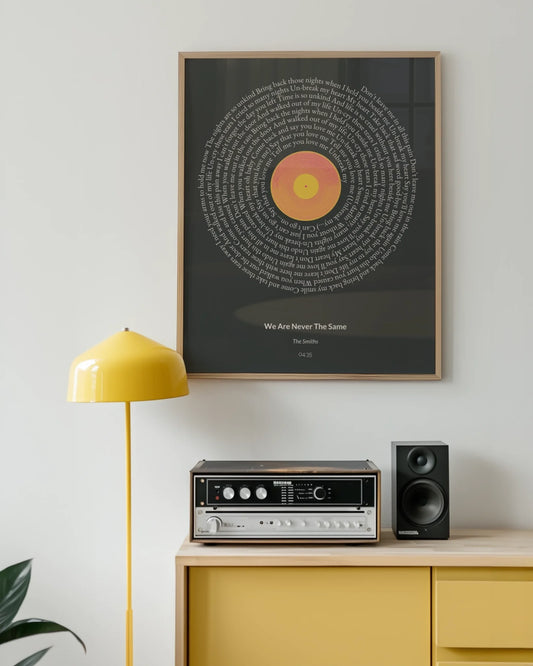
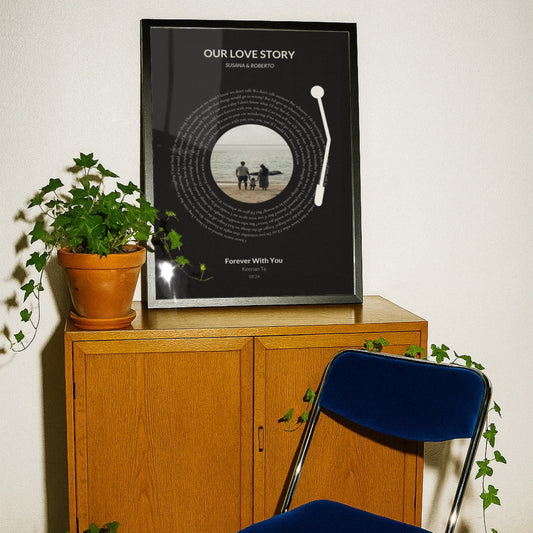
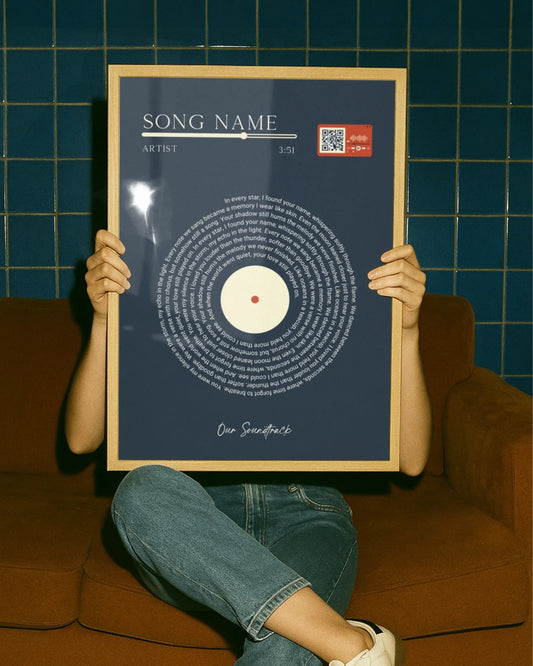
Some shops favor clear material information, guided previews before checkout, and satisfaction guarantees, so buyers know what they’re getting before it ships. If you’re shopping for a personalized piece, whether that’s a custom photo collage or a song lyric print, ask the same questions you’d ask any fine-art printer: what ink, what paper, and can I see a proof first.
Our practical advice stands regardless of where you order: prioritize documented materials and a real proofing step over marketing language every time.
— Luanda
Sources
The claims in this guide draw on museum documentation and academic printing research, not marketing copy.
- Giclée print — Smithsonian National Museum of African Art glossary
- RIT thesis on fine-art reproduction workflows
- Smithsonian conservation note on digital prints and water sensitivity
FAQ
What Does Giclée Mean Exactly?
Giclée is a French-derived term, from gicler meaning “to spray,” used to describe high-quality pigment or dye inkjet fine-art prints. The Smithsonian’s glossary treats it as a marketing term covering a wide quality range, so the label alone doesn’t guarantee archival materials.
Is Giclée Printing Better Than Lithography?
Giclée and lithography are different processes rather than a strict better-or-worse comparison. Lithography uses plates and is efficient for very large runs, while giclée’s inkjet process suits smaller runs and reproduces fine detail and subtle color gradients well, which is why most limited-edition art reproductions today use inkjet methods.
How Long Do Giclée Prints Last?
Longevity depends entirely on the specific ink, paper, and coating combination used, not on the giclée label itself. Wilhelm Imaging Research testing shows permanence estimates vary widely by pairing, so any “archival” claim should name the exact materials tested.
What Should I Ask a Printer Before Ordering a Giclée?
Ask for the ink brand and type, the paper or canvas brand, which ICC profile applies to your file, and whether you’ll see a hard proof at final size before the full run prints. A shop that won’t name its materials or skip a proofing step is a clear warning sign.
Can Giclée Prints Be Used for Photos, Not Just Paintings?
Yes, giclée printing works well for photography, and many professional photographers use it for gallery-scale reproductions. The same rules apply: check resolution at final size, confirm the ink and paper combination, and request a proof before committing to a large print run.